
The farming landscape is shifting beneath our feet, and small commercial farmers who recognize the signs early stand to benefit most. While traditional agriculture grapples with rising input costs, water scarcity, and consumer demands for cleaner food, a different approach is quietly gaining momentum. The aquaponics market is projected to more than double from USD 1.8 billion in 2025 to USD 3.9 billion by 2035, representing an 8.1% annual growth rate that few agricultural sectors can match.
This isn’t just another farming trend. It’s a fundamental reimagining of how we produce food — one that addresses the resource constraints and market pressures that keep many small farmers awake at night.
The Perfect Storm Driving Aquaponics Growth
Three converging forces are creating unprecedented opportunities for aquaponics adoption. First, consumer demand for organic and locally-grown produce continues to surge, with buyers willing to pay 17.5% premiums for organic and 12% for locally-grown produce. For small farms operating on tight margins, these premium prices can mean the difference between breaking even and genuine profitability.
Second, water scarcity is no longer a distant concern but a present reality affecting farming regions worldwide. Traditional agriculture consumes vast amounts of water, much of which is lost to evaporation, runoff, or inefficient distribution. Aquaponics systems, by contrast, use fish waste as fertilizer in a closed-loop system that dramatically reduces water usage, recycling the same water continuously while maintaining optimal growing conditions.
Third, input costs for traditional farming continue to climb. Chemical fertilizers, pesticides, and soil amendments represent significant ongoing expenses that directly impact profitability. Aquaponics systems generate their own fertilizer through fish waste, reducing reliance on external chemical inputs and lowering operational costs.
How Aquaponics Creates Value Through Integration
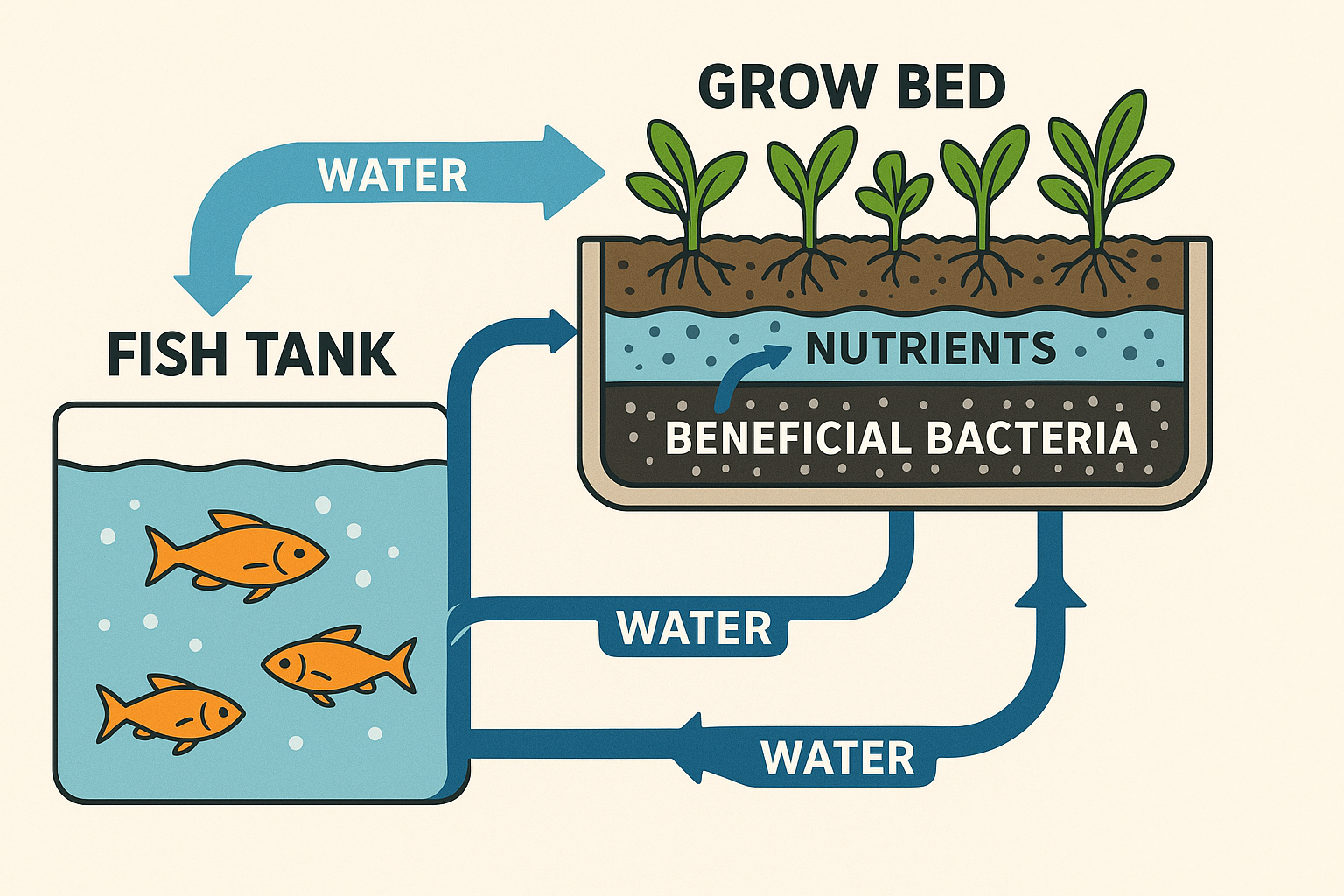
The genius of aquaponics lies in its elegant simplicity: fish and plants working together in a symbiotic relationship that benefits both. In this system, fish produce waste containing nitrogen, phosphorus, and potassium — essential nutrients that plants need to thrive. Beneficial bacteria convert ammonia from fish waste into nitrites and then nitrates, which plants readily absorb. As plants uptake these nutrients, they clean the water, which returns to the fish tanks in a continuous cycle.
This integration creates multiple revenue streams from a single system. You’re not just growing vegetables; you’re also raising fish. Both products can command premium prices in local markets, especially when marketed as sustainably produced, chemical-free food. The dual-output nature of aquaponics means you’re maximizing the productive potential of every square foot of space and every gallon of water.
The resource efficiency gains are substantial. Traditional soil-based farming often experiences nutrient loss through leaching, runoff, and atmospheric volatilization. In aquaponics, nutrients stay within the system, creating a closed-loop that minimizes waste and maximizes efficiency. This nutrient recycling promotes ecological balance while reducing environmental impact.
Market Signals and Institutional Support
The growing acceptance of aquaponics isn’t limited to individual farmers and consumers. Government and educational institutions are actively promoting aquaponics as part of sustainability initiatives, particularly in regions facing water scarcity challenges. This institutional support often translates into grants, tax incentives, and technical assistance programs that can help offset initial setup costs.
Educational initiatives are also raising public awareness and acceptance. Recent agricultural exhibits, including the 2025 Philadelphia Flower Show, have showcased aquaponics systems and their benefits, introducing the concept to thousands of potential customers and creating market demand for aquaponically-grown produce.
This institutional and educational support creates a favorable environment for aquaponics adoption. When government agencies endorse a farming method and educational institutions teach it, consumer confidence and market acceptance typically follow.
The Urban and Drought-Prone Advantage
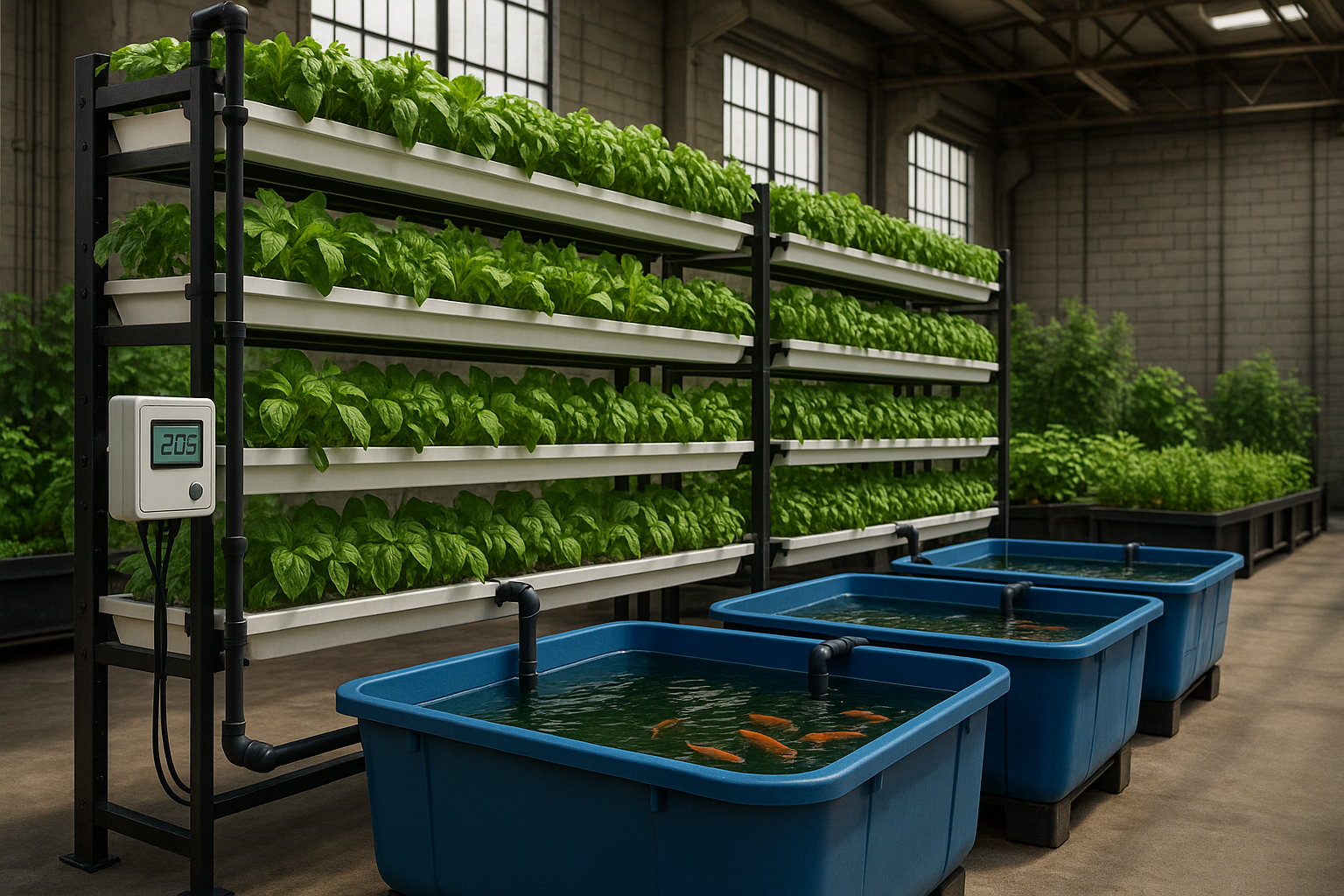
Aquaponics systems offer particular advantages in urban environments and drought-prone regions where traditional farming faces significant challenges. Urban areas often lack adequate soil quality or space for conventional agriculture, but aquaponics can operate in warehouses, rooftops, or other unconventional spaces. The controlled environment allows for year-round production, extending growing seasons and increasing annual yields.
In drought-prone regions, the water efficiency of aquaponics becomes especially valuable. While traditional farming may face water restrictions or costly irrigation during dry periods, aquaponics systems maintain their productivity with minimal water input. This reliability can be crucial for maintaining consistent income streams in areas where rainfall is unpredictable.
The compact nature of aquaponics systems also makes them suitable for areas with limited arable land. By growing vertically and utilizing every inch of available space, these systems can produce significantly more food per square foot than traditional farming methods.
Understanding the Investment and Complexity
While the opportunities are significant, aquaponics isn’t without challenges. The initial infrastructure investment can be substantial, typically ranging from several thousand to tens of thousands of dollars depending on system size and sophistication. This includes costs for tanks, pumps, filtration systems, grow beds, and monitoring equipment.
Technical complexity is another consideration. Successful aquaponics requires understanding fish husbandry, plant nutrition, water chemistry, and system maintenance. You’re essentially managing three interconnected biological systems — fish, plants, and bacteria — each with specific requirements that must be balanced for optimal performance.
The learning curve can be steep, particularly for farmers accustomed to soil-based agriculture. Water quality parameters like pH, dissolved oxygen, ammonia, and nitrite levels require constant monitoring and adjustment. Fish health management adds another layer of complexity, as sick or stressed fish can compromise the entire system.
Power reliability becomes critical since pumps, aerators, and filtration systems require continuous operation. Power outages can quickly lead to fish kills and system failures, making backup power systems a necessary investment in many locations.
The Technology Integration Opportunity
Modern aquaponics systems increasingly incorporate digital monitoring and control technologies that can help address some of these complexity challenges. Sensors can continuously monitor water quality parameters, sending alerts when levels drift outside optimal ranges. Automated feeding systems ensure fish receive consistent nutrition, while timer-controlled LED lighting optimizes plant growth cycles.
For small commercial farmers, these technological integrations can transform aquaponics from a labor-intensive system requiring constant attention to a more manageable operation that runs largely on autopilot. Remote monitoring capabilities mean you can check system status from anywhere, receiving immediate alerts if intervention is needed.
Data logging capabilities also provide valuable insights into system performance, helping identify optimization opportunities and track productivity trends over time. This data-driven approach to farming aligns with broader agricultural technology trends and can help justify the initial investment through improved efficiency and yields.
Market Positioning and Consumer Education
Successful aquaponics operations often excel at storytelling and consumer education. The sustainable, chemical-free nature of aquaponics provides compelling marketing angles that resonate with environmentally conscious consumers. The ability to offer both fresh vegetables and fish from the same system creates unique bundling opportunities for farmers markets, CSA programs, and direct-to-consumer sales.
Transparency becomes a competitive advantage in aquaponics. Unlike traditional farming where consumers rarely see production methods, aquaponics systems can be showcased to customers, demonstrating the clean, sustainable growing environment. This transparency builds trust and can justify premium pricing.
The local food movement also favors aquaponics operations. These systems can produce fresh food year-round regardless of climate, reducing dependence on distant suppliers and seasonal variations. For restaurants and retailers emphasizing local sourcing, aquaponics provides a reliable supply of fresh, traceable produce.
Financial Modeling and Return Considerations
The financial attractiveness of aquaponics depends heavily on market positioning and operational efficiency. Premium pricing for organic, locally-grown produce can generate strong margins, but success requires understanding local market dynamics and consumer preferences. Direct-to-consumer sales often yield higher profits than wholesale channels, but require additional time and marketing investment.
Operational costs include electricity for pumps and lighting, fish feed, plant seeds or seedlings, and system maintenance. These ongoing expenses must be weighed against revenue from both plant and fish production. Many successful operations find that the dual revenue streams provide better financial stability than single-crop farming.
The relatively predictable nature of aquaponics production — with controlled environment growing and consistent fish growth rates — can make financial planning more straightforward than weather-dependent traditional farming. This predictability can be valuable for securing financing and planning business expansion.
Looking Toward 2035
As the aquaponics market approaches its projected $3.9 billion valuation by 2035, early adopters will likely enjoy significant advantages. Market positioning, consumer relationships, and operational expertise developed over the next decade will be difficult for late entrants to replicate.
The convergence of consumer demand, environmental pressures, and technological advancement creates a particularly favorable environment for aquaponics adoption. Small commercial farmers who recognize this opportunity and develop the necessary skills and infrastructure may find themselves uniquely positioned to meet growing market demand.
The question isn’t whether aquaponics will become a significant part of the agricultural landscape — the market projections and driving forces suggest it will. The question is whether individual farmers will position themselves to benefit from this transformation or watch it happen from the sidelines.
For small commercial farmers facing the ongoing challenges of traditional agriculture, aquaponics offers a path toward greater sustainability, resource efficiency, and market differentiation. The initial investment and learning curve are real, but so are the potential rewards for those willing to embrace this growing market opportunity.