
When David Martinez first started his aquaponics operation, he thought the hardest part would be keeping the fish alive. Three months later, with healthy tilapia swimming in crystal-clear water but stunted, yellowing plants struggling in his grow beds, he learned a crucial lesson: successful aquaponics isn’t just about fish and plants coexisting—it’s about creating the precise nutrient environment where both can thrive.
The challenge in aquaponics lies in managing a complex biological system where fish waste must provide complete nutrition for plants while maintaining water quality that keeps fish healthy. Unlike hydroponics, where growers can precisely control every nutrient input, aquaponics requires understanding how fish species, feeding schedules, and system design interact to create—or limit—the nutrients available for plant growth.
For small commercial growers, mastering nutrient profiles represents the difference between systems that barely break even and operations that consistently produce premium crops. The biology is complex, but the principles are manageable when approached systematically. Understanding what fish contribute, what plants need, and how to bridge the gaps creates the foundation for profitable aquaponics production.
The Foundation: Fish as Living Fertilizer Factories
In aquaponics systems, fish serve as more than protein producers—they’re living fertilizer factories whose output directly determines plant nutrition. Different fish species and their diets significantly affect nutrient loads, making species selection a critical decision for optimizing nutrient availability.
Tilapia remains the gold standard for many aquaponics operations because of their efficient feed conversion and robust waste production. A mature tilapia produces approximately 30-50 grams of solid waste and 10-15 grams of dissolved nutrients daily through respiration and excretion. This waste provides the foundation of nitrogen and phosphorus that drives plant growth, but the ratios rarely match what plants need for optimal development.
African catfish and Nile tilapia influence nutrient concentrations differently based on their feed composition and metabolic rates. Catfish tend to produce more ammonia relative to solid waste, while tilapia create more balanced waste streams. Goldfish, though less common in commercial systems, produce consistent waste loads with lower protein requirements, making them suitable for operations focused on leafy greens rather than fruiting crops.
The relationship between fish density, feeding rates, and nutrient production isn’t linear. Overcrowded fish produce more waste per gallon but often at lower feed conversion efficiency, creating more ammonia stress without proportional increases in available plant nutrients. Underfed fish produce insufficient waste to support robust plant growth, creating systems with healthy fish but nutrient-starved plants.
Feed composition directly impacts nutrient availability for plants. High-protein feeds increase nitrogen production but may create imbalanced ratios for plant needs. Fish feed selection affects not only fish health and growth but also the entire nutrient profile available for plant production. Understanding these relationships allows growers to select fish species and feeding programs that align with their crop production goals.
Water Testing: The Diagnostic Foundation
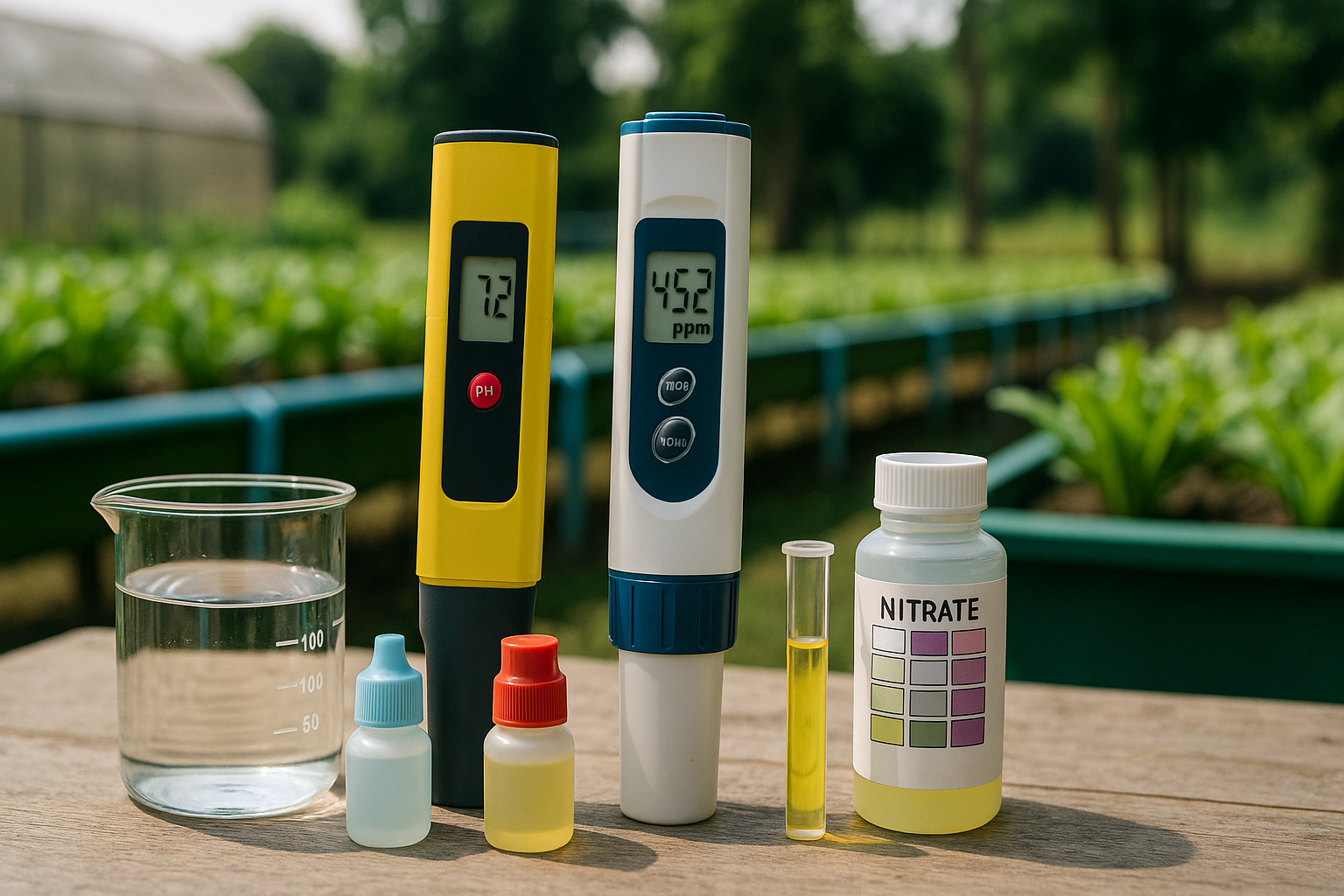
Regular testing of water for pH, TDS, nitrate, and phosphate levels is crucial for maintaining optimal growing conditions. However, effective testing goes beyond basic parameters to include the specific nutrients that determine plant health and productivity.
Primary testing should focus on the nitrogen cycle components: ammonia, nitrite, and nitrate levels. Ammonia represents the immediate product of fish waste and gill excretion—beneficial for plants but toxic to fish at concentrations above 1-2 ppm. Nitrite appears as beneficial bacteria convert ammonia but becomes dangerous to fish at levels above 5 ppm. Nitrate represents the final, plant-available nitrogen form that should maintain levels between 50-100 ppm for most crops.
Phosphate testing reveals another critical plant nutrient that fish provide through waste but often in quantities insufficient for optimal plant growth. Most aquaponics systems maintain phosphate levels between 10-30 ppm, but many plants require 30-50 ppm for maximum productivity. Understanding phosphate levels helps determine when supplementation becomes necessary.
Key testing parameters should include pH, TDS, nitrate, phosphate, calcium, and magnesium to provide a complete picture of nutrient availability. Calcium and magnesium often become limiting factors in aquaponics systems because fish waste provides minimal quantities of these essential plant nutrients.
Total dissolved solids (TDS) measurements provide insight into overall nutrient concentration and system balance. TDS levels between 300-600 ppm typically indicate healthy systems with adequate nutrition, while levels below 200 ppm suggest insufficient nutrients for robust plant growth. High TDS readings above 800 ppm may indicate accumulating salts or overfeeding issues requiring system management.
IoT devices and sensors enable continuous monitoring of critical parameters, providing real-time data that allows for proactive management rather than reactive problem-solving. Digital pH meters, TDS sensors, and automated nitrate monitors can alert growers to developing problems before they impact plant or fish health.
pH Management: Balancing Competing Needs
Maintaining a pH range of 6.0 to 6.5 provides optimal conditions for most aquaponics crops while supporting fish health. This narrow range represents a compromise between the slightly acidic conditions that optimize nutrient uptake for plants and the neutral to slightly alkaline conditions that most aquaponics fish prefer.
The biological processes in aquaponics systems naturally influence pH in predictable ways. Fish respiration and waste decomposition produce carbonic acid, which lowers pH over time. Beneficial bacteria that convert ammonia to nitrates also consume alkalinity, contributing to pH decline. Plant uptake of nutrients can either raise or lower pH depending on which nutrients they absorb most rapidly.
Plants like Swiss chard and lettuce thrive at the lower end of the optimal pH range, while fish generally prefer pH levels between 6.5-7.5. This creates inherent tension that requires careful management to avoid compromising either fish welfare or plant nutrition.
Buffer management becomes critical for maintaining stable pH levels. Calcium hydroxide serves as both a pH buffer and calcium source, addressing two common aquaponics challenges simultaneously. Potassium hydroxide provides pH adjustment while supplementing potassium that plants need but fish waste provides inconsistently.
Natural buffering through crushed coral, limestone, or shell materials provides long-term pH stability while adding beneficial minerals. These materials dissolve slowly, providing consistent alkalinity without rapid pH swings that can stress both fish and plants.
Nutrient Cycling: Understanding the Biological Engine
Nutrient cycling involves fish waste providing nitrogen and phosphorus for plants, which purify water for fish in a continuous biological loop. Understanding this cycle allows growers to optimize each component for maximum efficiency and production.
The nitrogen cycle represents the heart of aquaponics nutrition. Fish excrete ammonia through their gills and waste, which beneficial Nitrosomonas bacteria convert to nitrite. Nitrobacter bacteria then convert nitrite to nitrate, the primary nitrogen form that plants absorb. This biological process requires adequate oxygen, appropriate temperature (65-85°F), and time to establish mature bacterial populations.
Establishing robust bacterial populations takes 4-6 weeks in new systems, during which nutrient availability may be inconsistent. Mature systems with established biofilter communities can process fish waste efficiently while maintaining stable nutrient levels for plants.
Phosphorus cycling follows different patterns than nitrogen. Fish waste provides phosphorus in organic forms that require decomposition to become plant-available. This process happens more slowly than nitrogen conversion, often creating phosphorus limitations even when nitrogen levels are adequate.
System designs like NFT (Nutrient Film Technique) and DWC (Deep Water Culture) have varying efficiencies in nutrient uptake and cycling. NFT systems provide excellent oxygen to roots but may not capture all available nutrients from fish waste. DWC systems immerse roots completely but may accumulate solid waste that requires management.
Media-based systems using expanded clay, gravel, or similar materials provide surfaces for beneficial bacteria while filtering solid waste from the water. These systems often achieve better nutrient cycling efficiency but require larger physical footprints than NFT or DWC alternatives.

Fish Species Selection: Matching Biology to Production Goals
Fish like tilapia and goldfish are preferred for their adaptability and consistent nutrient contributions, but species selection should align with specific production goals, climate conditions, and market opportunities.
Tilapia species (Nile tilapia, blue tilapia, Mozambique tilapia) provide robust waste production, rapid growth, and tolerance for varying water conditions. They thrive in temperatures between 70-85°F and can tolerate pH ranges from 6.0-8.0. Their omnivorous diet allows for varied feed options, and their waste provides balanced nitrogen and phosphorus for plant growth.
Channel catfish offer cold-water alternatives for systems operating in temperate climates. They remain active at temperatures down to 60°F and produce consistent waste loads throughout cooler seasons. Catfish waste tends to be higher in nitrogen relative to phosphorus, making them particularly suitable for leafy green production.
Trout species provide premium fish products but require cooler water (55-65°F) and higher dissolved oxygen levels. Their waste production is lower per pound of fish but tends to be more concentrated in nutrients. Trout systems often work well for herbs and specialty crops that command higher prices.
Goldfish and koi, while not typically food fish, provide consistent waste production with minimal management requirements. They tolerate wide temperature and pH ranges while producing steady nutrient streams suitable for ornamental aquaponics systems focused on plant production.
Feeding Strategies: Optimizing Input for Maximum Output
Proper feeding schedules and quantities are essential to maintain nutrient balance and water quality while optimizing fish growth and waste production. Overfeeding creates ammonia spikes that can kill fish while producing no additional plant nutrition. Underfeeding limits fish growth and reduces waste production, creating nutrient-starved plants.
The general rule of feeding 2-3% of fish body weight daily provides a starting point, but this should be adjusted based on water temperature, fish activity, and plant nutrient demands. Warmer water increases fish metabolism and waste production, while cooler conditions slow digestion and reduce nutrient output.
Overfeeding leads to excess ammonia production, harming both fish and plants. Uneaten feed decomposes in the system, creating additional ammonia loads without the benefit of fish growth or waste production. This creates water quality problems while providing no additional plant nutrition.
Feeding frequency impacts both fish health and nutrient consistency. Multiple small feedings throughout the day maintain steady waste production and prevent ammonia spikes from large meals. Fish fed once daily may consume food rapidly, creating temporary ammonia surges that stress fish and potentially harm beneficial bacteria.
Feed quality significantly affects nutrient availability for plants. High-protein feeds (35-45% protein) support rapid fish growth and increased waste production but may create nitrogen-heavy waste that requires balancing with other nutrients. Lower protein feeds (28-35%) provide more balanced waste composition but may limit fish growth rates.
IoT automation can optimize feeding schedules while reducing waste and improving system management. Automated feeders programmed for multiple daily feedings ensure consistent nutrient inputs while preventing overfeeding that can destabilize water chemistry.
Nutrient Supplementation: Filling the Gaps
Some nutrients require supplementation despite fish waste inputs because fish waste alone rarely provides complete plant nutrition. Understanding which nutrients commonly become limiting allows growers to supplement strategically without disrupting system balance.
Iron represents the most common nutrient deficiency in aquaponics systems. Fish waste provides minimal iron, and the slightly alkaline conditions preferred by fish can make iron less available to plants. Iron deficiency appears as yellowing between leaf veins (interveinal chlorosis) in new growth. Chelated iron supplements address this deficiency without affecting fish health or water chemistry significantly.
Potassium often becomes limiting in fruiting crops that require high potassium levels for fruit development. Fish waste provides some potassium, but rarely enough for optimal tomato, pepper, or cucumber production. Potassium hydroxide can supplement potassium while providing pH buffering, addressing two system needs simultaneously.
Calcium and magnesium deficiencies commonly develop in soft-water systems or those with rapid plant growth. Calcium deficiency causes blossom end rot in tomatoes and tip burn in leafy greens. Adding crushed oyster shell or limestone provides slow-release calcium and magnesium while buffering pH.
Phosphorus may require supplementation in systems with high plant densities or rapid growth rates. Fish waste provides phosphorus, but plant uptake may exceed fish production capacity. Phosphoric acid can supplement phosphorus while providing pH adjustment, though care must be taken to avoid excessive acid additions that stress fish.
Supplementing nutrients like iron and potassium enhances plant growth without compromising fish health when done properly. The key lies in understanding system capacity and adding supplements gradually while monitoring both plant response and water chemistry changes.
Advanced Monitoring and System Optimization
Real-time nitrate monitoring allows dynamic nutrient adjustments based on actual plant uptake and fish production. Modern aquaponics operations increasingly rely on continuous monitoring systems that provide data for optimizing both fish and plant production.
Continuous pH monitoring reveals system trends that might not be apparent from daily manual testing. pH drift patterns can indicate developing problems with bacterial populations, fish health, or plant nutrient uptake before these issues become visible in plant or fish symptoms.
Dissolve oxygen monitoring becomes critical in systems with high fish densities or warm water conditions. Adequate dissolved oxygen supports both fish respiration and beneficial bacteria activity. Low dissolved oxygen can slow the nitrogen cycle while stressing fish, creating cascading problems throughout the system.
Nitrate trend monitoring helps predict when nutrient levels may become inadequate for plant growth or excessive for fish health. Systems with rapid plant growth may show declining nitrate levels that indicate the need for increased feeding or fish density. Rising nitrate levels may indicate overfeeding or insufficient plant uptake capacity.
Automated alert systems can notify growers of conditions that require immediate attention, such as pH excursions, dissolved oxygen drops, or temperature fluctuations. These systems prevent small problems from becoming system failures while reducing the labor required for system monitoring.
Decoupled Systems: Advanced Nutrient Management
Decoupled systems allow separate nutrient management for fish and plants, enabling precise control over nutrient and pH levels. While traditional coupled aquaponics systems share water between fish and plants, decoupled designs provide flexibility for optimizing each component independently.
In decoupled systems, fish tanks maintain conditions optimal for fish health and growth while plant systems receive water from fish tanks supplemented with additional nutrients as needed. This approach allows for precise plant nutrition while maintaining ideal fish conditions.
Nutrient concentration can be adjusted independently for different crops or growth stages. Seedlings can receive diluted solutions while mature fruiting plants get concentrated nutrients, all drawing from the same fish waste foundation but tailored to specific needs.
pH management becomes more flexible in decoupled systems. Fish tanks can maintain pH levels optimal for fish health (7.0-7.5) while plant systems operate at pH levels that maximize nutrient uptake (6.0-6.5). This eliminates the compromise inherent in coupled systems.
Water quality management improves in decoupled systems because problems in one component don’t immediately affect the other. Fish health issues don’t directly impact plant nutrition, and plant problems don’t stress fish through water chemistry changes.
Economic Considerations and Production Optimization
Nutrient management costs in aquaponics include fish feed, supplemental nutrients, testing supplies, and monitoring equipment. Feed typically represents 60-70% of operating costs in fish production, making feed efficiency crucial for economic viability.
Optimizing feed conversion ratios through proper feeding management can significantly impact both fish production costs and nutrient availability for plants. Fish that convert feed efficiently produce more biomass per unit of feed while generating more waste for plant nutrition.
Supplement costs should be evaluated against their impact on crop yields and quality. Iron supplementation costing $20-30 per month may increase lettuce yields by 20-30%, easily justifying the expense. Calcium supplementation that prevents crop losses from blossom end rot provides even higher returns on investment.
Monitoring equipment represents a significant initial investment but can reduce labor costs while improving production consistency. Automated systems that prevent crop losses or fish mortality quickly pay for themselves through avoided losses and improved productivity.
Testing costs include reagents, calibration solutions, and periodic equipment replacement. These costs typically range from $50-100 monthly for small commercial systems but prevent much larger losses from undetected problems.
Troubleshooting Common Nutrient Problems
Poor plant growth despite adequate fish feeding often indicates pH problems that prevent nutrient uptake even when nutrients are present. Testing pH and adjusting to optimal ranges frequently resolves apparent nutrient deficiencies.
Fish health problems coupled with plant nutrient deficiencies may indicate biofilter problems that prevent efficient waste processing. Insufficient beneficial bacteria can create ammonia buildup while providing inadequate nitrate for plants.
Uneven plant growth across the system suggests inconsistent water flow or nutrient distribution. Dead zones in water circulation create areas with inadequate nutrients while other areas may receive excessive concentrations.
Rapid pH swings indicate inadequate buffering capacity in the system. Adding buffer materials or adjusting alkalinity helps stabilize pH and improves overall system stability.
Ammonia stress symptoms in fish combined with nutrient deficiencies in plants often result from overfeeding that creates ammonia spikes while overloading the biofilter capacity.
Building System Resilience and Sustainability
Successful aquaponics operations develop redundancies and management practices that maintain stable conditions despite environmental or operational challenges. Understanding nutrient profiles provides the foundation for building resilient systems that consistently produce quality crops and healthy fish.
Seasonal management strategies account for changing conditions that affect both fish metabolism and plant growth. Summer heat may require increased aeration and modified feeding schedules, while winter conditions may need supplemental heating and adjusted nutrient concentrations.
Integrating renewable energy for pumps, aeration, and monitoring systems reduces operating costs while improving sustainability. Solar-powered systems can operate reliably in remote locations while reducing dependence on grid electricity.
Developing local sources for fish feed and supplement materials reduces costs and improves supply chain reliability. Some operations successfully incorporate food waste or locally grown ingredients into fish feed formulations while maintaining nutritional quality.
Training and knowledge development remain crucial for long-term success. Aquaponics systems are complex biological entities that require ongoing attention and understanding to optimize performance and prevent problems.
Mastering nutrient profiles in aquaponics represents the difference between systems that survive and those that thrive. The biological complexity can seem overwhelming initially, but systematic attention to fish health, water chemistry, and plant nutrition creates the foundation for successful operations. Understanding how these components interact allows growers to optimize their systems for maximum productivity while maintaining the sustainability that makes aquaponics attractive to environmentally conscious producers and consumers.