
Your thermometer reads -40°F outside, but inside your insulated aquaponics greenhouse, lettuce is growing and trout are thriving. Or perhaps you’re watching the desert sun bake the landscape at 115°F while your shaded tilapia tanks maintain perfect growing conditions. This isn’t fantasy—it’s the reality for aquaponics farmers who’ve mastered the art of environmental control in some of the planet’s most challenging climates.
Most aquaponics guides assume you’re operating in moderate, stable conditions. But what if you’re farming in Alaska’s bone-chilling winters, New Mexico’s scorching deserts, or any of the countless places where extreme weather makes conventional agriculture nearly impossible? The truth is, these challenging environments can actually provide advantages for aquaponics systems—if you understand how to harness and control them.
Extreme climates force you to become a better systems thinker. You can’t rely on favorable weather to mask design flaws or management mistakes. Every component must work efficiently, every detail must be planned, and every seasonal change must be anticipated. This demanding environment creates aquaponics farmers who develop skills and systems that dramatically outperform those operating in easier conditions.
The farmers succeeding in harsh climates share common characteristics: they understand that environmental control isn’t an expense—it’s the foundation of profitability. They invest in insulation, climate management, and system design upfront because they know that inadequate environmental control means total system failure. Most importantly, they’ve learned to work with extreme conditions rather than fighting against them.
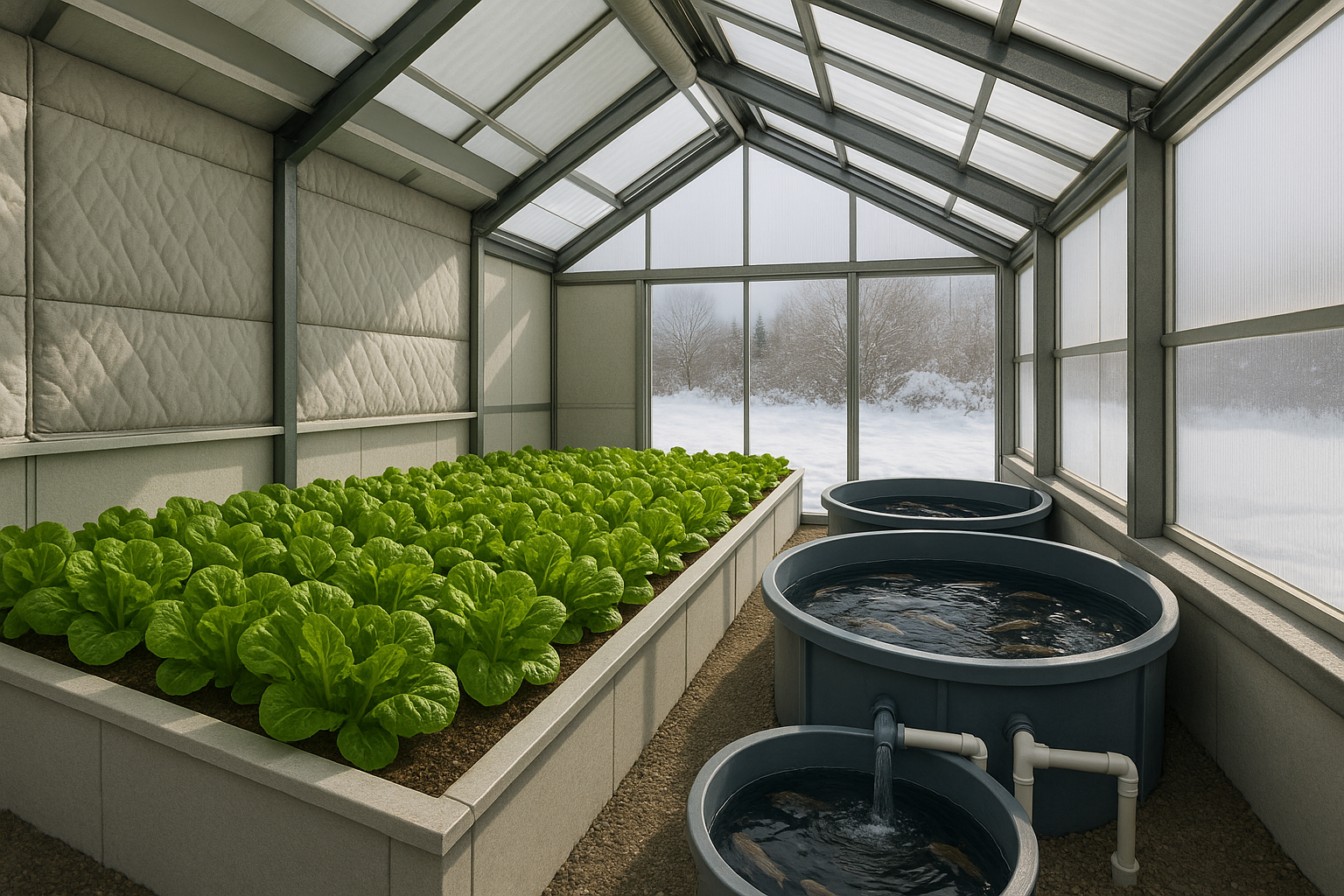
The Physics of Survival: Understanding Extreme Climate Challenges
Before diving into solutions, it’s crucial to understand how extreme climates attack aquaponics systems and why conventional approaches fail. Temperature extremes don’t just stress plants and fish—they disrupt the biological processes that make aquaponics possible.
In cold climates, the challenges multiply beyond simple temperature management. Water freezes, biological processes slow dramatically, and heating costs can exceed crop values. Even more dangerous are the daily temperature swings that can stress fish, shock plant roots, and disrupt beneficial bacterial populations. A system that survives steady cold might fail completely during freeze-thaw cycles.
Cold weather also affects system components in ways that many growers don’t anticipate. Pumps work harder in cold water, using more energy and wearing out faster. PVC becomes brittle and prone to cracking. Growing media can heave and shift as it freezes and thaws. Even the beneficial bacteria essential for aquaponics slow their activity dramatically, potentially causing ammonia spikes that kill fish.
Hot, arid climates present different but equally challenging problems. Evaporation rates can exceed plant consumption by 300-500%, requiring constant water replacement that dilutes nutrients and stresses fish. Surface temperatures that exceed fish tolerance can develop within hours, while solar radiation can damage plants and promote algae growth that competes with plants for nutrients.
Desert conditions also create humidity challenges that affect plant transpiration and nutrient uptake. Low humidity increases plant water stress while high evaporation rates concentrate salts and minerals that can reach toxic levels. Wind and dust create additional stresses while differential cooling at night can create temperature swings nearly as challenging as those in cold climates.
The key insight for harsh climate aquaponics is that you’re not just growing plants and fish—you’re creating and maintaining a controlled ecosystem. This ecosystem must remain stable despite external conditions that would quickly destroy unprotected biological systems.
Insulation Mastery: Creating Thermal Fortresses
Effective insulation in extreme climate aquaponics goes far beyond simply wrapping tanks in blankets. It requires understanding heat transfer principles and implementing comprehensive thermal management strategies that address conduction, convection, and radiation.
Strategic Insulation Materials and Applications
Foam board insulation provides excellent thermal barrier properties when properly applied around fish tanks and water reservoirs. The key to effective foam board application lies in eliminating thermal bridges—areas where heat can bypass the insulation through structural elements.
Proper foam board installation requires attention to joints, penetrations, and attachment methods. Gaps between sheets can create thermal bridges that negate much of the insulation’s effectiveness. Use expanding foam sealant to fill joints and create continuous thermal barriers. Pay special attention to areas where plumbing or electrical components penetrate the insulation.
Layering different insulation types creates more effective thermal barriers than single-material approaches. Combine rigid foam board with flexible materials like reflective insulation that reflects radiant heat back into the system. This combination addresses both conductive and radiant heat transfer.
The thickness of insulation must be calculated based on your specific climate conditions and acceptable energy costs. In extreme cold climates, 6-8 inches of insulation may be economically justified, while moderate climates might require only 2-4 inches. Calculate insulation payback periods based on energy savings to determine optimal thickness.
Insulating blankets provide flexible coverage for grow beds and external components, allowing for seasonal application and easy access during maintenance. These blankets work best when they can trap air layers that provide additional insulation value.
Blanket selection should prioritize durability and UV resistance for outdoor applications. Agricultural-grade insulating blankets designed for greenhouse use typically provide better longevity than generic options. Look for materials that can withstand temperature extremes without degrading or losing insulation value.
Advanced Thermal Management Techniques
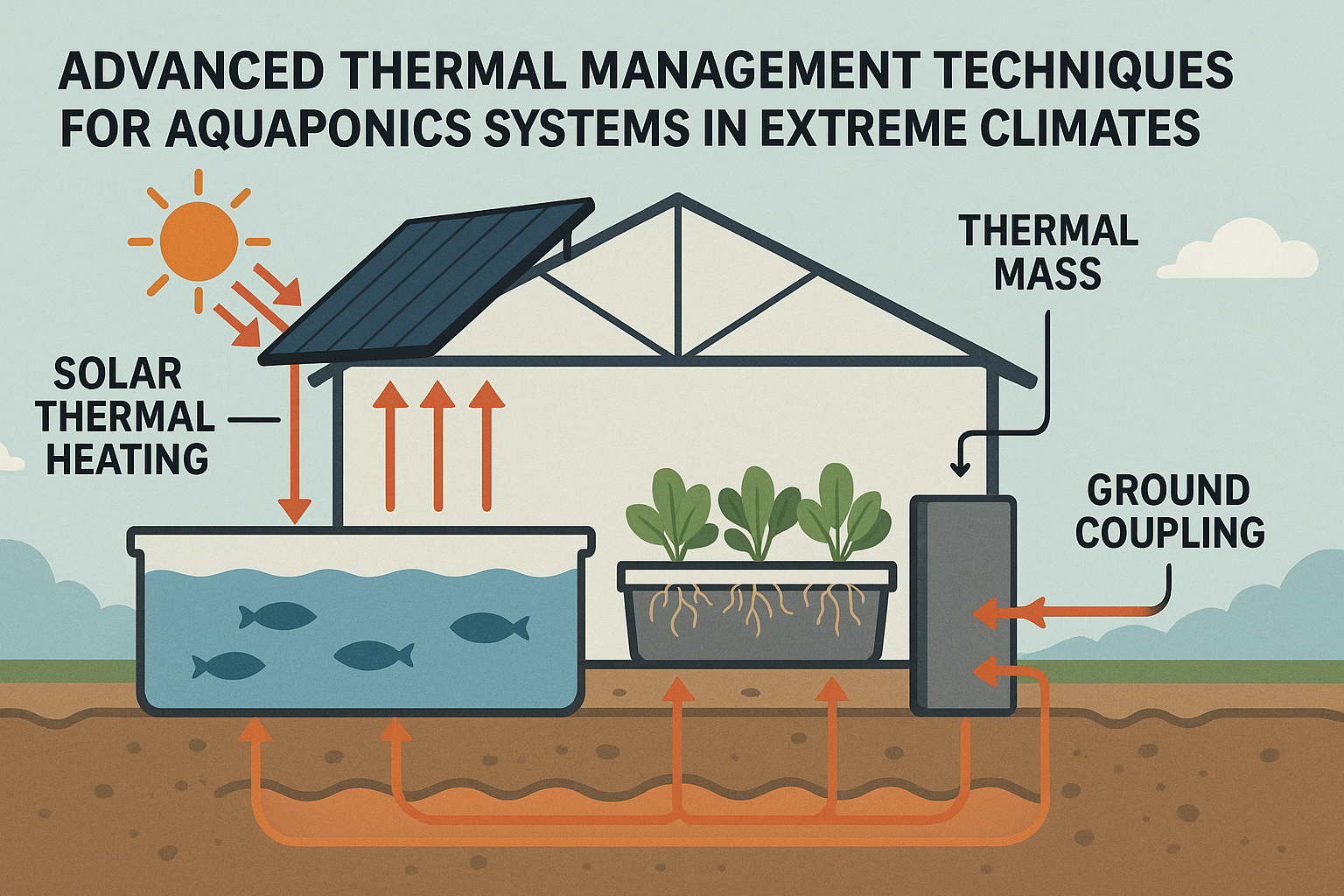
Thermal mass integration uses large volumes of water or other heat-storing materials to moderate temperature swings. In cold climates, thermal mass stores heat during warm periods and releases it during cold snaps. In hot climates, thermal mass absorbs excess heat during the day and releases it during cooler nighttime hours.
Water thermal mass works particularly well in aquaponics because you already have significant water volumes. Additional water storage tanks can serve dual purposes as thermal mass and emergency water supply. Size these tanks at 20-30% of your total system water volume for optimal thermal moderation.
Solar thermal collection can supplement heating systems by capturing and storing solar energy during daylight hours. Simple solar collectors made from dark-colored water containers in insulated boxes can provide significant heating assistance. More sophisticated systems use circulating pumps to transfer captured solar heat to system water.
Ground coupling takes advantage of stable soil temperatures to moderate system temperatures. In-ground installations or earth-sheltered systems benefit from soil temperatures that remain relatively constant year-round. This technique works particularly well in extreme climates where air temperatures vary dramatically but soil temperatures remain moderate.
Radiant barriers become crucial in hot climates where solar radiation can quickly overwhelm cooling systems. Reflective materials installed above tanks and grow beds can reduce heat gain by 50-70%. These barriers work best when they create air spaces that prevent direct contact between the reflective surface and protected components.
Climate-Adapted Fish Selection: Matching Biology to Environment
Fish selection in extreme climates requires understanding not just temperature tolerances, but also how different species respond to the stresses and opportunities that harsh environments create.
Cold Climate Champions
Rainbow trout excel in cold climate aquaponics with optimal temperature ranges of 10–20°C. These fish don’t just tolerate cold water—they require it for optimal health and growth, making them perfect partners for systems in northern climates.
Trout provide exceptional feed conversion ratios in cold water, often achieving better growth rates at 15°C than warm-water species achieve at their optimal temperatures. This efficiency means that despite higher heating costs, trout can provide better economic returns than attempting to maintain warm-water species in cold climates.
The oxygen requirements of trout align well with cold water’s higher dissolved oxygen capacity. Cold water holds more dissolved oxygen than warm water, naturally providing the high oxygen levels that trout require. This relationship means that cold climate systems often support higher fish densities than equivalent warm-water systems.
Trout also produce waste with excellent nutrient profiles for cold-season crops. The slower metabolisms in cold water create waste with different nitrogen-to-phosphorus ratios that better match the needs of leafy greens and herbs commonly grown in winter aquaponics systems.
Other cold-water species worth considering include arctic char, which tolerate even colder temperatures than trout, and cold-adapted strains of salmon that can provide both food production and higher market values. Perch and northern pike also offer possibilities for diversified cold-water aquaponics.
Hot Climate Specialists
Tilapia demonstrate remarkable heat tolerance, surviving temperatures up to 38°C while maintaining good growth rates. This heat tolerance makes them ideal for desert and tropical aquaponics where maintaining cool water would be prohibitively expensive.
The rapid growth rates of tilapia in warm climates can offset the challenges of high evaporation and energy costs. Optimal tilapia growing temperatures of 26-30°C align well with solar heating potential, reducing energy requirements while maximizing fish production.
Tilapia feeding behavior also provides advantages in hot climates. They efficiently consume algae and organic matter that tends to proliferate in warm water systems. This cleaning behavior helps maintain water quality while reducing feed costs and system maintenance requirements.
Breeding capabilities of tilapia can provide system advantages or challenges depending on management goals. Controlled breeding can provide continuous fish production without purchasing fingerlings, but uncontrolled reproduction can lead to overcrowding and stunted fish.
Channel catfish offer another excellent hot-climate option with even greater temperature tolerance than tilapia. Catfish survive temperature spikes that would kill other species while producing excellent eating fish. Their bottom-feeding behavior helps clean systems and process organic waste.
Largemouth bass can provide predatory balance in warm-water systems while offering recreational and food value. Bass help control tilapia populations and can command premium prices in appropriate markets.
Species Management in Extreme Conditions
Fish health monitoring becomes critical in extreme climates where environmental stresses can quickly overwhelm immune systems. Temperature stress, oxygen fluctuations, and water quality changes all compromise fish health, making them susceptible to diseases that wouldn’t affect fish in stable conditions.
Stress reduction techniques become essential management practices in harsh climates. Provide hiding places, maintain stable water chemistry, avoid sudden temperature changes, and monitor fish behavior for early signs of stress. Stressed fish are not only less productive but also more likely to die, creating water quality problems that can cascade through the entire system.
Feeding adjustments must account for temperature effects on fish metabolism and feed conversion. Cold-water fish may require reduce feeding during extreme cold, while warm-water fish may need increased nutrition during heat stress. Understanding these relationships prevents overfeeding problems while maintaining optimal fish health.
Backup planning for fish protection during equipment failures becomes crucial in extreme climates where system failures can quickly become catastrophic. Have emergency aeration, backup heating or cooling, and temporary fish housing options prepared before problems occur.
Temperature Management Systems: Engineering Climate Control
Effective temperature management in extreme climate aquaponics requires integrated systems that address heating, cooling, air circulation, and humidity control simultaneously.
Heating Solutions for Cold Climates
Solar thermal heating provides the most cost-effective supplemental heating for aquaponics systems in cold but sunny climates. Solar thermal systems can maintain optimal water temperatures while reducing energy costs, particularly when combined with thermal mass storage.
Solar collector design for aquaponics requires attention to freeze protection and system integration. Use glycol-based heat exchangers to prevent freeze damage while transferring solar heat to system water. Size collectors at 5-10% of water surface area for significant heating contribution.
Thermal siphon systems eliminate the need for pumps by using natural convection to circulate heated water. These systems are highly reliable but require careful design to ensure adequate circulation rates. Position collectors above storage tanks and size piping appropriately for natural circulation.
Backup heating systems become essential when solar heating can’t meet demand during extended cloudy periods or extreme cold snaps. Electric resistance heaters provide reliable backup but consume significant energy. Propane or natural gas heaters offer lower operating costs but require ventilation and safety considerations.
Heat pump systems can provide efficient heating even in cold climates, particularly air-source heat pumps designed for extreme cold operation. These systems can achieve coefficients of performance of 2-3, meaning they produce 2-3 times more heat energy than electrical energy consumed.
Cooling Strategies for Hot Climates
Shading methods using shade cloth and screens can reduce water temperatures by 10-15°F while preventing algae growth. Proper shading design requires understanding sun angles and seasonal variations to provide optimal protection.
Shade cloth selection involves balancing light reduction with cooling effectiveness. 30-50% shade cloth typically provides good temperature control while allowing adequate light for plant growth. Adjustable shading systems allow optimization for different seasons and weather conditions.
Evaporative cooling can provide significant temperature reduction in arid climates where low humidity allows effective evaporation. Evaporative pads, misters, and swamp coolers can reduce air and water temperatures by 20-30°F in dry conditions.
Fan and circulation systems create air movement that enhances evaporative cooling while preventing hot spots. Size circulation fans to change greenhouse air volume every 1-2 minutes for effective temperature control. Strategic placement of inlet and exhaust fans creates airflow patterns that maximize cooling effectiveness.
Nighttime cooling systems capture cool night air to reduce daytime temperatures. Automated ventilation systems that open during cool nighttime hours and close during hot daytime hours can significantly reduce cooling loads.
Ground-coupled cooling takes advantage of stable soil temperatures to provide cooling without energy consumption. Underground piping systems can circulate water through buried pipes that transfer heat to the cooler soil.
Humidity and Ventilation Control
Humidity management affects plant health, disease pressure, and system efficiency in ways that many growers underestimate. Excessive humidity promotes fungal diseases and reduces plant transpiration, while insufficient humidity increases water stress and evaporation rates.
Ventilation systems must balance humidity control with temperature management and CO2 levels. Natural ventilation using ridge vents, side vents, and louvers can provide effective humidity control when properly designed. Automated vent controllers respond to temperature and humidity sensors to optimize conditions.
Dehumidification systems become necessary in humid climates or during periods when ventilation can’t adequately control moisture levels. Desiccant dehumidifiers work better than refrigerant types in greenhouse applications, particularly at lower temperatures.
Air circulation systems separate from ventilation systems help maintain uniform conditions throughout growing spaces. Horizontal airflow fans prevent stratification and reduce disease pressure while improving plant growth and cooling effectiveness.
Real-World Success Stories: Learning from the Extremes
The most valuable lessons in extreme climate aquaponics come from farmers who’ve succeeded in the world’s most challenging environments. Their experiences provide practical insights that can’t be gained from theoretical knowledge alone.
Alaska’s Aquaponics Pioneers
Aquaponics operations in Alaska demonstrate successful year-round production in extreme cold climates through innovative greenhouse design and thermal management. These operations face winter temperatures that can drop below -60°F while maintaining productive growing systems.
The University of Alaska Fairbanks Controlled Environment Agriculture Center operates research aquaponics systems that provide fresh vegetables year-round despite extreme cold. Their systems use triple-wall polycarbonate greenhouses with radiant floor heating and thermal curtains to maintain growing conditions.
Insulation strategies used by successful Alaska operations often involve multiple layers with different materials. Underground thermal mass, below-grade construction, and earth-sheltered designs take advantage of stable soil temperatures. Some operations report heating cost reductions of 60-70% through comprehensive insulation upgrades.
Fish species selection in Alaska operations tends toward cold-water species that don’t require heated water. Arctic char, rainbow trout, and even northern pike provide protein production without the energy costs of maintaining tropical species. Some operations rotate between cold-water fish in winter and warm-water species during brief summer months.
Solar gain optimization becomes crucial during Alaska’s limited daylight hours. South-facing greenhouse orientations, reflective surfaces to maximize light capture, and thermal mass positioned to absorb and store solar heat help reduce heating demands during the few hours of winter sunlight.
Wind protection requires special attention in Alaska where winter winds can create dangerous wind chill effects and increase heating demands. Windbreaks, sheltered locations, and aerodynamic greenhouse designs help protect systems from wind-driven heat loss.
Desert Southwest Innovations
New Mexico’s aquaponics farmers have developed innovative approaches to managing extreme heat, intense solar radiation, and minimal water resources. Their solutions often provide models for other arid regions worldwide.
Shading innovations in desert operations go beyond simple shade cloth to include architectural shading, thermal chimneys, and reflective roof systems. Some operations achieve 40-50% reductions in cooling loads through comprehensive shading strategies that address both direct and reflected solar radiation.
Water conservation techniques become essential in desert operations where evaporation rates can exceed 2 inches per week during summer months. Covered growing beds, efficient irrigation systems, and water recycling can reduce water consumption by 70-80% compared to open systems.
Night cooling systems capture the significant temperature differentials available in desert climates. Automated systems that circulate cool night air through thermal mass storage can provide daytime cooling without energy consumption. Some operations achieve 15-20°F temperature reductions through night cooling alone.
Evaporative cooling systems work exceptionally well in desert climates due to low humidity levels. Properly designed evaporative cooling can maintain comfortable growing conditions even when outside temperatures exceed 115°F. The key is adequate water supply and air circulation to maximize evaporation effectiveness.
Heat-tolerant plant varieties selected for desert operations often provide better nutrition and market value than standard varieties. Desert-adapted lettuce, spinach, and herbs frequently show better heat tolerance and flavor than conventional varieties, providing market advantages that offset additional production costs.
Mountain Region Adaptations
High-altitude aquaponics operations face unique combinations of temperature extremes, intense solar radiation, and reduced atmospheric pressure. These conditions require specialized approaches that combine cold-climate and hot-climate strategies.
Solar intensity management at high altitudes requires different shading strategies than desert operations. The combination of intense UV radiation and cool air temperatures creates conditions where plants can experience light stress and temperature stress simultaneously. Specialized UV-filtering shade materials help protect sensitive crops.
Temperature swing management becomes critical where daily temperature variations can exceed 50°F. Thermal mass, insulation, and climate control systems must address both heating and cooling needs within single 24-hour periods.
Oxygen management at high altitudes requires attention to reduced atmospheric pressure effects on dissolved oxygen levels. Water aeration systems may need upgrading to maintain adequate oxygen levels for fish health, particularly during warm periods when oxygen solubility decreases.
Greenhouse Integration: Creating Controlled Environments
Greenhouse integration provides year-round production capability and optimized microclimate control essential for extreme climate aquaponics success. Proper greenhouse design and management can create tropical growing conditions in arctic climates or temperate conditions in desert environments.
Greenhouse Design Principles
Structural design for extreme climate greenhouses must address snow loads, wind loads, and thermal expansion while maintaining optimal growing conditions. Cold climate greenhouses require designs that handle heavy snow loads without losing structural integrity or light transmission.
Glazing selection affects both thermal performance and light transmission in ways that directly impact system performance and energy costs. Triple-wall polycarbonate provides excellent insulation while maintaining good light transmission for cold climates. Single-wall polycarbonate or glass works better in hot climates where insulation is less important than heat rejection.
Ventilation system design must accommodate extreme temperature differentials while maintaining consistent internal conditions. Automated systems using temperature and humidity sensors provide responsive environmental control without requiring constant manual adjustment.
Foundation and floor design affects thermal performance and system integration. Insulated concrete floors with radiant heating provide thermal mass and comfort in cold climates. Graded gravel or concrete floors with drainage work better in hot climates where thermal mass is less beneficial.
Climate Control Integration
Heating system integration within greenhouse structures requires attention to air distribution, humidity effects, and backup capabilities. Radiant floor heating provides even temperature distribution and thermal mass benefits. Forced air heating systems require careful duct design to prevent hot spots and ensure uniform temperatures.
Cooling system design for greenhouse applications differs from building cooling due to solar heat gain and humidity considerations. Evaporative cooling works well in arid climates but requires adequate ventilation. Mechanical cooling may be necessary in humid hot climates where evaporative cooling is ineffective.
Automation systems that integrate heating, cooling, ventilation, and shading provide optimal climate control with minimal manual intervention. Modern greenhouse controllers can manage complex interactions between different climate control systems while optimizing energy consumption.
Backup systems become essential when greenhouse environments depend entirely on mechanical climate control. Power outages, equipment failures, or extreme weather events can quickly destroy greenhouse crops and fish without adequate backup systems.
Advanced Shading and Light Management
Sophisticated shading techniques combine shade cloth with structural elements for adjustable shading systems that respond to changing conditions throughout seasons and weather events.
Retractable shading systems allow optimization for different crops and seasons. Computer-controlled systems can adjust shading based on light levels, temperature, and plant requirements. Manual systems provide similar benefits at lower cost but require more management attention.
Spectral filtering addresses specific light quality issues that affect plant growth and energy efficiency. UV-filtering materials protect sensitive crops while reducing cooling loads. Light-diffusing materials improve light distribution and reduce hot spots that can damage plants.
Reflective systems can redirect light to improve growing conditions or reduce heat gain depending on configuration. Reflective materials positioned to redirect light to shaded growing areas improve light utilization efficiency. Reflective barriers that redirect solar heat away from growing areas help reduce cooling loads.
Seasonal Management: Anticipating and Adapting to Change
Successful extreme climate aquaponics requires understanding and planning for seasonal changes that can dramatically affect system performance and management requirements.
Winter Preparation and Management
Winterization procedures should begin weeks before extreme cold arrival to ensure adequate preparation time. System modifications, equipment maintenance, and supply stockpiling help prevent crisis situations during extreme weather events.
Insulation installation and maintenance requires attention to settling, moisture damage, and UV degradation. Annual insulation inspections and repairs help maintain thermal performance and prevent expensive heat loss.
Heating system maintenance and testing ensures reliable operation during critical periods. Clean heating elements, test thermostats, inspect electrical connections, and verify backup systems before heating season begins.
Water system freeze protection goes beyond simple heating to include pipe insulation, heat tape installation, and emergency thawing procedures. Even brief power outages can cause freeze damage that takes days or weeks to repair.
Fish management during extreme cold requires attention to feeding reduction, activity monitoring, and stress indicators. Cold-water fish naturally reduce activity and feeding during extreme cold, but warm-water fish may require additional protection or temporary relocation.
Summer Heat Management
Heat stress prevention requires advance planning and system modifications before extreme temperatures arrive. Shading installation, cooling system maintenance, and backup power preparation help prevent catastrophic losses during heat waves.
Water temperature management becomes critical during extreme heat when fish can die within hours of temperature spikes. Continuous monitoring, automatic cooling systems, and emergency cooling procedures can prevent temperature-related fish kills.
Plant heat stress management involves crop selection, irrigation optimization, and microclimate modification. Heat-tolerant varieties, increased humidity, and localized cooling help plants survive extreme temperatures.
Evaporation management and water replacement become major operational concerns during prolonged hot periods. Automatic water addition systems, covered reservoirs, and efficient irrigation help minimize water loss while maintaining system stability.
Transition Period Management
Seasonal transitions often create the most challenging conditions as systems adapt to changing environmental conditions. Spring and fall periods with rapidly changing temperatures require flexible management approaches.
Equipment transitions between heating and cooling seasons require advance planning and system modifications. Switchover procedures, equipment maintenance, and setting adjustments help optimize system performance for changing conditions.
Fish and plant stress management during transitions requires attention to gradual changes and system stability. Avoid major system modifications during transition periods when biological systems are already stressed by changing conditions.
Crop rotation and species management can optimize production throughout seasonal changes. Cool-season crops during winter months and heat-tolerant crops during summer maximize productivity while reducing environmental stress.
Economic Considerations: Justifying Climate Control Investments
The economics of extreme climate aquaponics often differ significantly from moderate climate operations due to higher infrastructure costs, energy requirements, and specialized equipment needs.
Cost-Benefit Analysis
Initial investment costs for climate control systems in extreme climates typically represent 30-50% of total system costs compared to 10-20% in moderate climates. However, these investments are essential for system viability and often provide better returns than attempting to operate without adequate climate control.
Operational cost considerations include energy consumption, maintenance requirements, and replacement schedules for climate control equipment. Energy-efficient systems and proper sizing help minimize operational costs while maintaining adequate environmental control.
Revenue potential in extreme climate operations often exceeds moderate climate operations due to limited local competition and premium pricing for locally produced food. Fresh vegetables in Alaska during winter can command prices 3-5 times higher than moderate climate areas.
Risk mitigation benefits from climate control investments include prevention of catastrophic losses, reduced insurance costs, and improved system reliability. These benefits are difficult to quantify but can justify climate control investments through reduced business risk.
Long-term Profitability
System efficiency improvements through proper climate control often provide compounding benefits over time. Better growing conditions lead to higher yields, reduce crop losses, improve quality, and reduce replacement costs for dead fish or plants.
Market positioning advantages in extreme climates can justify higher initial investments through premium pricing and reduced competition. Local food production in extreme climates often enjoys strong community support and premium market positioning.
Scalability considerations for extreme climate operations often favor larger systems that can better justify the fixed costs of climate control infrastructure. Economies of scale in heating, cooling, and control systems make larger operations more cost-effective.
System longevity and equipment life in extreme climates requires attention to component selection and maintenance procedures. Quality equipment designed for extreme conditions often provides better long-term value than lower-cost options that require frequent replacement.
Mastering aquaponics in extreme climates requires more than just surviving harsh conditions—it demands creating systems that thrive by turning environmental challenges into competitive advantages. The farmers who succeed in these demanding environments develop skills, systems, and market positions that provide sustained profitability even when competitors in easier climates struggle.
Your extreme climate isn’t just a challenge to overcome—it’s an opportunity to develop expertise and market advantages that can’t be replicated in easier environments. Embrace the complexity, invest in proper systems, and build the knowledge base that will make you a master of aquaponics regardless of what nature throws at your operation.