
Every morning, while you’re checking water levels or adjusting nutrient solutions, millions of tiny workers are already on the job in your fields and greenhouses. They’re hunting down aphids, pollinating your crops, and breaking down organic matter—all without asking for wages, benefits, or even a lunch break. These are your beneficial insects, and they represent one of the most underutilized profit centers in modern agriculture.
For small commercial farmers operating on razor-thin margins, the economics are compelling. A single ladybug can consume up to 50 aphids per day. A small population of parasitic wasps can eliminate entire pest colonies before you even notice they exist. Native bees can increase fruit yields by 30% or more through improved pollination. Yet most farmers are inadvertently driving these valuable allies away through practices that prioritize short-term pest control over long-term economic sustainability.
The shift toward beneficial insect management isn’t just about environmental stewardship—though that matters. It’s about building farming operations that are more profitable, more resilient, and less dependent on expensive external inputs. The farmers who understand this are already seeing the results: dramatically reduced pesticide costs, higher yields, improved crop quality, and systems that become more productive over time rather than requiring ever-increasing inputs to maintain performance.
Understanding Your Invisible Workforce: What Beneficial Bugs Actually Do
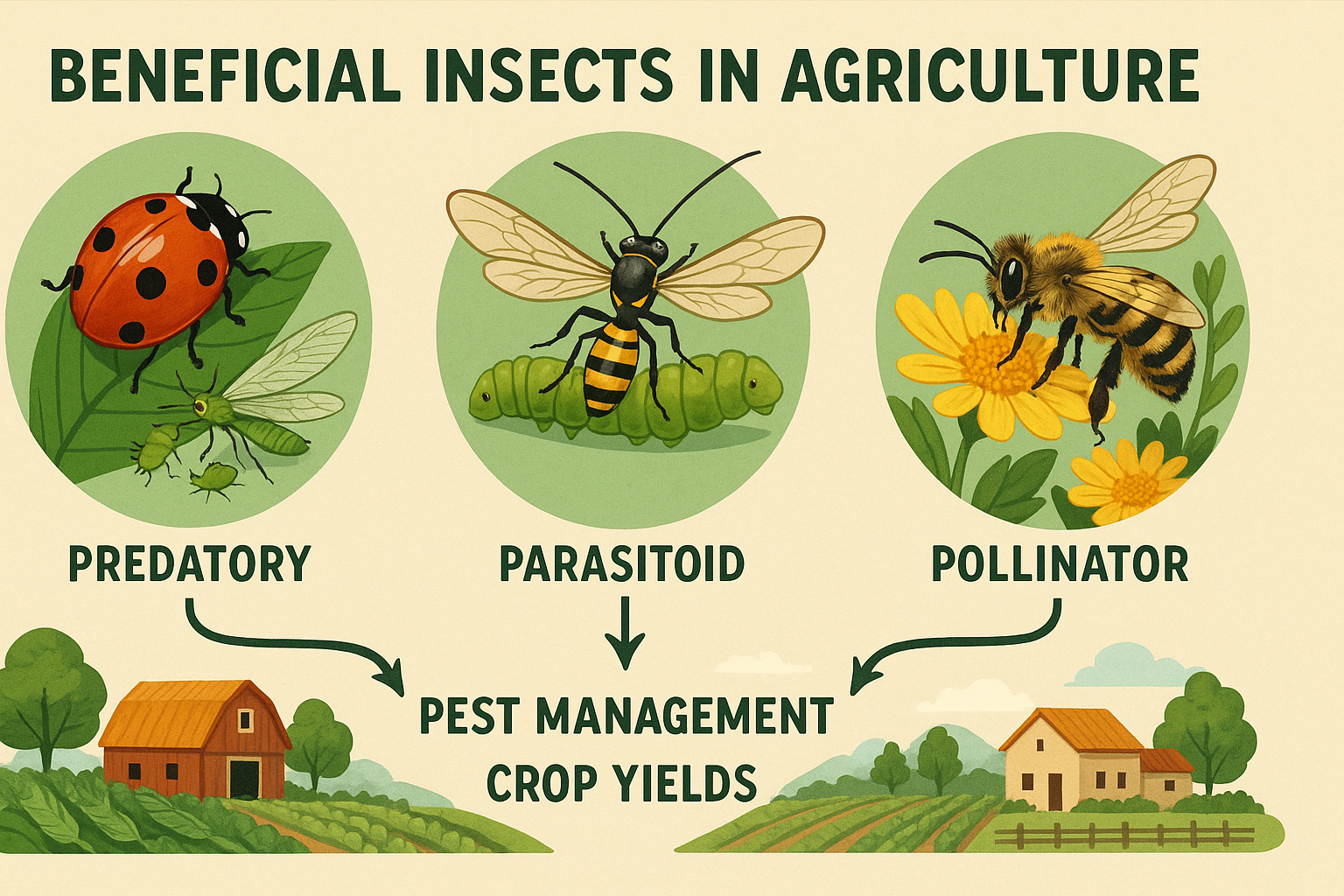
Beneficial insects operate in three distinct roles that directly impact your bottom line, each addressing different aspects of farm productivity and cost management. Understanding these roles helps you recognize opportunities to leverage natural processes instead of fighting against them.
Predatory insects function as your field’s pest control specialists. Ladybugs, lacewings, and predatory beetles consume large numbers of pest insects daily, eliminating problems before they reach economic thresholds. A healthy population of these predators can prevent pest outbreaks that might otherwise require multiple pesticide applications, each costing hundreds of dollars per acre.
What makes predatory insects particularly valuable is their targeting precision. Unlike broad-spectrum pesticides that kill everything in their path, beneficial predators focus specifically on pest species while leaving neutral and beneficial insects unharmed. This selectivity prevents the secondary pest outbreaks that often follow pesticide applications, when pest species recover faster than their natural predators.
Parasitoids represent the most sophisticated pest control available to farmers. These insects lay their eggs inside pest insects, effectively turning each pest into a factory for producing more beneficial insects. Parasitic wasps target specific pest species like aphids and caterpillars, often achieving control rates exceeding 90% in areas where they’re well-established.
The economic advantage of parasitoids lies in their multiplication effect. A single parasitic wasp doesn’t just kill one pest—it produces dozens of offspring that continue the control process. This creates exponential pest reduction without ongoing cost or intervention from the farmer.
Pollinators directly impact yield and quality in ways that translate immediately to revenue. Bees and butterflies are essential for pollinating many crops, directly impacting yields and quality. In crops like tomatoes, peppers, and squash, adequate pollination can mean the difference between a marketable harvest and crop failure.
Beyond yield impacts, proper pollination affects fruit quality characteristics that determine market value. Well-pollinated fruits tend to be larger, more uniform, and have better shelf life than those with inadequate pollination. For farmers selling into premium markets, these quality improvements can justify significantly higher prices.
Decomposer insects work behind the scenes to maintain soil health and nutrient cycling. These insects improve soil health by breaking down organic matter, which is particularly crucial for farmers using organic amendments or those operating aquaponics systems where nutrient cycling efficiency affects overall system performance.
The soil health benefits of beneficial insects compound over time. Better soil structure improves water retention and reduces irrigation needs. Enhanced nutrient cycling reduces fertilizer requirements. Improved soil biology creates more resilient growing conditions that can better handle environmental stresses.
The Profit Champions: Key Beneficial Insects Every Farmer Should Know
Certain beneficial insects provide such significant economic returns that they deserve special attention in farm planning and management decisions. These species have proven track records of reducing costs and improving yields across diverse farming operations.
Ladybugs represent perhaps the most recognizable and economically important beneficial insect for most farmers. A single ladybug can consume up to 50 aphids per day during peak feeding periods, with some species consuming even more. For farmers dealing with aphid pressures that might otherwise require weekly pesticide applications, a healthy ladybug population can eliminate treatment costs entirely.
The lifecycle of ladybugs multiplies their economic impact. Both adult ladybugs and their larvae feed voraciously on soft-bodied pests, providing continuous control throughout the growing season. A single female ladybug can lay 200-1000 eggs during her lifetime, creating multiple generations of pest control within a single growing season.
Ladybugs also serve as an indicator species for overall beneficial insect health in your system. Areas that support thriving ladybug populations typically host diverse communities of other beneficial insects, creating comprehensive natural pest control systems.
Parasitic wasps operate as precision pest control specialists, often targeting specific pest species with remarkable efficiency. These tiny insects—many smaller than a grain of rice—can achieve pest control rates that exceed chemical treatments while producing no resistance issues or environmental concerns.
The economic advantage of parasitic wasps lies in their host specificity and reproductive strategy. Species like Aphidius colemani target specific aphid species, while Trichogramma wasps focus on caterpillar eggs. This targeting means they concentrate their efforts on actual pest species rather than spreading their impact across the entire insect community.
Parasitic wasps also provide season-long control with minimal farmer intervention. Once established, they respond automatically to increases in pest populations, maintaining control without requiring monitoring or treatment decisions from the farmer. This automatic response system can prevent minor pest problems from becoming major economic issues.
Native bees deliver pollination services that directly translate to increased revenue, particularly for farmers growing fruits, vegetables, or seed crops. Unlike honeybees, which can be expensive to rent and may not be available when needed, native bees provide consistent, reliable pollination services when properly supported.
The pollination efficiency of native bees often exceeds that of honeybees for many crops. Bumble bees, for example, can pollinate tomatoes through “buzz pollination” that honeybees cannot perform, leading to better fruit set and higher yields. Mason bees are extremely efficient pollinators of fruit trees, often providing complete pollination with much smaller populations than would be required if using honeybees.
Native bees also provide insurance against honeybee colony problems. Farmers depending entirely on rented honeybee colonies face significant risks from colony collapse, mite infestations, or simple availability issues during critical pollination periods. Diverse native bee populations provide backup pollination services that ensure crop success even when honeybee services are compromised.
Ground beetles work the night shift, hunting down pest insects that many other beneficial species miss. These beetles target cutworms, root maggots, and other soil-dwelling pests that can cause significant crop damage, particularly in young plants where losses have the greatest economic impact.
The pest control provided by ground beetles often goes unnoticed because they work at night and target pests that operate below ground or during dark hours. However, their economic contribution can be substantial, particularly in preventing the root damage that can kill young plants and force expensive replanting.
Ground beetles also serve as cleanup crews, consuming pest insects killed by other beneficial species and preventing the buildup of pest populations that might otherwise resurge. This cleanup function helps maintain the effectiveness of other biological control agents.
Proven Management Strategies That Work in Real-World Farming
Successful beneficial insect management requires specific practices that have been proven effective across diverse farming operations. These strategies focus on creating conditions that support beneficial insects while maintaining productive agricultural systems.
Plant diversity forms the foundation of effective beneficial insect management. Incorporating flowering plants like dill and fennel attracts beneficial insects by providing nectar and pollen sources that sustain adult beneficial insects throughout the growing season. This isn’t about creating wildflower gardens—it’s about strategic placement of specific plants that maximize beneficial insect populations while minimizing competition with crops.
The timing and placement of these plantings matter significantly for their effectiveness. Flowering plants need to bloom throughout the growing season to provide continuous support for beneficial insects. This might involve succession plantings of annual flowers or selecting perennial species with extended bloom periods.
Edge plantings often provide the best return on investment for beneficial insect habitat. Field margins, fence rows, and headlands can be planted with beneficial insect plants without reducing crop production area. These edge habitats also serve as reservoirs that allow beneficial insects to survive pesticide applications to crops and recolonize treated areas quickly.
Pesticide management practices directly determine whether beneficial insect populations can survive and thrive in agricultural systems. Avoiding broad-spectrum insecticides preserves beneficial populations that might take weeks or months to recover after treatment. This doesn’t necessarily mean eliminating pesticides entirely, but rather using them strategically in ways that minimize impact on beneficial species.
Selective pesticides that target specific pest groups while leaving beneficial insects unharmed offer one approach to maintaining both pest control and beneficial insect populations. Bt-based products, for example, target caterpillars while leaving most beneficial insects unaffected.
Timing of pesticide applications can also minimize impacts on beneficial insects. Applications during early morning or late evening hours when beneficial insects are less active reduce direct exposure. Avoiding applications during flowering periods protects pollinators and other beneficial insects that visit flowers.
Spot treatments rather than broadcast applications limit beneficial insect exposure to areas where pest problems actually exist. This approach requires more monitoring and targeted application equipment, but it can maintain beneficial insect populations in untreated areas that serve as sources for recolonization.
Habitat creation extends beyond flowering plants to include physical structures that beneficial insects need for shelter, overwintering, and reproduction. Hedgerows and field margins provide refuge for beneficial insects during adverse weather, pesticide applications, or periods when crops don’t provide adequate habitat.
Insect hotels and artificial nesting structures can increase populations of beneficial insects like mason bees and parasitic wasps. These structures are particularly valuable in agricultural areas where natural habitat has been limited by intensive farming practices.
Maintaining some areas of undisturbed ground provides overwintering habitat for beneficial insects that spend part of their lifecycle in soil or plant debris. This might involve leaving strip areas unmowed until spring or maintaining permanent habitat areas near production fields.
Cover crops serve dual purposes in beneficial insect management, providing both habitat and soil health benefits. Cover crop species that flower before termination provide nectar and pollen for beneficial insects, while the diverse plant community supports a broader range of beneficial species than monoculture cash crops.

Success Stories: Farms That Made the Switch and Boosted Their Profits
Real-world examples demonstrate how beneficial insect management translates into improved farm profitability and sustainability. These case studies show the practical implementation and economic results of strategic beneficial insect programs.
EarthDance Urban Farm implemented one of the most comprehensive beneficial insect programs documented in small-scale farming. The farm implemented native flower plots, reducing organic sprays and improving yields. Their approach involved dedicating approximately 5% of their production area to beneficial insect habitat, with flowers strategically placed throughout their growing areas.
The results exceeded expectations in multiple areas. Pesticide costs dropped by 60% within two growing seasons as beneficial insects took over pest control functions. Yields increased by 15-20% in crops requiring pollination, particularly in their fruit and vegetable production. Perhaps most significantly, crop quality improvements allowed them to command premium prices in farmers markets where customers valued their reduced-input production methods.
EarthDance’s program also demonstrated the importance of patience and persistence in beneficial insect management. The first year showed modest improvements, but the second and third years delivered the dramatic results as beneficial insect populations established and multiplied. This timeline highlights the need for long-term thinking in beneficial insect programs.
The Iowa Farm Network represents a larger-scale implementation of beneficial insect principles across multiple farming operations. The network demonstrated that diverse habitats improve soil health and reduce chemical use. Participating farms implemented habitat strips, reduced pesticide applications, and monitored beneficial insect populations across thousands of acres.
Results from the network showed consistent patterns across different farm types and sizes. Farms with the most diverse beneficial insect habitat showed the greatest reductions in pest pressure and pesticide use. The economic benefits varied by crop type, but most participants saw net cost savings within three years of program implementation.
The network also documented some unexpected benefits of beneficial insect programs. Farms with extensive beneficial insect habitat experienced less crop damage from weather events, possibly due to improved ecosystem resilience. Wildlife viewing and agritourism opportunities emerged as additional revenue sources for some participating farms.
One participating corn and soybean operation reduced insecticide applications by 40% while maintaining yields equal to or better than pre-program levels. The farmer attributed success to establishing habitat strips that supported beneficial insects throughout the rotation cycle, providing continuous pest control services.
A vegetable farmer in the network eliminated most insecticide applications on tomatoes and peppers by establishing parasitic wasp populations and supporting them with flowering habitat. The reduction in pesticide residues allowed access to premium markets that required minimal or no pesticide use, increasing net returns despite slightly higher production costs.
Smaller-scale examples provide insights for farmers just starting beneficial insect programs. A two-acre market garden operation reduced pesticide costs from $400 per acre to less than $100 per acre over three seasons by establishing pollinator habitat and releasing purchased beneficial insects during critical periods.
The market garden example demonstrates that beneficial insect management can work even on very small operations where habitat space is limited. The farmer used container plantings and vertical growing structures to maximize flowering habitat within a small footprint, proving that space constraints don’t eliminate beneficial insect opportunities.
Practical Tools and Resources for Getting Started
Implementing beneficial insect management requires specific tools and resources that have been proven effective in commercial farming operations. These resources help farmers transition from theoretical knowledge to practical implementation with measurable results.
Native plantings form the foundation of most successful beneficial insect programs. Wildflowers and shrubs provide nectar and pollen that sustain beneficial insects throughout the growing season. The key is selecting species that bloom throughout the period when beneficial insects are active, creating continuous food sources rather than sporadic availability.
Regional adaptation matters critically in plant selection. Native plants adapted to local growing conditions require less water, fertilizer, and maintenance than exotic species while providing better habitat for local beneficial insect species. State extension services and native plant societies provide region-specific recommendations for beneficial insect plants.
Seed mixes specifically designed for beneficial insects take the guesswork out of plant selection while ensuring proper timing and spacing. These mixes typically include both annual and perennial species that provide season-long bloom and establish quickly from seed.
Monitoring tools help farmers track beneficial insect populations and measure program effectiveness. Yellow traps attract beneficial insects for monitoring and control, providing data on population levels and seasonal activity patterns. This information guides management decisions about when to implement control measures or when beneficial insects are providing adequate pest control.
Sticky traps designed for specific beneficial insects allow targeted monitoring of key species. Pheromone traps can monitor parasitic wasp populations, while specialized traps track predatory mite and beetle populations. Regular monitoring data helps farmers understand which beneficial insects are present and active in their systems.
Photo identification guides help farmers recognize beneficial insects in the field and distinguish them from pest species. Many beneficial insects are small or inconspicuous, making field identification challenging without proper resources. Digital identification apps provide instant access to identification information with photos and behavioral descriptions.
Integrated Pest Management (IPM) practices provide the framework for combining beneficial insects with other pest control methods. IPM practices minimize pesticide use and monitor pest populations, creating conditions where beneficial insects can thrive while maintaining effective pest control.
IPM monitoring protocols help farmers make informed decisions about when pest control interventions are needed and when beneficial insects are providing adequate control. Economic thresholds specific to different crops guide decisions about whether pest levels justify treatment or whether natural control is sufficient.
Scouting techniques designed for IPM programs help farmers monitor both pest and beneficial insect populations simultaneously. Understanding the ratios between pest and beneficial insects provides insight into whether biological control is likely to be effective or whether additional interventions might be needed.
Record-keeping systems designed for beneficial insect programs track population levels, pest control effectiveness, and economic outcomes over multiple seasons. This data helps farmers refine their programs and provides documentation of results for potential cost-sharing programs or certification requirements.
Commercial beneficial insect suppliers provide options for augmenting natural populations during critical periods or in systems where habitat establishment is still developing. While purchased beneficial insects cannot replace habitat-based programs, they can provide targeted control during pest outbreaks or boost populations in new systems.
Timing of beneficial insect releases requires coordination with pest monitoring and environmental conditions. Suppliers typically provide guidance on release timing and follow-up monitoring to ensure establishment and effectiveness.
Cost-effectiveness of purchased beneficial insects varies significantly by species and situation. Some species like parasitic wasps provide excellent return on investment in greenhouse operations, while others are more cost-effective when used as part of broader habitat-based programs.
Making the Economic Case: Why Beneficial Bugs Pay
The economic argument for beneficial insect management becomes compelling when considered over multiple growing seasons rather than single-year comparisons. Initial establishment costs are typically recovered within two to three years, followed by ongoing cost savings and yield improvements that continue indefinitely.
Direct cost savings from reduced pesticide use provide the most immediate and measurable economic benefits. Farms implementing comprehensive beneficial insect programs typically see 40-80% reductions in insecticide costs within three years of program establishment. For operations spending $200-500 per acre annually on insecticides, this translates to significant cost savings.
Indirect cost savings often exceed direct pesticide cost reductions over time. Reduced pesticide resistance problems eliminate the need for increasingly expensive pest control products. Fewer pesticide applications reduce fuel, labor, and equipment wear costs. Better crop quality from reduced pesticide stress can justify premium pricing in appropriate markets.
Yield improvements from better pollination services provide additional revenue that can be substantial for appropriate crops. Fruit and vegetable operations often see 10-30% yield increases from improved native bee populations, translating directly to increased gross income.
The long-term economic benefits of beneficial insect management continue improving over time as populations establish and habitat matures. Unlike pesticides, which face increasing resistance and regulatory restrictions, beneficial insect programs become more effective and economical over time.
For small commercial farmers operating on limited budgets, beneficial insect management offers a path to reduced input costs and improved profitability that aligns with market trends toward reduced-input production. The farmers who master these systems early position themselves for long-term competitive advantages in evolving agricultural markets.