
When you wake up to find your fish floating belly-up or covered in mysterious white spots, every minute counts. For small commercial farmers running aquaculture operations, a disease outbreak isn’t just a setback—it’s a potential business killer that can wipe out months of investment in a matter of days.
The harsh reality is that fish diseases don’t announce themselves with advance warning. They strike fast, spread faster, and can devastate an entire system before you’ve even identified the problem. But here’s what separates successful aquaculture operations from those that fail: understanding the enemy before it arrives at your door.
Five diseases account for the majority of catastrophic losses in small-scale aquaculture operations. Each has its own signature, its own timeline, and its own prevention strategy. More importantly, each represents a different type of economic threat to your operation.
The White Death: Ichthyophthirius multifiliis (Ich)
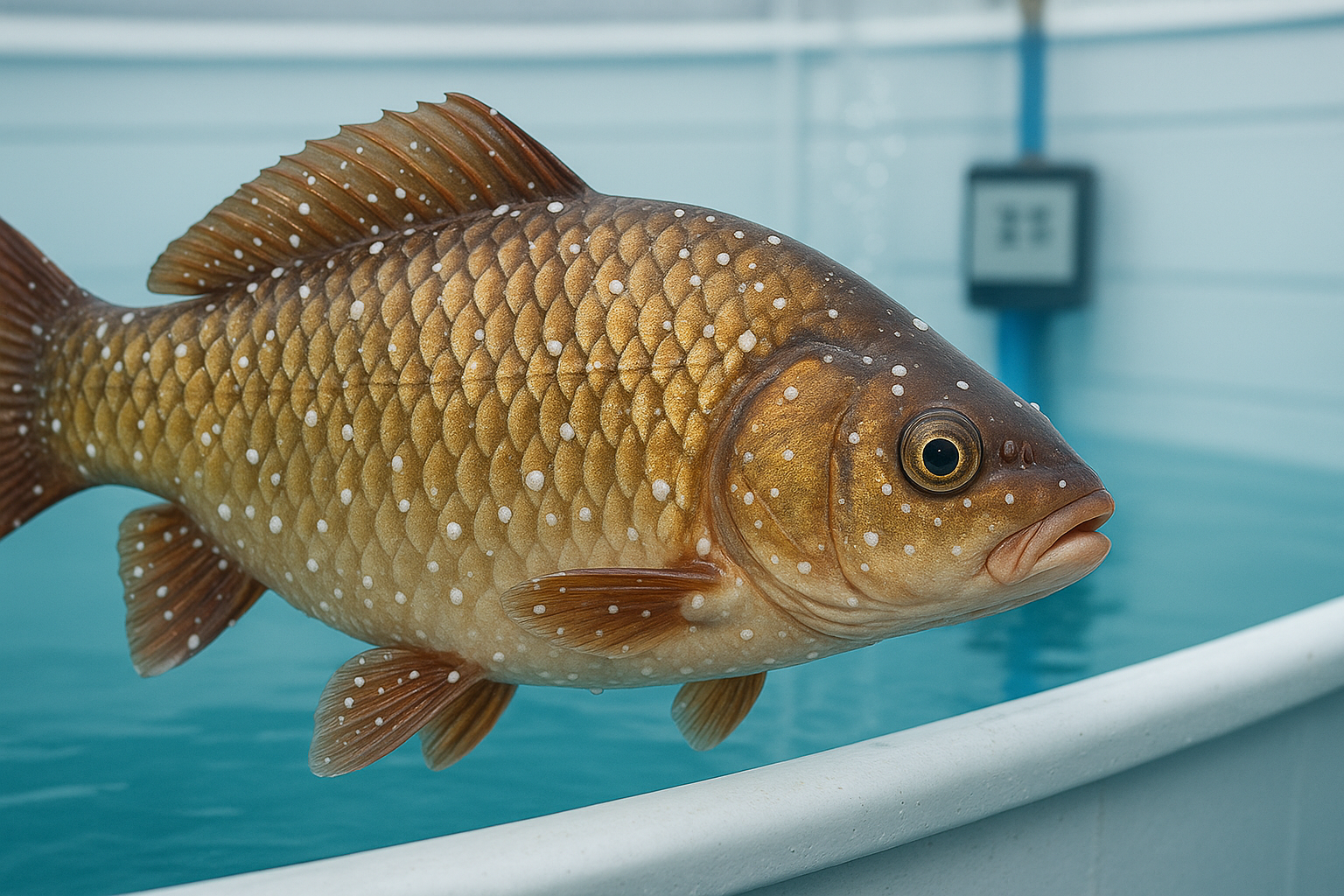
Every aquaculture farmer has heard the horror stories about Ich, and for good reason. When this parasitic protozoan takes hold, it transforms healthy fish into white-spotted, lethargic shadows of their former selves. The parasite burrows into fish tissue, creating the characteristic white cysts that give the disease its common name: white spot disease.
The symptoms are unmistakable once you know what to look for. White spots appear on skin, fins, and gills, often starting as tiny pinpricks before spreading across the fish’s body. Affected fish become lethargic, lose their appetite, and may scrape against surfaces in an attempt to relieve the irritation.
What makes Ich particularly dangerous for commercial operations is its lifecycle. The parasite can survive in your system even when no visible symptoms are present, waiting for the right conditions to explode into a full outbreak. Temperature fluctuations, poor water quality, or stressed fish create the perfect storm for Ich to multiply rapidly.
Prevention centers on three core strategies: rigorous quarantine protocols for new fish, maintaining pristine tank conditions, and careful temperature management. Every fish entering your system should spend at least two weeks in quarantine, giving you time to spot problems before they spread to your main population.
The economic impact of Ich goes beyond immediate fish losses. High mortality can devastate cash flow, but the prevention measures pay for themselves many times over. A quarantine system might cost a few hundred dollars to set up, but it can save thousands in lost stock.
Temperature management deserves special attention because it’s often overlooked. Ich thrives in temperature fluctuations, so maintaining stable conditions isn’t just about fish comfort—it’s about disease prevention. This is where monitoring systems become invaluable, alerting you to temperature swings before they create disease conditions.
The Hemorrhaging Killer: Viral Hemorrhagic Septicemia (VHS)
Viral Hemorrhagic Septicemia represents every aquaculture farmer’s nightmare: a viral disease with no cure that can kill 80-100% of affected fish. The symptoms are as dramatic as they are deadly: hemorrhaging throughout the body, bulging eyes, and erratic swimming patterns that signal internal bleeding.
Unlike bacterial infections that might respond to treatment, VHS is viral, which means once it’s in your system, you’re fighting for containment rather than cure. The virus attacks the fish’s circulatory system, causing the internal bleeding that gives the disease its name. Fish may exhibit darkening skin, bulging eyes, and erratic swimming before succumbing to the infection.
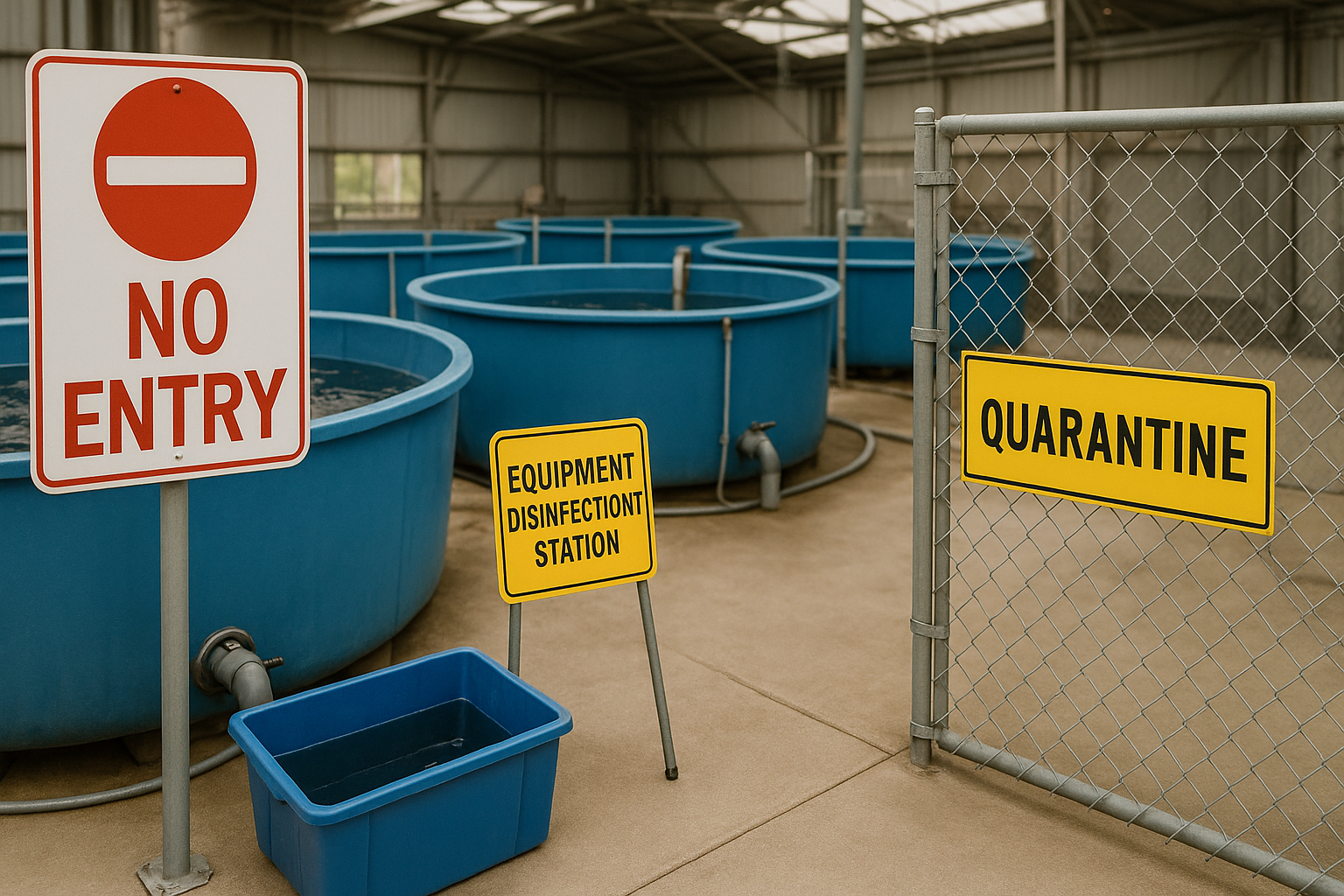
Prevention becomes absolutely critical because treatment options are so limited. Biosecurity measures form the first line of defense, starting with strict protocols about what enters your facility. This means disinfecting equipment, controlling access to your operation, and being extremely cautious about water sources.
Fish movement restrictions are another crucial element. VHS can spread through contaminated water, equipment, or even on the boots of someone who’s been near infected water. Avoiding unnecessary fish movement and maintaining strict quarantine protocols can prevent introduction of the virus to your system.
The economic implications extend far beyond fish losses. VHS is a reportable disease in many jurisdictions, meaning an outbreak triggers regulatory involvement, potential quarantine of your entire operation, and compliance costs that can be staggering for small operations. Some farmers have found their operations shut down for months while regulators work to contain the spread.
Monitoring becomes your early warning system. Since treatment options are limited, catching VHS early allows you to isolate affected areas and prevent total system contamination. Daily observation routines aren’t just good practice—they’re essential business protection.
The Silent Spreader: Aeromonas Infections
Aeromonas bacteria are everywhere in aquatic environments, which makes them particularly insidious for aquaculture operations. These bacteria normally exist in balance with healthy fish, but when conditions deteriorate or fish become stressed, Aeromonas transforms from a harmless resident into a deadly pathogen.
The symptoms can be subtle at first: small skin ulcers, minor hemorrhages, or slight changes in fish behavior. But this gradual progression can fool farmers into thinking the problem isn’t serious until it’s too late. As the infection advances, ulcers expand, hemorrhaging becomes more pronounced, and fish develop the telltale lethargy that signals systemic infection.
What makes Aeromonas particularly challenging is that the bacteria thrive in conditions that might seem acceptable for fish health. Poor water quality, overcrowding, handling stress, or even seasonal temperature changes can trigger bacterial overgrowth. Fresh insights into Aeromonas hydrophila reveal that the bacteria are opportunistic, striking fish when their immune systems are compromised.
Prevention strategies focus heavily on maintaining optimal water quality and minimizing fish stress. Water quality maintenance, stress reduction, and quarantine protocols for new stock form the foundation of Aeromonas prevention. This means consistent monitoring of ammonia, nitrite, and dissolved oxygen levels, along with regular water changes to maintain system health.
Stress reduction might seem like a luxury, but it’s actually critical disease prevention. Overcrowding, sudden temperature changes, poor handling practices, or inadequate nutrition all compromise fish immunity, creating opportunities for Aeromonas to gain a foothold. Simple management changes—like maintaining proper stocking densities and implementing gentle handling procedures—can dramatically reduce infection risk.
Economic impact includes both increased mortality and treatment costs, but the hidden costs might be even more significant. Aeromonas infections often become chronic, reducing fish growth rates and feed conversion efficiency. Fish that survive the infection may never reach their full market potential, representing lost revenue that might not be immediately obvious.
The prevention investment pays dividends beyond disease control. Water quality systems that prevent Aeromonas also improve overall fish performance, leading to better growth rates, higher survival, and improved feed conversion ratios.
The System Destroyer: Columnaris Disease
Columnaris disease attacks where fish are most vulnerable: their gills and fins. Caused by the bacterium Flavobacterium columnare, this disease can progress from barely noticeable to system-wide devastation in a matter of days, particularly in warm water conditions.
The symptoms are distinctive and alarming: gill rot that appears as white or gray patches, fin rot that seems to eat away at tissue, and discoloration that spreads across affected areas. Fish may also develop cottony growths on their skin or fins, giving the disease one of its alternative names: cotton wool disease.
What makes Columnaris particularly dangerous for commercial operations is how quickly it spreads through a population. The bacteria thrive in warm water with high organic loads—conditions that can develop rapidly in intensive aquaculture systems. High mortality rates are common, especially when the disease affects gill tissue and compromises the fish’s ability to extract oxygen from water.
Temperature plays a crucial role in Columnaris progression. The bacteria multiply rapidly in warm water, which means summer months or heated systems face higher risk. However, sudden temperature changes can also trigger outbreaks by stressing fish and creating favorable conditions for bacterial growth.
Prevention requires regular water changes, quarantine protocols, and avoiding overcrowding. Water changes aren’t just about maintaining chemistry—they’re about removing the organic load that feeds Columnaris bacteria. Regular partial water changes prevent the buildup of dissolved organics that create ideal conditions for bacterial overgrowth.
Overcrowding deserves special attention because it creates a perfect storm for Columnaris. High fish density increases organic loading, reduces dissolved oxygen levels, elevates stress hormones, and provides more opportunities for disease transmission. Maintaining appropriate stocking densities might reduce immediate revenue per tank, but it protects the entire investment.
The economic impact extends beyond mortality losses. High mortality and treatment costs can be severe, but Columnaris also damages fish that survive, reducing their market value. Gill damage can permanently impair fish performance, while fin and skin damage affects appearance and marketability.
The Crustacean Killer: White Spot Syndrome Virus (WSSV)
For farmers raising shrimp or other crustaceans, White Spot Syndrome Virus represents the ultimate threat. This viral disease can kill 100% of affected populations within days, and there’s virtually no treatment once it takes hold.
The symptoms include white spots and lethargy, but the progression is devastatingly fast. Affected crustaceans may show reduced feeding, lethargy, and the characteristic white spots on their shells before succumbing to the infection. High mortality rates are typical, often approaching 100% in susceptible populations.
WSSV spreads through multiple pathways: contaminated water, infected animals, contaminated equipment, and even through feed containing infected crustacean products. This makes biosecurity absolutely critical for prevention, as the virus can enter your system through seemingly innocent routes.
Biosecurity and environmental control form the foundation of WSSV prevention. This means controlling what enters your facility, from the water source to the feed supply. Water treatment systems that eliminate potential viral contamination become essential infrastructure, not optional upgrades.
The virus can survive in frozen products, dried feeds, and even in water for extended periods. This persistence means that biosecurity protocols must be maintained consistently, not just during active production periods. Equipment disinfection, personnel hygiene, and feed sourcing all become critical control points.
Vaccination research is ongoing, offering hope for future prevention strategies, but current prevention relies entirely on keeping the virus out of your system. This makes WSSV prevention more about system design and operational protocols than about treatment capabilities.
Economic impact includes high mortality and operational costs, but the business destruction can be total. Unlike bacterial diseases where some fish might survive, WSSV outbreaks often result in complete stock loss. Recovery means starting over entirely, including the time and cost of restocking and rebuilding market relationships.
The Prevention Investment: Why Early Action Pays
Across all five diseases, a pattern emerges: prevention costs are modest compared to outbreak consequences. Whether it’s maintaining quarantine systems for Ich, implementing biosecurity for VHS, managing water quality for Aeromonas, controlling stocking density for Columnaris, or establishing strict protocols for WSSV, the prevention investment pays for itself many times over.
Modern monitoring systems have transformed disease prevention from reactive crisis management to proactive system optimization. Parameters like temperature, dissolved oxygen, pH, and ammonia levels provide early warning signs of conditions that favor disease development. When these systems are integrated with mobile alerts, farmers can respond to developing problems before they become crises.
The key insight is that disease prevention isn’t just about fish health—it’s about business sustainability. Each of these five diseases represents a different type of business risk, from the gradual erosion of Aeromonas infections to the catastrophic destruction of WSSV outbreaks. Understanding these risks allows farmers to prioritize prevention investments based on their specific operation and risk tolerance.
For small commercial farmers operating on thin margins, disease prevention might seem like an expensive luxury. But the alternative—rebuilding after a catastrophic loss—is far more expensive and often marks the end of the farming operation entirely. The farmers who succeed long-term are those who invest in prevention systems early and maintain them consistently.
The five diseases covered here represent the most significant threats to aquaculture operations, but they’re also the most preventable with proper planning and consistent execution. Success isn’t about perfection—it’s about creating systems robust enough to prevent catastrophic losses while maintaining the profitability that keeps the operation sustainable.