
In a world where 2 billion people lack access to safe drinking water and 828 million face hunger, aquaponics should be revolutionizing global food production. This innovative system uses 90% less water than traditional agriculture, produces both fish and vegetables simultaneously, and can operate in areas where soil farming is impossible. Yet despite decades of research and hundreds of millions in development funding, aquaponics remains largely confined to demonstration projects and niche applications.
The disconnect between aquaponics’ potential and its actual adoption reveals fundamental barriers that extend far beyond technical challenges. While the technology works brilliantly in controlled environments, its path to widespread implementation has been blocked by economic realities, operational complexity, and knowledge gaps that traditional agricultural extension systems are ill-equipped to address.
However, emerging evidence suggests that certain contexts—water-scarce regions, urban food deserts, and humanitarian crisis zones—may provide the conditions necessary for aquaponics to overcome these barriers and deliver on its transformative promise. Understanding both the obstacles and the opportunities provides crucial insights into where this technology will eventually find its place in global food systems.
The Economic Reality: Why Numbers Don’t Add Up for Most Farmers
The primary barrier to aquaponics adoption isn’t technical—it’s economic. Despite impressive productivity metrics and environmental benefits, the financial arithmetic of aquaponics often fails to work for small and medium-scale farmers operating in competitive agricultural markets.
Initial Investment Challenges
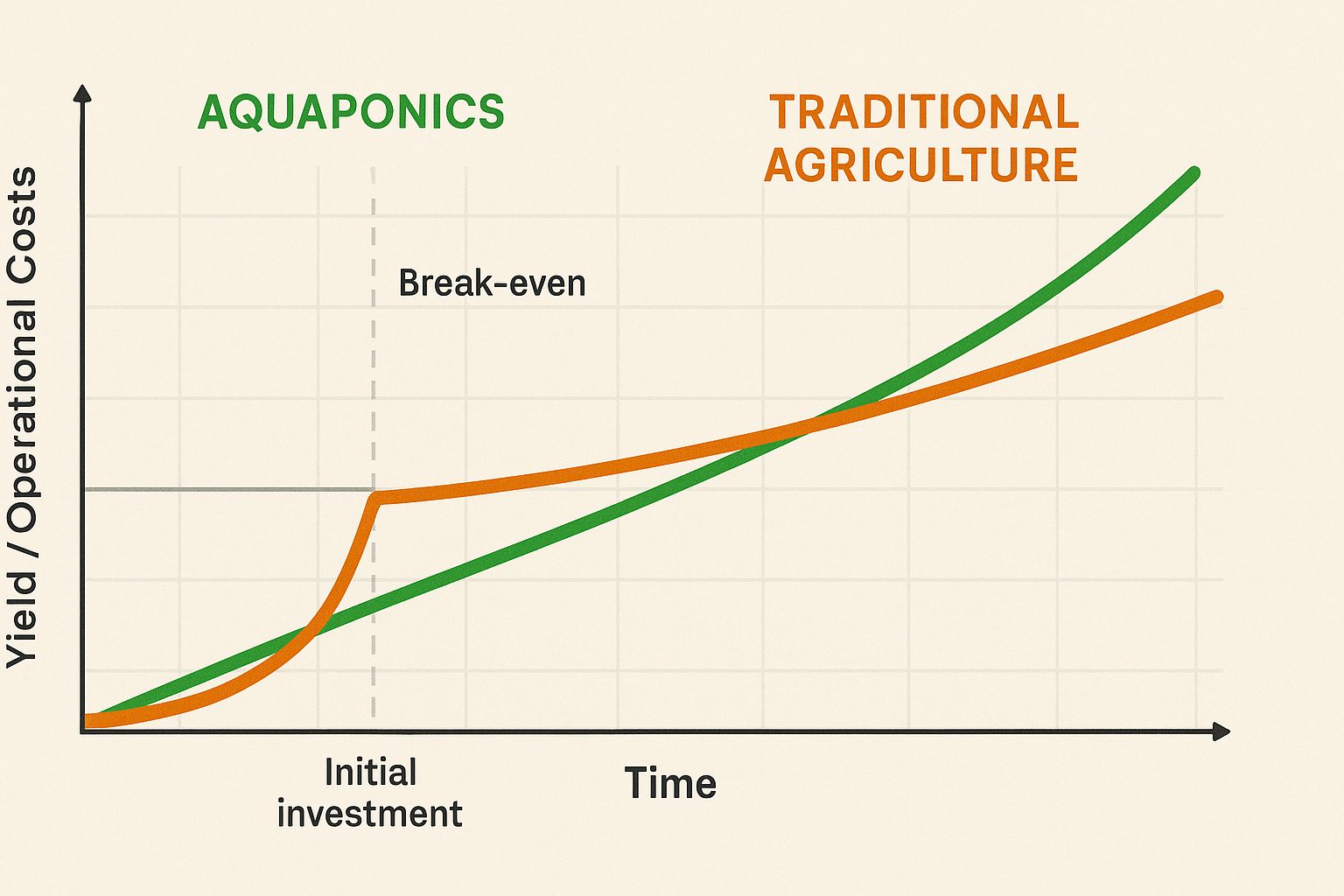
High initial setup and operational costs represent significant barriers for small farmers attempting to adopt aquaponics systems. A modest commercial aquaponics operation requires $15,000-50,000 in initial investment, compared to $2,000-5,000 for equivalent traditional greenhouse production.
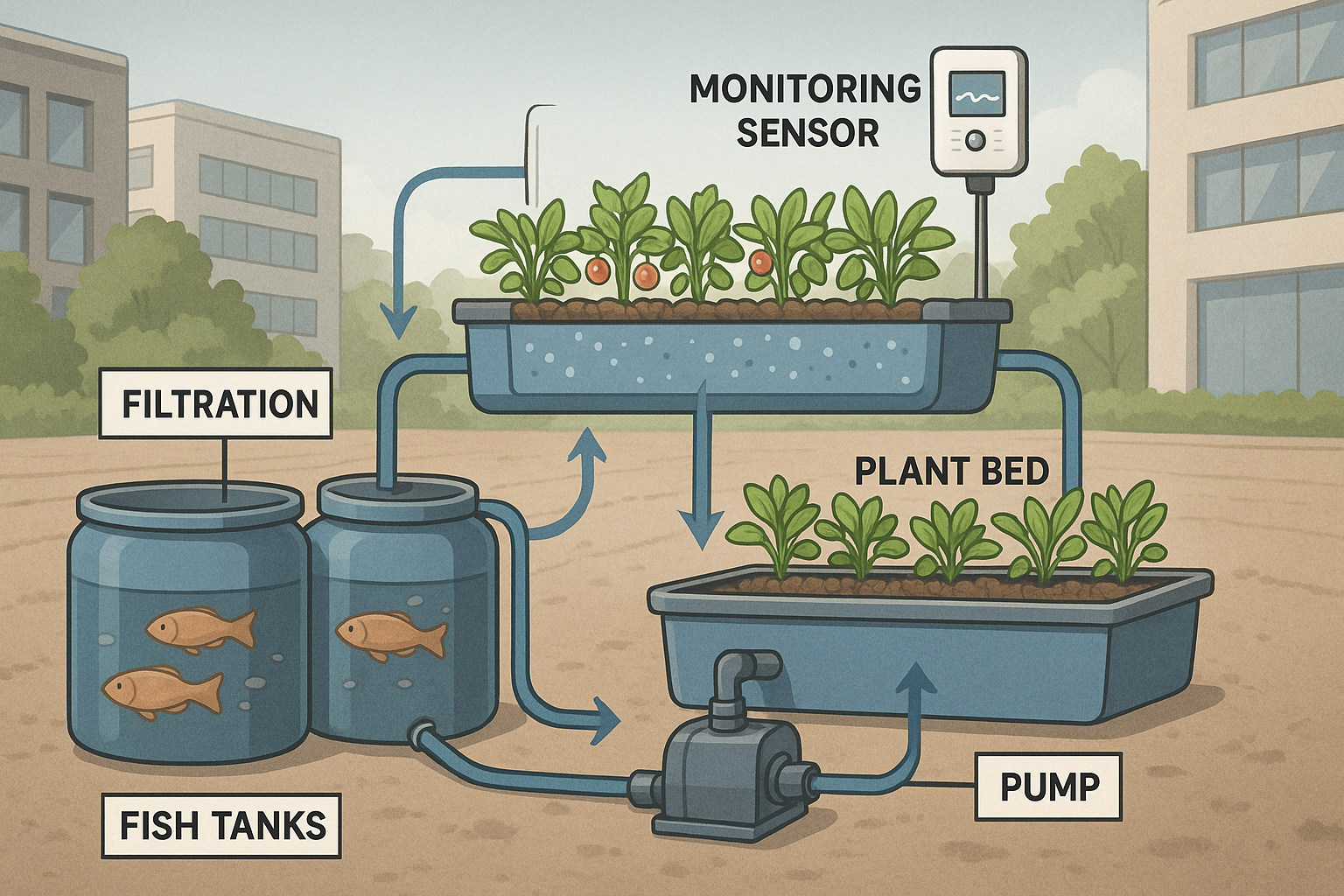
The capital intensity stems from aquaponics requiring complete systems before any production begins. Unlike traditional farming where equipment can be acquired gradually, aquaponics demands tanks, pumps, filtration, monitoring equipment, and climate control as integrated components. This creates financing challenges that many agricultural lenders struggle to evaluate.
Equipment and ongoing expenses for fish feed, nutrients, and energy create operational cost structures that often exceed revenue potential. Energy costs alone can represent 20-30% of operational expenses in climate-controlled systems, far exceeding energy requirements in traditional agriculture.
The return-on-investment timeline for aquaponics operations typically extends 12-24 months before achieving full productivity, compared to single-season returns in traditional farming. This extended payback period challenges farmers operating on thin margins who cannot absorb lengthy periods without positive cash flow.
Market Price Pressures
Market prices for aquaponics products rarely reflect the additional production costs, creating profitability challenges even for well-managed operations. While consumers express interest in sustainably produced food, willingness to pay sufficient premiums remains limited in most markets.
Competition from low-cost conventional agriculture creates pricing pressure that aquaponics operations struggle to match. In many regions, conventionally produced lettuce retails for $1-2 per pound, while aquaponics lettuce requires $3-4 per pound to achieve profitability.
Seasonal price variations affect aquaponics operations differently than traditional farming. The inability to scale production up and down seasonally creates mismatches between production costs and market prices that traditional farmers can avoid through seasonal planning.
Hidden Operational Costs
Specialized labor requirements in aquaponics often exceed initial projections. Managing fish health, water chemistry, and plant nutrition simultaneously requires either extensive training for existing staff or hiring specialized personnel, increasing labor costs significantly.
Maintenance and replacement costs for pumps, UV sterilizers, and monitoring equipment create ongoing financial pressures. Unlike traditional farm equipment that might operate for decades with minimal maintenance, aquaponics components typically require replacement every 3-7 years.
Feed costs for fish represent 15-25% of operational expenses—a cost category that doesn’t exist in traditional vegetable production. Quality fish feed costs $1-3 per pound, and poor feed quality can compromise entire system performance, making feed sourcing and cost management critical factors.
The Complexity Challenge: When Simple Farming Becomes Rocket Science
Aquaponics requires managing multiple interconnected biological systems simultaneously, creating operational complexity that exceeds most farmers’ current expertise and comfort levels.
Interdisciplinary Knowledge Requirements
Complex system management requiring expertise in maintaining balanced ecosystems combines fish health, plant nutrition, and bacterial processes. This interdisciplinary requirement challenges farmers accustomed to specializing in either crop or livestock production.
The biological relationships in aquaponics create cascading effects where problems in one area quickly impact the entire system. Fish health affects waste production, which affects bacterial processing, which affects plant nutrition, which affects water quality—understanding these interconnections requires systems thinking that many farmers haven’t developed.
Troubleshooting aquaponics problems requires simultaneous consideration of multiple variables. A plant nutrition problem might stem from fish health issues, bacterial imbalances, or water chemistry problems, making diagnosis and treatment far more complex than in traditional agriculture.
Technical Knowledge Barriers
Water quality management represents one of the most challenging aspects of aquaponics operation. pH, dissolved oxygen, ammonia, nitrite, and nitrate levels must be monitored and adjusted regularly—knowledge and skills that most farmers lack.
Disease prevention and treatment in aquaponics must consider impacts on all system components. Treatments safe for fish might harm beneficial bacteria, while plant treatments might affect fish health, creating constraint complexity that doesn’t exist in traditional farming.
System balancing requires understanding relationships between fish biomass, feeding rates, plant uptake, and bacterial capacity. Miscalculating these relationships can lead to system crashes that destroy both fish populations and crop cycles.
Technology Integration Challenges
Modern aquaponics operations increasingly rely on sensors, controllers, and automated systems that require technical skills differing significantly from traditional farming knowledge. Data interpretation and system optimization require understanding complex relationships between multiple variables.
Maintenance and repair of specialized equipment requires technical skills or access to specialized service providers. Unlike traditional farm equipment that local mechanics can often service, aquaponics equipment may require manufacturer support or specialized technicians.
The Education Gap: Why Knowledge Transfer Fails
The interdisciplinary nature of aquaponics creates unique educational challenges that traditional agricultural extension systems are poorly equipped to address.
Inadequate Training Infrastructure
Farmers need comprehensive training to understand biological cycles and technical aspects of aquaponics systems. However, existing agricultural education programs rarely integrate aquaculture, hydroponics, and systems management into comprehensive curricula.
University extension programs typically focus on either crop production or livestock management, but rarely provide the integrated knowledge that aquaponics requires. The few specialized aquaponics programs often emphasize research over practical commercial application.
Hands-on training opportunities remain limited due to the small number of operating commercial facilities. Unlike traditional agriculture where student farmers can gain experience on countless operations, aquaponics trainees have few opportunities for apprenticeships or practical learning.
Cultural and Social Barriers
Risk aversion in farming communities often prevents adoption of technologies requiring significant upfront investment and learning curves. Farmers facing economic pressure may be unable to risk their livelihoods on unfamiliar technologies, regardless of potential benefits.
Cultural preferences for traditional farming methods create resistance to aquaponics adoption in communities where farming practices are tied to cultural identity and traditional knowledge systems. The radical departure from soil-based agriculture can be difficult for traditional farmers to accept.
Social acceptance of aquaponics products requires consumer education about food safety and quality. In communities unfamiliar with fish and vegetable production in integrated systems, market acceptance may be limited regardless of product quality.
Information Quality and Access
Information reliability creates significant challenges for potential aquaponics adopters. The internet contains vast amounts of aquaponics information, but distinguishing between research-based guidance and promotional material requires expertise that beginners lack.
Language barriers limit access to quality technical information in many regions where aquaponics could provide significant benefits. Most technical resources exist in English, while local language materials are often limited or of questionable quality.
Local adaptation requirements mean that general aquaponics knowledge must be modified for specific climates, markets, and cultural contexts. Generic information may not address the specific challenges present in different regions, limiting its practical value.
Promise Zones: Where Aquaponics Overcomes the Barriers
Despite significant obstacles to widespread adoption, certain environments and applications create conditions where aquaponics’ advantages outweigh its challenges.
Arid Regions: Water Scarcity as Economic Driver
Aquaponics’ water efficiency makes it ideal for water-scarce areas, using up to 90% less water than traditional agriculture. In regions where water costs $5-15 per thousand gallons or where water access is severely limited, this efficiency creates compelling economic advantages.
The Middle East, North Africa, and southwestern United States represent promising markets where water scarcity drives demand for efficient production methods. In these regions, aquaponics’ water conservation can justify higher initial costs through operational savings.
Desert regions with abundant solar energy but limited water can support aquaponics operations powered by renewable energy. The combination of water efficiency and solar integration creates sustainable systems that would be impossible with traditional agriculture.
Government incentives for water conservation in arid regions often provide subsidies or tax credits that improve aquaponics economics. These policy supports can bridge the gap between aquaponics costs and traditional agriculture economics.
Urban Food Deserts: Premium Markets and Social Impact
Urban integration of aquaponics can utilize unused spaces like rooftops while providing local sources of fresh produce. Food deserts—areas lacking access to affordable, nutritious food—create unique market conditions where aquaponics can thrive.
Urban real estate economics often favor intensive production methods that maximize food output per square foot. While aquaponics equipment costs may be high, the value of urban land makes intensive production economically viable.
Premium pricing for locally produced food in urban markets can justify aquaponics production costs. Urban consumers often pay 50-100% premiums for fresh, locally grown produce, particularly when environmental and social benefits are clearly communicated.
Community development benefits from urban aquaponics attract funding from foundations and social impact investors. The combination of food security, environmental sustainability, and community building creates funding opportunities unavailable to purely commercial operations.
Refugee Camps and Humanitarian Applications
Aquaponics enhances food security in refugee camps by providing reliable sources of fresh produce and protein. Humanitarian contexts create unique conditions where aquaponics’ benefits justify costs and complexity.
Rapid deployment capabilities make aquaponics valuable for emergency food security. Modular systems designed for quick assembly can provide food production within weeks of installation, addressing urgent nutritional needs.
Protein production from fish addresses critical nutritional gaps in humanitarian food aid. Traditional relief programs often lack adequate protein sources, while aquaponics systems can produce high-quality fish protein to supplement grain-based distributions.
Skill development opportunities through aquaponics training provide refugees with valuable capabilities for eventual resettlement or return to their home countries. These livelihood skills extend benefits beyond immediate food security.
International funding for humanitarian aquaponics projects comes from specialized sources dedicated to emergency relief and development assistance. Organizations like UNHCR, World Food Programme, and international development agencies provide funding not available for commercial operations.
Case Studies: Lessons from Real-World Implementation
Actual aquaponics projects provide valuable insights into both the potential and limitations of this technology across different contexts.
Pilot System Performance Analysis
A comprehensive aquaponics pilot system demonstrated efficient nutrient management and reduced bacterial contamination compared to traditional methods. The study tracked system performance over 18 months, providing detailed data on productivity, costs, and operational challenges.
The pilot achieved 40% higher yields per square meter compared to traditional greenhouse production while using 85% less water. However, operational costs were 60% higher due to energy consumption, specialized equipment, and labor requirements.
Nutrient management proved more efficient than anticipated, with fish waste providing 80% of plant nutritional requirements. Nevertheless, supplemental nutrients were still required for optimal plant growth, adding to operational costs.
Water quality management required daily monitoring and frequent adjustments during the first six months, though system stability improved significantly once operators gained experience. This learning curve highlights the importance of adequate training and support during initial operation phases.
The pilot’s economic analysis revealed that profitability required premium pricing 50-75% above conventional produce prices. Market development proved as challenging as technical operation, emphasizing the importance of marketing strategy in aquaponics success.
African Food Security Initiative
A food security project in Africa integrated aquaponics with traditional farming methods, achieving increased yields with efficient water management. The three-year project involved 50 small-scale farmers across multiple climate zones.
Participating farmers achieved 30% increases in overall food production while reducing water consumption by 70%. The integration approach allowed farmers to maintain traditional practices while incorporating aquaponics for supplemental production.
Training and support proved critical for success, with farmers receiving monthly technical assistance and ongoing education. Farmers who received comprehensive training achieved significantly better results than those with minimal support.
Community acceptance varied significantly based on cultural factors and previous exposure to aquaculture. Communities with existing fish farming traditions adopted aquaponics more readily than those without aquaculture experience.
Economic outcomes varied widely between participants, with successful farmers achieving 40-60% income increases while struggling farmers saw minimal benefits. Success factors included access to markets, quality training, and adequate initial investment.
The project highlighted the importance of local adaptation, with different regions requiring modifications to system design, fish species selection, and crop choices based on climate and market conditions.
Urban Integration Success Story
Urban aquaponics integration demonstrated potential for city self-sufficiency and community engagement. A multi-site urban project installed aquaponics systems in schools, community centers, and unused urban spaces.
The project achieved significant community engagement, with over 500 residents participating in system maintenance and food distribution. Educational benefits proved as valuable as food production, with participants developing agriculture and nutrition knowledge.
Food production met 15% of participants’ vegetable and fish consumption needs while providing 40% cost savings compared to purchasing equivalent products retail. The economic benefits were particularly significant for low-income participants.
System reliability proved challenging in community-managed installations, with volunteer maintenance creating inconsistent care quality. Professional management or dedicated staff appeared necessary for optimal system performance.
Social benefits extended beyond food production, with the project creating community gathering spaces and fostering neighborhood cooperation. These social outcomes proved crucial for long-term project sustainability and community support.
Scaling challenges emerged as successful pilot sites attempted expansion. Capital costs and technical complexity limited replication, though lessons learned improved subsequent installations.
Overcoming Barriers: Strategies for Successful Implementation
Successful aquaponics adoption requires strategic approaches that address cost, complexity, and education barriers simultaneously.
Financial Innovation and Support
Partnerships between governments, NGOs, and private entities can provide financial support and technical training necessary for aquaponics adoption. Innovative financing models can make aquaponics accessible to small-scale farmers.
Equipment leasing and service contracts reduce initial capital requirements while providing ongoing technical support. These models spread costs over time while ensuring proper maintenance and optimization.
Cooperative purchasing and shared infrastructure allow multiple small farmers to access aquaponics technology at reduced individual costs. Cooperative models also provide peer support networks crucial for technical problem-solving.
Government incentives for sustainable agriculture and water conservation can improve aquaponics economics through tax credits, subsidies, or grants. Policy support becomes particularly important in regions where environmental benefits justify public investment.
Education and Training Solutions
Comprehensive workshops and training programs can enhance skills and confidence in adopting aquaponics systems. Effective education programs must address both technical knowledge and practical skills development.
Hands-on training at demonstration facilities provides practical experience that classroom instruction cannot deliver. Immersive learning experiences help farmers understand system complexity while building confidence for independent operation.
Peer-to-peer learning networks connect novice practitioners with experienced operators for ongoing mentoring and support. These relationships provide problem-solving resources that formal training programs often lack.
Online and hybrid education programs can reach geographically dispersed audiences while reducing training costs. Digital platforms enable ongoing education and support that continues beyond initial training periods.
Technology Simplification and Standardization
Standardized system designs reduce complexity while leveraging manufacturing economies of scale. Modular approaches allow systems to be expanded incrementally as operators gain experience and financial capacity.
Automation and monitoring technologies can reduce daily management requirements while improving system reliability. Smart controllers that automatically manage pH, feeding, and environmental conditions help novice operators achieve better results.
Remote monitoring and support services enable expert technicians to provide guidance to distributed operations. Cloud-based systems allow centralized expertise to support multiple installations efficiently.
Future Prospects: Where Aquaponics Will Thrive
Understanding current barriers and emerging solutions provides insights into where aquaponics adoption is most likely to succeed in coming decades.
Geographic Prioritization
Water-scarce regions with supportive government policies and premium food markets represent the most promising near-term opportunities for aquaponics expansion. Areas combining water shortage, environmental consciousness, and economic development create ideal conditions for adoption.
Urban and peri-urban areas with high land values and food security concerns provide economic conditions favoring intensive production methods. Metropolitan areas with environmental awareness and premium food markets offer both market support and potential funding sources.
Humanitarian contexts where traditional agriculture is impossible create situations where aquaponics’ advantages outweigh typical economic barriers. Emergency food security and development assistance funding can support aquaponics in contexts where commercial viability isn’t required.
Technology Development Priorities
Cost reduction through standardization and manufacturing scale will be crucial for broader adoption. As the industry matures, economies of scale should reduce equipment costs while improving reliability and performance.
Complexity reduction through automation and simplified management systems will help address knowledge and skill barriers. Systems requiring less specialized expertise while maintaining performance will be more accessible to traditional farmers.
Energy efficiency improvements will address major operational cost barriers, particularly in climate-controlled environments. Integration with renewable energy sources will improve both economics and environmental sustainability.
Market Development Requirements
Consumer education about aquaponics benefits will be essential for developing premium markets necessary to justify production costs. Marketing strategies emphasizing sustainability, food security, and local production will be crucial for market development.
Regulatory clarity and support will reduce compliance costs and uncertainty that currently hinder investment. Clear food safety regulations and agricultural classifications will facilitate both operation and financing.
Supply chain development for specialized equipment and inputs will reduce costs while improving reliability. Mature supply chains will enable faster deployment and lower operational costs.
The Reality Check: Aquaponics’ True Potential
While aquaponics holds significant promise for addressing global food security challenges, realistic assessment suggests its impact will be concentrated in specific applications rather than revolutionary transformation of global agriculture.
The technology’s greatest successes will likely occur in contexts where water efficiency, space utilization, and year-round production provide compelling advantages that justify higher costs and complexity. These include water-scarce regions, urban environments, and specialized applications where conventional agriculture faces serious limitations.
Barriers to widespread adoption—particularly economic challenges—will likely persist until technological advances and market development create more favorable conditions. Success will depend on continued innovation to reduce costs and complexity while developing markets that value aquaponics’ unique benefits.
The future of aquaponics lies not in universal adoption but in strategic deployment where its advantages provide clear competitive benefits. Understanding both the barriers and the opportunities allows for realistic expectations while maximizing the technology’s potential contribution to global food security and environmental sustainability.
As climate change intensifies pressure on water resources and urbanization increases demand for local food production, aquaponics may find expanded applications. However, success will continue to depend on addressing fundamental economic, technical, and educational challenges that currently limit adoption.
The question isn’t whether aquaponics will revolutionize global agriculture, but where and how it will find sustainable applications that contribute meaningfully to food security while overcoming the real barriers that currently constrain its adoption.