
Aquaponics represents one of the most promising agricultural innovations of the 21st century. It uses 90% less water than traditional farming, produces both fish and vegetables, and can grow food in places where soil-based agriculture is impossible. With global food insecurity affecting over 800 million people and climate change making traditional farming increasingly difficult, aquaponics should be revolutionizing agriculture worldwide.
Yet despite decades of research, millions in development funding, and countless pilot projects, aquaponics remains a niche practice adopted by relatively few commercial operations. While the technology works brilliantly in controlled environments and demonstration projects, it has failed to achieve the widespread adoption that many experts predicted would happen by now.
The disconnect between aquaponics’ potential and its actual adoption reveals fundamental barriers that go beyond simple technical challenges. Cost structures that favor large-scale operations over small farmers, complexity that requires expertise many producers don’t have, and educational gaps that prevent effective knowledge transfer all combine to keep this promising technology from reaching its potential.
However, certain regions and applications are beginning to demonstrate where aquaponics can overcome these barriers and deliver on its promise. In water-scarce regions, urban food deserts, and humanitarian crisis zones, the unique advantages of aquaponics are proving powerful enough to justify the costs and complexity. Understanding both the barriers and the breakthroughs provides crucial insights for where aquaponics will succeed—and where it won’t.
The Economic Reality: Why Cost Remains the Primary Barrier
The promise of aquaponics often collides with the harsh reality of agricultural economics. While the technology can produce impressive yields with minimal water and land, the initial investment and ongoing operational costs create financial barriers that many potential adopters cannot overcome.
Initial Investment Challenges
High initial investment and operational costs represent significant barriers for small farmers attempting to adopt aquaponics systems. The upfront costs for even modest aquaponics operations often exceed $10,000-15,000 for systems that might replace traditional gardens costing a few hundred dollars to establish.
Equipment costs create the largest single barrier for most potential adopters. Pumps, filters, grow beds, tanks, and monitoring equipment require substantial initial investment before any food production begins. Unlike traditional agriculture where basic tools can be acquired gradually, aquaponics requires a complete system to function at all.
Equipment and inputs such as pumps and filters are often expensive and difficult to access in resource-limited settings. This accessibility challenge becomes particularly acute in developing regions where aquaponics could provide the greatest benefits but where capital and supply chains are most constrained.
The financing challenges for aquaponics adoption differ significantly from traditional agriculture. Banks and agricultural lenders often lack experience evaluating aquaponics projects, making it difficult to secure loans or investment. The interdisciplinary nature of aquaponics—combining aquaculture, hydroponics, and controlled environment agriculture—doesn’t fit neatly into existing agricultural lending categories.
Return on investment timelines for aquaponics operations often exceed what small-scale farmers can accommodate. While established systems can be highly productive, the learning curve and system optimization period can extend 6-12 months before operations reach full productivity. This timeline challenges farmers accustomed to annual crop cycles with more predictable returns.

Operational Cost Realities
Ongoing operational costs in aquaponics systems often exceed initial projections, particularly for energy consumption and specialized inputs. Electricity costs for pumps, heaters, and lighting can represent 20-30% of operational expenses in climate-controlled systems, far exceeding energy costs in traditional agriculture.
Feed costs for fish represent another significant ongoing expense that traditional farmers don’t face. Quality fish feed can cost $1-2 per pound, and feed typically represents 15-25% of operational costs in aquaponics systems. Poor feed quality can compromise the entire system, making feed selection and sourcing critical cost factors.
Maintenance and replacement costs for specialized equipment create ongoing financial pressures. Pumps, UV sterilizers, and monitoring equipment require regular maintenance and eventual replacement. Unlike traditional farm equipment that might last decades, some aquaponics components may need replacement every 3-5 years.
Labor costs can exceed traditional farming when specialized knowledge is required for system management. The complexity of managing fish health, water chemistry, and plant nutrition simultaneously often requires either extensive training for existing staff or hiring specialized personnel.
Market Price Challenges
Market prices for aquaponics products often fail to reflect the additional costs of production, creating profitability challenges even for well-managed operations. While consumers may express interest in sustainably produced food, willingness to pay premium prices sufficient to cover aquaponics production costs remains limited.
Competition from low-cost conventional agriculture creates pricing pressure that aquaponics operations struggle to match. In many markets, conventionally produced lettuce, tomatoes, and fish are available at prices that make aquaponics products difficult to price competitively.
Seasonal price variations affect aquaponics operations differently than traditional farming. While aquaponics can provide year-round production, the inability to scale production up and down seasonally can create mismatches between production costs and market prices.
Local market limitations often constrain aquaponics operations to small-scale direct sales rather than wholesale markets that could provide economies of scale. Many aquaponics operations rely on farmers markets, restaurants, and direct sales that require significant marketing efforts and limit scaling potential.
The Complexity Trap: Technical Barriers to Adoption
Aquaponics systems require managing complex biological and chemical processes simultaneously, creating technical challenges that exceed many farmers’ current expertise and comfort levels.
System Management Complexity
System design and management require expertise in maintaining a balanced ecosystem that combines fish health, plant nutrition, and bacterial processes. This interdisciplinary requirement challenges farmers accustomed to specializing in either livestock or crop production.
The balancing act required in aquaponics involves managing multiple biological systems that affect each other in complex ways. Fish health affects waste production, which affects bacterial processing, which affects plant nutrition, which affects water quality, which affects fish health. Understanding these interconnections requires systems thinking that many farmers haven’t developed.
Troubleshooting aquaponics problems requires understanding multiple disciplines simultaneously. A plant nutrition problem might be caused by fish health issues, bacterial imbalances, or water chemistry problems. Traditional farmers can often isolate and address single-factor problems, but aquaponics requires considering multiple variables simultaneously.
Seasonal management in aquaponics involves adjusting multiple system parameters as environmental conditions change. Temperature, daylight, and humidity changes affect fish behavior, bacterial activity, and plant growth in different ways that require coordinated management responses.
Water Quality Management
Water quality management and disease control represent complex tasks requiring specialized knowledge in chemistry, biology, and aquaculture. Many farmers lack experience with water testing, pH adjustment, and dissolved oxygen management that are critical for aquaponics success.
Ammonia, nitrite, and nitrate management requires understanding nitrogen cycling processes and regular testing to prevent fish kills or plant nutrition problems. The testing frequency and technical knowledge required exceed what most traditional farmers need to manage.
PH management in aquaponics involves balancing the needs of fish, plants, and bacteria that each have different optimal pH ranges. Understanding buffering capacity, pH adjustment methods, and the relationship between pH and nutrient availability requires chemistry knowledge that many farmers lack.
Disease prevention and treatment in aquaponics must consider impacts on all system components. Treatments that are safe for fish might harm beneficial bacteria, while plant treatments might affect fish health. This constraint complexity makes disease management particularly challenging.
Technology Integration Challenges
Monitoring and control systems in modern aquaponics operations often involve digital technologies that some farmers find intimidating or unreliable. Sensors, controllers, and automated systems require technical skills that differ significantly from traditional farming knowledge.
Data interpretation and system optimization require understanding relationships between multiple variables and their impacts on system performance. While modern monitoring systems can collect vast amounts of data, interpreting this data and making appropriate management decisions requires training and experience.
Maintenance and repair of specialized equipment requires technical skills or access to specialized service providers. Unlike traditional farm equipment that local mechanics can often repair, aquaponics equipment may require specialized knowledge or replacement parts that are difficult to obtain.
System scaling and modification require understanding how changes in one area affect the entire system. Adding fish, changing plant types, or expanding growing capacity all require recalculating system balance and potentially modifying multiple components.
The Education Gap: Knowledge Transfer Challenges
The interdisciplinary nature of aquaponics creates unique educational challenges that traditional agricultural extension and education systems are poorly equipped to address.
Technical Knowledge Barriers
Many potential adopters lack the technical expertise required for successful aquaponics operation. The combination of aquaculture, hydroponics, and system management skills rarely exists in single individuals or even traditional farming communities.
Existing agricultural education programs often focus on either crop production or livestock management but rarely integrate both disciplines with the additional requirements of water chemistry and system engineering that aquaponics demands.
Practical training opportunities for aquaponics remain limited compared to traditional agricultural training. While universities and research centers offer courses, hands-on experience with working systems is difficult to obtain, creating a gap between theoretical knowledge and practical skills.
Peer-to-peer learning networks that are crucial for traditional agricultural knowledge transfer are less developed for aquaponics due to the smaller number of experienced practitioners. New adopters often lack access to experienced mentors who can provide guidance based on practical experience.
Cultural and Social Barriers
Cultural barriers and preferences for traditional farming methods require education about aquaponics benefits before adoption can occur. In many communities, farming practices are deeply tied to cultural identity and traditional knowledge systems that view innovation with skepticism.
Risk aversion in farming communities often prevents adoption of new technologies, particularly those that require significant upfront investment and learning curves. Farmers facing economic pressure may be unable to risk their livelihoods on unfamiliar technologies, even when potential benefits are substantial.
Social acceptance of aquaponics products can be challenging in communities unfamiliar with fish and plant production in the same system. Consumer education about food safety and quality becomes necessary for market acceptance of aquaponics products.
Gender and age dynamics in many farming communities may create barriers to aquaponics adoption if the technology is perceived as requiring skills or knowledge that certain groups lack or if it disrupts traditional farming roles and responsibilities.
Information Access and Quality
Information quality and reliability create significant challenges for potential aquaponics adopters. The internet contains vast amounts of aquaponics information, but distinguishing between reliable, research-based guidance and promotional or inaccurate material requires expertise that many beginners lack.
Language barriers limit access to quality aquaponics information in many regions where the technology could provide significant benefits. Most technical resources are available in English, while local language materials are often limited or of poor quality.
Local adaptation of aquaponics knowledge requires understanding how general principles apply to specific climates, markets, and cultural contexts. Generic aquaponics information may not address the specific challenges and opportunities present in different regions.
Continuous learning requirements in aquaponics exceed those of traditional farming due to the technology’s relative novelty and ongoing evolution. Farmers must stay current with technological developments, best practices, and research findings to maintain optimal system performance.
The Promise Zones: Where Aquaponics Thrives Despite the Barriers
While barriers to aquaponics adoption remain significant in traditional agricultural contexts, certain environments and applications provide conditions where aquaponics’ advantages outweigh its challenges.
Arid Regions: Where Water Scarcity Drives Innovation
Aquaponics systems use up to 90% less water than traditional agriculture, making them highly suitable for water-scarce regions. In areas where water scarcity makes traditional agriculture impossible or economically unviable, aquaponics’ water efficiency becomes a decisive advantage.
Water conservation benefits in arid regions often justify the higher initial costs and complexity of aquaponics systems. When water costs $5-10 per thousand gallons or when water access is rationed, the 90% reduction in water use can provide operational cost savings that overcome equipment costs.
The ability to establish aquaponics systems on non-arable lands provides solutions for drought-prone areas where soil-based agriculture is no longer viable. Desert regions with abundant solar energy but limited water and soil can support aquaponics operations that would be impossible to sustain with traditional farming methods.
Solar integration in arid regions provides opportunities to reduce energy costs that are often prohibitive in other contexts. The abundant sunshine in desert regions can power pumps, lighting, and climate control systems, reducing operational costs while taking advantage of renewable energy resources.
Market premiums for locally grown food in arid regions often exceed those in areas with abundant traditional agriculture. Remote desert communities may pay premium prices for fresh vegetables and fish that would otherwise require expensive transportation from distant production areas.
Government support for water conservation technologies often provides incentives that help offset initial investment costs. Many arid regions offer subsidies, tax credits, or grants for water-efficient agricultural technologies, improving the economic viability of aquaponics adoption.
Urban Food Deserts: Filling Critical Gaps
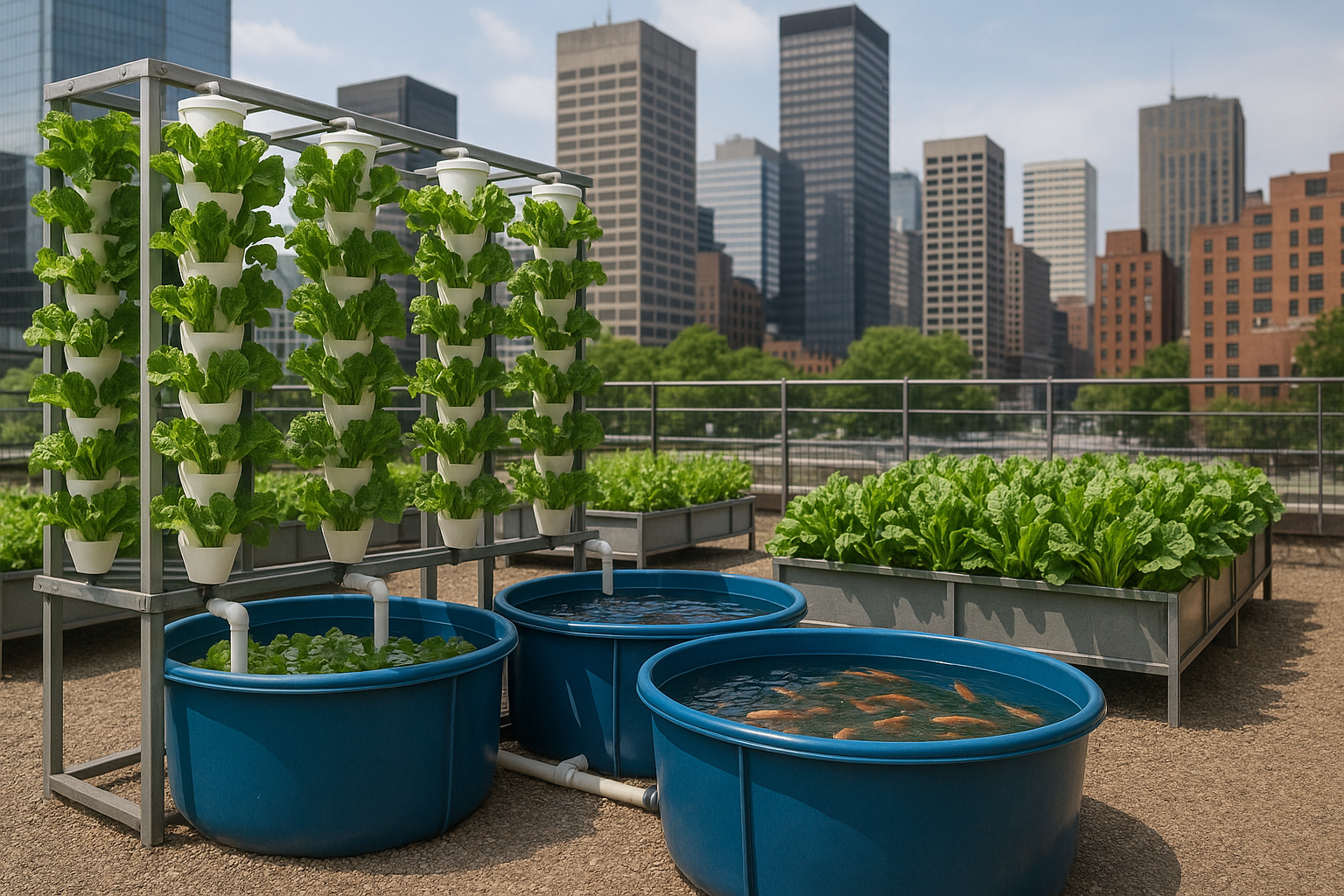
Aquaponics systems enable year-round production in urban and suburban settings, directly addressing food security challenges in food deserts. Areas lacking access to fresh, affordable food can benefit from local production that reduces transportation costs and improves food access.
Urban real estate economics often favor intensive production methods like aquaponics that maximize food production per square foot. While aquaponics equipment costs may be high, the value of urban land often makes intensive production economically viable compared to extensive traditional farming.
Year-round production capabilities provide economic advantages in urban markets where fresh produce commands premium prices during off-seasons. Urban aquaponics operations can supply fresh vegetables and fish throughout winter months when traditional local production is limited.
Reduced transportation costs and carbon footprint appeal to urban consumers willing to pay premium prices for locally produced food. The environmental benefits and food security advantages of local production can justify higher prices that cover aquaponics production costs.
Community development benefits from urban aquaponics operations often attract funding from foundations, government programs, and social impact investors. The combination of food security, environmental sustainability, and community building creates opportunities for funding that purely commercial operations might not access.
Educational and social benefits of urban aquaponics provide additional value that can help justify costs. Schools, community centers, and nonprofit organizations can use aquaponics systems for education while also producing food, creating multiple revenue streams and funding sources.
Refugee Camps and Humanitarian Applications
Aquaponics systems can provide sustainable protein sources and can be rapidly deployed and scaled in humanitarian crisis situations. The ability to produce both fish and vegetables in areas lacking infrastructure or arable land makes aquaponics valuable for emergency food security.
Rapid deployment capabilities of modular aquaponics systems match the urgent timelines of humanitarian responses. Systems can be designed for quick assembly with minimal tools and infrastructure, providing food production capacity within weeks of deployment.
Protein production from fish addresses nutritional gaps that are common in humanitarian food aid programs. Traditional food aid often lacks adequate protein sources, while aquaponics systems can produce high-quality fish protein to supplement grain-based distributions.
Water efficiency becomes critical in humanitarian settings where clean water is scarce and expensive to transport. The closed-loop water use in aquaponics systems minimizes water requirements while maximizing food production in water-limited environments.
Skill development and capacity building through aquaponics operations provide long-term benefits beyond immediate food production. Training refugees in aquaponics skills can provide livelihood opportunities and self-sufficiency that extend beyond the immediate crisis period.
International funding for humanitarian aquaponics projects often comes from sources specifically dedicated to emergency relief and development assistance. Organizations like the UN, World Bank, and international NGOs may provide funding for aquaponics projects that would not be available for commercial operations.
Learning from Success: Case Studies in Aquaponics Implementation
Real-world implementations of aquaponics provide valuable insights into overcoming barriers and achieving success in challenging environments.
Floating Gardens LLC: Energy Integration Success
Floating Gardens LLC integrated energy-efficient systems to maintain optimal growth conditions while managing costs effectively. Their approach demonstrates how addressing energy costs can make aquaponics operations economically viable even in challenging climates.
The integration of efficient heating systems reduced energy costs by 40% compared to conventional greenhouse heating, addressing one of the major operational cost barriers in aquaponics. The system used hot water heating with zoning controls that allowed precise temperature management while minimizing energy waste.
System design focused on thermal efficiency through insulation, heat recovery, and thermal mass optimization. The facility incorporated passive solar design principles that reduced heating loads while maintaining optimal growing conditions for both fish and plants.
Crop selection and scheduling optimization allowed the operation to maximize revenue during peak pricing periods while minimizing energy costs during expensive heating seasons. The combination of efficient systems and intelligent scheduling created a viable business model in a challenging climate.
Monitoring and control systems provided real-time data on energy consumption, environmental conditions, and system performance. This data-driven approach allowed continuous optimization of operations and early detection of problems that could affect both costs and productivity.
The success of Floating Gardens demonstrates that energy efficiency investments can overcome one of the major operational cost barriers in aquaponics, particularly in climates requiring heated production environments.
XYZ Farm Conversion: Retrofitting for Success
XYZ Farm successfully converted existing agriculture infrastructure to aquaponics while emphasizing the importance of continuous education and training. Their experience provides insights into how existing farmers can transition to aquaponics while managing complexity and cost challenges.
The conversion process involved retrofitting existing greenhouse infrastructure with aquaponics systems, significantly reducing initial capital requirements compared to new facility construction. This approach made aquaponics adoption financially feasible for an existing operation.
Phased implementation allowed the operation to learn and optimize systems gradually while maintaining income from existing production. The farm converted one greenhouse section at a time, reducing risk and allowing experimentation with different approaches.
Staff training and skill development represented a major investment in the conversion process. The operation invested heavily in training existing staff and hiring consultants to develop the interdisciplinary skills required for aquaponics management.
Market development and customer education were crucial for success. The farm invested significant effort in educating customers about aquaponics products and developing markets willing to pay premium prices for sustainably produced food.
Continuous improvement and system optimization continued throughout the first several years of operation. The farm documented lessons learned and made incremental improvements based on performance data and operational experience.
The XYZ Farm case demonstrates that existing agricultural operations can successfully convert to aquaponics when they invest adequately in training, take gradual implementation approaches, and focus on market development.
Industry Success Stories: Scaling and Replication
Multiple success stories in the aquaponics industry highlight the importance of careful planning, adequate financing, and ongoing system management. These examples provide models for overcoming common barriers to adoption.
Successful operations consistently demonstrate the importance of adequate initial capitalization that accounts for learning curves and system optimization periods. Undercapitalized operations often fail during the first year as they struggle with unexpected costs and lower-than-projected initial productivity.
Market development and customer education prove crucial for economic viability. Successful operations invest heavily in building relationships with customers who understand and value the benefits of aquaponics production methods.
Technical expertise and ongoing education represent critical success factors across all documented cases. Operations that invest in staff training and maintain relationships with technical experts consistently outperform those that attempt to minimize education costs.
System monitoring and data-driven management distinguish successful operations from those that struggle. Successful farms maintain detailed records of system performance and make management decisions based on data rather than intuition.
Community engagement and stakeholder relations provide multiple benefits including market development, funding opportunities, and regulatory support. Operations that engage actively with their communities often find solutions to challenges that isolated operations cannot overcome.
Alternative Approaches: Overcoming Barriers Through Innovation
Innovative approaches to addressing cost, complexity, and education barriers are emerging as the aquaponics industry matures and learns from both successes and failures.
Financial Innovation and Support
Government incentives and support programs are beginning to address financing barriers for aquaponics adoption. Tax credits for water conservation, renewable energy integration, and sustainable agriculture practices can significantly improve project economics.
Cooperative financing models allow multiple farmers to share costs and risks of aquaponics adoption. Equipment sharing, bulk purchasing, and cooperative marketing can reduce individual farmer costs while providing support networks for technical challenges.
Impact investing and social financing provide alternative funding sources for aquaponics projects with social or environmental benefits. Organizations focused on food security, environmental sustainability, or community development may provide financing not available through traditional agricultural lenders.
Lease and service models reduce initial capital requirements by spreading costs over time. Equipment leasing, management services, and performance-based contracts can make aquaponics accessible to farmers who cannot afford large upfront investments.
Technology Simplification and Standardization
Standardized system designs reduce complexity and costs by leveraging economies of scale in manufacturing and simplifying installation and maintenance. Modular systems that can be easily assembled, expanded, and maintained help address both cost and complexity barriers.
Automation and sensor technologies can reduce the skills required for daily system management while improving performance consistency. Smart controllers that automatically adjust feeding, pH, and environmental conditions can help novice operators achieve better results.
Remote monitoring and support services allow expert technicians to provide guidance and troubleshooting support to distributed operations. Cloud-based monitoring systems enable centralized expertise to support multiple operations efficiently.
Open-source designs and knowledge sharing reduce development costs and improve access to proven technologies. Collaborative development of system designs, operation protocols, and educational materials can accelerate adoption while reducing costs.
Educational Innovation and Delivery
Online and hybrid educational programs can provide aquaponics training to geographically distributed audiences at lower costs than traditional in-person programs. Virtual reality and simulation technologies can provide hands-on experience without requiring access to physical systems.
Peer-to-peer learning networks connect novice practitioners with experienced operators for mentoring and knowledge sharing. Online communities and regional associations provide ongoing support and problem-solving resources.
Localization of educational materials and approaches ensures that training addresses specific regional challenges and opportunities. Culturally appropriate training methods and locally relevant examples improve learning outcomes and adoption rates.
Demonstration and incubator facilities provide hands-on learning opportunities while reducing individual investment risks. Shared facilities allow multiple prospective adopters to gain experience and confidence before committing to individual operations.
The Future Landscape: Where Aquaponics Will Succeed
Understanding current barriers and emerging solutions provides insights into where aquaponics adoption is most likely to succeed in the coming decade.
Geographic and Market Prioritization
Water-scarce regions with high food costs and government support for sustainable agriculture represent the most promising near-term markets for aquaponics expansion. Areas combining these factors—such as parts of Australia, Israel, and the southwestern United States—provide ideal conditions for overcoming current barriers.
Urban and peri-urban areas with high land costs, premium food markets, and environmental sustainability priorities create economic conditions that favor intensive production methods like aquaponics. Metropolitan areas with food security concerns and environmental awareness provide both market support and potential funding sources.
Humanitarian and development contexts where traditional agriculture is impossible or inadequate create situations where aquaponics’ advantages outweigh its challenges. Refugee camps, disaster recovery areas, and remote communities may provide early adoption opportunities that don’t exist in traditional agricultural contexts.
Specialized niche markets including high-value crops, organic certification, and year-round production can provide premium pricing that justifies aquaponics production costs. Operations targeting restaurants, farmers markets, and specialty food retailers may achieve profitability more easily than those competing in commodity markets.
Technology Development Priorities
Cost reduction through manufacturing scale and standardization will be crucial for broader adoption. As the industry matures, standardized components and larger production volumes should reduce equipment costs and improve reliability.
Complexity reduction through automation and simplified management systems will help address skill and knowledge barriers. Systems that require less specialized knowledge while maintaining high performance will be more accessible to traditional farmers.
Energy efficiency improvements will address one of the major operational cost barriers, particularly in climate-controlled environments. Integration with renewable energy sources and more efficient equipment will improve long-term economic viability.
Data integration and decision support systems will help operators optimize performance while reducing the expertise required for management. AI-powered systems that can predict and prevent problems will make aquaponics more reliable and profitable.
Policy and Support Framework Development
Regulatory clarity and support for aquaponics will be essential for industry growth. Clear regulations for food safety, environmental compliance, and agricultural classification will reduce uncertainty and compliance costs.
Financial incentives and support programs that recognize aquaponics’ environmental and social benefits will help overcome economic barriers. Water conservation credits, carbon offset payments, and food security grants can improve project economics.
Education and extension services that include aquaponics will be crucial for knowledge transfer and adoption. Integration of aquaponics into agricultural education programs and extension services will help address skill and knowledge gaps.
Research and development support for addressing specific barriers will accelerate technology improvement and adoption. Focused research on cost reduction, system simplification, and performance optimization will help overcome current limitations.
The future of aquaponics lies not in universal adoption, but in strategic deployment where its advantages provide compelling benefits despite current barriers. Success will come from focusing on applications where water efficiency, space utilization, and year-round production create value that justifies costs and complexity.
As the technology matures and support systems develop, the range of viable applications will expand. But in the near term, success will be concentrated in water-scarce regions, urban environments, and specialized applications where aquaponics’ unique advantages provide clear competitive benefits.
The question isn’t whether aquaponics will revolutionize global agriculture—it’s where and how it will find its optimal applications while contributing to food security, environmental sustainability, and economic development in the places where it can succeed despite current barriers.