
Hydroponic farming represents one of agriculture’s most promising frontiers, offering unprecedented control over growing conditions and the potential for dramatically increased yields in minimal space. Yet beneath the gleaming greenhouse surfaces and precisely controlled environments lies a complex web of management challenges that can overwhelm even experienced farmers. For small commercial growers, these challenges aren’t just technical hurdles—they’re potential business killers that can transform promising ventures into costly failures.
Every hydroponic system operates on a knife’s edge of precision. A single pump failure can destroy an entire crop within hours. A pH imbalance can stunt plant growth for weeks. An undetected pest outbreak can spread through an entire facility faster than traditional soil-based infestations. The very factors that make hydroponics so productive—closed-loop systems, concentrated nutrients, controlled environments—also create vulnerabilities that demand constant vigilance and rapid response.
For small commercial farmers, mastering hydroponic management isn’t just about understanding plant biology or water chemistry. It’s about orchestrating a complex dance between resource allocation, system reliability, pest management, operational scaling, and sustainability goals—all while maintaining the profit margins that keep operations viable. The farmers who succeed in this environment are those who recognize that modern hydroponic management requires more than agricultural knowledge; it demands technological sophistication and systematic approaches to monitoring, prevention, and response.
The Resource Management Gauntlet
Hydroponics requires significant upfront investment in infrastructure and equipment, which can be a barrier for small-scale farmers. The financial reality of hydroponic farming often shocks newcomers who underestimate the capital requirements for pumps, reservoirs, lighting systems, climate control, monitoring equipment, and backup systems. Unlike traditional farming where land and basic tools might suffice initially, hydroponics demands a complete technological infrastructure before the first seed can be planted.
Energy consumption is high due to artificial lighting and climate control needs, creating ongoing operational costs that can consume significant portions of revenue. LED lighting systems, while more efficient than older technologies, still represent substantial electrical loads when scaled to commercial production. Climate control systems must run continuously to maintain optimal growing conditions, and water circulation pumps operate 24/7 to prevent root damage and nutrient stratification.
The challenge isn’t just managing these costs—it’s predicting and planning for them accurately. Energy costs fluctuate seasonally and can vary dramatically based on local utility rate structures. Equipment failures require immediate replacement to prevent crop losses, often at premium prices for expedited delivery. Small commercial farmers must balance the desire for redundant systems against the capital costs of maintaining backup equipment that may sit idle most of the time.
Water management presents another layer of complexity beyond simple irrigation scheduling. Hydroponic systems require precise control of water quality, temperature, pH, and nutrient concentrations. Efficient water management is crucial to prevent waterborne diseases that can spread rapidly through recirculating systems. Water sources must be tested and treated, storage tanks must be sized appropriately, and distribution systems must deliver consistent flow rates and pressures throughout the growing area.
Resource optimization in hydroponics isn’t just about minimizing costs—it’s about maximizing efficiency to improve profit margins. Every kilowatt-hour of electricity, every gallon of water, and every gram of nutrients must contribute to productive growth. Waste in any form—whether through inefficient lighting, over-fertilization, or water losses—directly impacts the bottom line in ways that may not be immediately apparent but accumulate into significant competitive disadvantages.
System Monitoring: The Never-Ending Vigilance
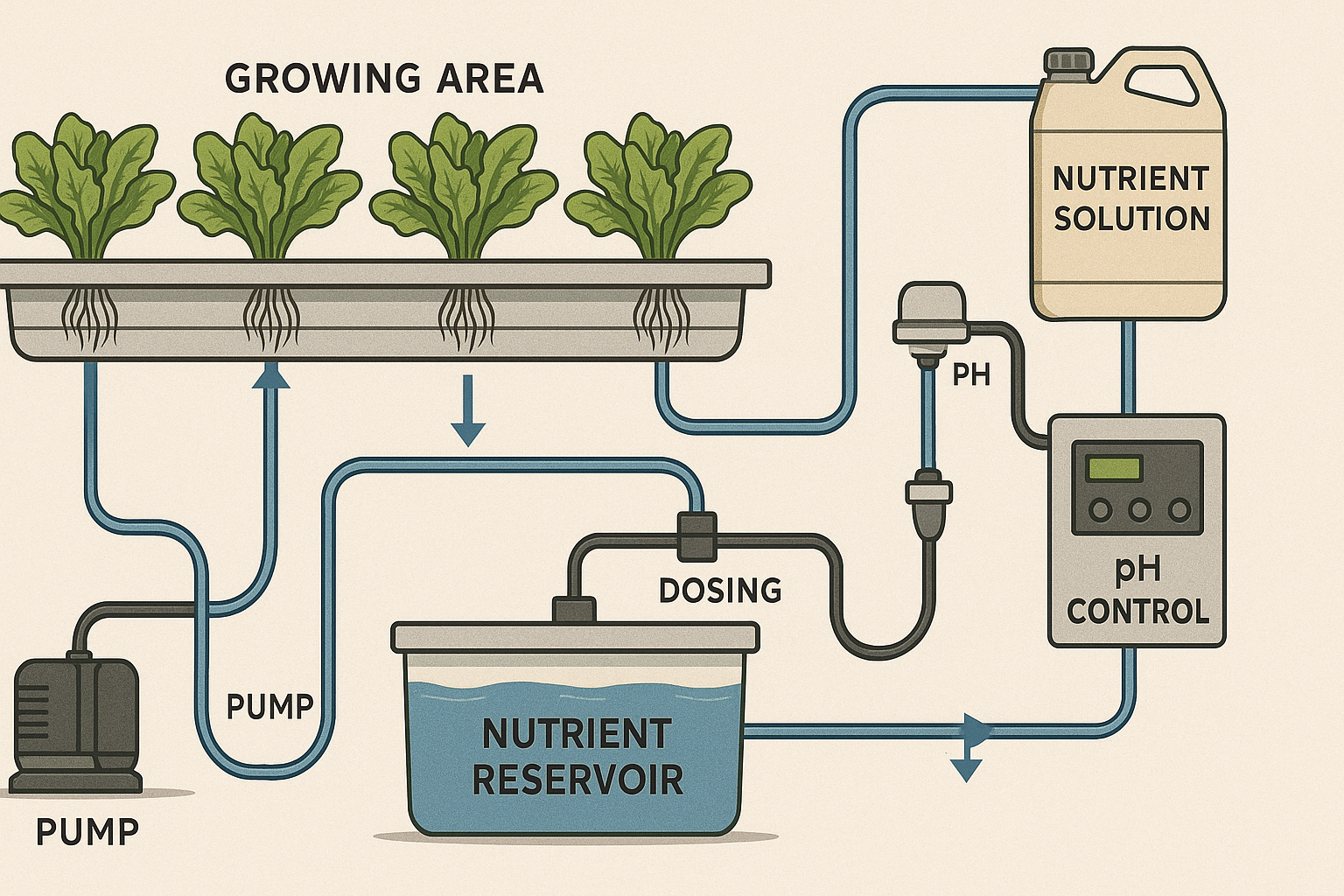
Constant monitoring of nutrients, pH levels, and temperature is essential, requiring specialized knowledge. Unlike soil-based agriculture where plants can buffer against minor fluctuations in growing conditions, hydroponic plants depend entirely on precisely maintained environmental parameters. A pH drift of just a few tenths can lock out essential nutrients, while temperature swings can stress plants and create favorable conditions for disease development.
The complexity of hydroponic monitoring extends far beyond taking occasional readings. Successful commercial operations require understanding how different parameters interact, how environmental conditions affect nutrient uptake, and how plant growth stages change monitoring requirements. Young seedlings have different optimal conditions than mature fruiting plants, and these differences must be accounted for in monitoring protocols.
All components must function correctly to prevent system failures, creating a reliability challenge that traditional farmers rarely face. Pumps, timers, sensors, and control systems must operate flawlessly, because component failures in hydroponic systems can create cascading problems that destroy crops within hours. A failed circulation pump can cause root rot, while a malfunctioning pH controller can create conditions that prevent nutrient uptake.
The human element of system monitoring creates additional challenges for small commercial operations. Constant vigilance requires either dedicated staff or automated systems that can monitor conditions and alert operators to problems. Many small farms operate with minimal staffing, making automated monitoring essential for maintaining the consistency that hydroponic systems demand.
Beyond basic parameter monitoring, successful hydroponic farms must track plant health indicators, growth rates, and productivity metrics to optimize their operations. This requires understanding not just what normal readings look like, but what trends indicate developing problems or opportunities for improvement. Data collection and analysis become essential skills that complement traditional agricultural knowledge.
Pest Control: Fighting on Multiple Fronts
The closed-loop nature of hydroponics makes plants susceptible to waterborne pathogens, creating pest management challenges that don’t exist in traditional agriculture. When harmful organisms enter a hydroponic system, they can spread rapidly through the entire operation via the recirculating water system. Fungal spores, bacterial infections, and even beneficial microorganisms turned harmful can proliferate quickly in the warm, nutrient-rich environment of hydroponic systems.
Integrated pest management strategies are necessary to combat fungal, bacterial, and insect infestations. Traditional pesticide applications can be problematic in hydroponic systems because chemicals can accumulate in recirculating water and affect plant health or food safety. Many conventional pesticides aren’t approved for use in hydroponic systems, limiting the available tools for pest control.
The enclosed nature of many hydroponic facilities can create ideal conditions for pest reproduction while limiting natural predator populations that might control pest outbreaks. Greenhouse environments often lack the biodiversity that naturally suppresses pest populations in outdoor agriculture. This creates the need for biological control methods, beneficial insects, and careful environmental management to prevent pest establishment.
Early detection becomes crucial in hydroponic pest management because problems can escalate rapidly. Visual inspection protocols must be thorough and frequent, while monitoring for subtle changes in plant health can indicate pest pressure before visible damage occurs. The ability to respond quickly to emerging pest problems often determines whether a minor issue becomes a major crop loss.
Prevention strategies in hydroponic pest management focus on excluding pests from the growing environment, maintaining plant health to improve resistance, and creating conditions that favor beneficial organisms over harmful ones. This requires understanding the lifecycle and behavior of potential pests, implementing appropriate sanitation protocols, and maintaining environmental conditions that discourage pest establishment.
Scaling Operations: Growth Without Growing Pains
Initial costs are high, but automation and improved designs can reduce operational expenses over time. The economics of hydroponic farming often require significant scale to achieve profitability, yet scaling operations creates new challenges in management, quality control, and system reliability. Small commercial farmers face the difficult task of growing their operations while maintaining the precision and attention to detail that hydroponic systems demand.
Small-scale farmers may face difficulties in achieving high-volume sales that justify the infrastructure investments required for commercial hydroponic operations. Traditional farmers’ markets may not provide sufficient volume to support the overhead costs of hydroponic facilities, while wholesale markets may require production volumes and consistency that challenge small operations.
Scaling hydroponic operations isn’t simply a matter of building larger systems—it requires systematic approaches to maintaining quality and consistency across increased production areas. Management systems that work for small-scale operations may not scale effectively to larger facilities. Labor efficiency, pest management, and system monitoring all become more complex as operations grow.
The timing of scaling decisions significantly impacts operational success. Expanding too quickly can overwhelm management capabilities and create quality problems, while waiting too long can allow competitors to establish market positions. Market demand, capital availability, and operational capacity must be balanced carefully to ensure that growth strengthens rather than weakens the business.
Infrastructure decisions made during scaling have long-term implications for operational efficiency and future growth potential. Systems designed for easy expansion, modular construction, and centralized monitoring can facilitate growth, while systems that require complete redesign for expansion can limit growth options. The ability to scale operations efficiently often determines long-term success in competitive hydroponic markets.
Sustainability: Beyond Just Growing Food
Improving energy efficiency through solar and LED lighting can enhance sustainability, but achieving true sustainability in hydroponic operations requires comprehensive approaches that consider energy use, resource consumption, waste management, and environmental impact. The controlled environment agriculture that makes hydroponics productive also tends to be energy-intensive, creating tension between productivity goals and sustainability objectives.
Expanding crop variety can increase sustainability by reducing reliance on traditional staple crops while potentially improving profitability through specialty crop premiums. However, crop diversification in hydroponic systems can complicate management by requiring different growing conditions, nutrient programs, and harvest schedules for different crops.
Sustainable hydroponic practices extend beyond energy and resource efficiency to include considerations of packaging, transportation, and waste management. Local food systems development, minimal packaging, and closed-loop nutrient cycling can improve the overall sustainability profile of hydroponic operations. These practices often require additional investment and planning but can create competitive advantages in environmentally conscious markets.
Waste management in hydroponic systems involves more than just disposing of plant residues. Nutrient solution disposal, plastic growing media, and equipment replacement all create waste streams that sustainable operations must address. Some hydroponic systems incorporate anaerobic digestion, composting, or recycling programs to minimize waste and potentially create additional revenue streams.
The long-term sustainability of hydroponic operations depends on maintaining soil health in the broader agricultural landscape, supporting biodiversity, and contributing to resilient food systems rather than simply maximizing individual farm productivity. This systems-level thinking requires understanding how hydroponic operations fit into broader agricultural and environmental contexts.
Technology Integration: The Smart Farm Advantage
Advanced sensors track water quality, nutrient levels, and pH, ensuring optimal conditions. Modern hydroponic farms increasingly rely on sensor technologies that provide continuous monitoring of critical parameters with far greater accuracy and consistency than manual testing. These sensors can detect problems before they become visible, enabling preventive interventions that protect crops and optimize growing conditions.
Automation reduces human contact, minimizing contamination risks while improving consistency and reducing labor costs. Automated systems can maintain precise environmental conditions, deliver nutrients on optimized schedules, and respond to changing conditions faster than human operators. This automation becomes particularly valuable for small commercial operations that may not have dedicated technical staff.
Predictive analytics and IoT integration allow for real-time monitoring and control of hydroponic systems from anywhere with internet connectivity. This capability enables remote management, rapid response to problems, and data-driven optimization of growing conditions. Cloud-based monitoring systems can track multiple facilities, compare performance across different growing conditions, and identify optimization opportunities.
FarmHub® represents a comprehensive approach to addressing these technological needs in hydroponic operations. By integrating sensor-based environmental monitoring, mobile-first data logging, operational checklists, and automated alerts, FarmHub® provides small commercial farmers with enterprise-level monitoring and management capabilities. The system’s crop and growing environment libraries help farmers optimize conditions for specific crops while maintaining detailed records for continuous improvement.
The disaster prevention capabilities of systems like FarmHub® are particularly valuable in hydroponic operations where small problems can quickly escalate into major crop losses. Automated alerts for parameter deviations, equipment failures, or environmental problems enable rapid response that can prevent minor issues from becoming catastrophic failures. Historical data analysis helps identify patterns that precede problems, enabling proactive interventions.

Disaster Prevention Through Smart Monitoring
The catastrophic potential of hydroponic system failures makes disaster prevention a critical aspect of commercial operations. Unlike traditional farming where weather or pests might reduce yields gradually, hydroponic system failures can destroy entire crops within hours. Pump failures can cause root rot, power outages can disrupt climate control, and contamination can spread rapidly through recirculating systems.
Early warning systems become essential components of disaster prevention in hydroponic operations. Sensors that monitor critical parameters can detect developing problems before they reach critical levels. pH drift, temperature fluctuations, nutrient imbalances, and equipment performance issues can all be detected and addressed before they cause serious damage.
Redundancy in critical systems provides backup capabilities when primary systems fail. Backup pumps, emergency power systems, and redundant monitoring equipment can maintain essential functions during equipment failures or power outages. However, redundant systems require monitoring and maintenance to ensure they function when needed.
Emergency response protocols help ensure rapid and appropriate responses to system failures. These protocols should include procedures for different types of failures, contact information for emergency repairs, and backup suppliers for critical components. Staff training on emergency procedures ensures that appropriate actions are taken quickly when problems occur.
Remote monitoring capabilities allow farmers to respond to problems even when not physically present at the facility. Mobile alerts can notify farmers of developing problems at any time, enabling rapid response that can prevent minor issues from escalating. This capability is particularly valuable for small operations that may not have staff present at all times.
Financial Management in High-Tech Agriculture
The financial complexity of hydroponic operations extends beyond traditional farming economics to include depreciation of technological equipment, energy cost management, and return on investment calculations for automation and monitoring systems. Capital expenses for hydroponic infrastructure can be substantial, requiring careful planning to ensure adequate cash flow for operations and maintenance.
Cash flow management becomes critical in hydroponic operations due to the high upfront costs and ongoing operational expenses. Unlike traditional farming where major expenses might be seasonal, hydroponic operations have consistent monthly costs for electricity, nutrients, labor, and equipment maintenance. Revenue must be consistent and sufficient to cover these ongoing expenses while providing returns on the substantial capital investments.
Insurance considerations for hydroponic operations differ from traditional farming insurance because of the technological complexity and potential for rapid loss events. Crop insurance, equipment insurance, and business interruption insurance all require careful evaluation to ensure adequate coverage for the unique risks of hydroponic farming.
Return on investment calculations for hydroponic technology must consider both direct benefits like increased yields and indirect benefits like reduced labor costs, improved quality, and disaster prevention. The value of preventing a single catastrophic crop loss may justify the cost of monitoring and automation systems, even if the direct productivity benefits are modest.
Market positioning and pricing strategies for hydroponic products must account for the higher production costs while capitalizing on quality advantages and local production benefits. Premium pricing for superior quality, local production, or specialty crops can improve profitability, but requires effective marketing and customer education.
Building Resilient Operations
Long-term success in hydroponic farming requires building resilient operations that can adapt to changing conditions, recover from setbacks, and evolve with advancing technology. This resilience comes from robust systems, skilled management, financial stability, and strategic planning that anticipates future challenges and opportunities.
Continuous learning and adaptation become essential skills for hydroponic farmers because technology and best practices evolve rapidly. Staying current with research developments, equipment improvements, and management techniques requires ongoing education and networking with other professionals in the field.
Systematic record-keeping and data analysis enable continuous improvement in hydroponic operations. Detailed records of growing conditions, input costs, yields, and quality metrics provide the foundation for optimizing operations and identifying trends that indicate improving or declining performance.
Relationship building with suppliers, customers, technical support providers, and other farmers creates networks that provide resources, knowledge, and market opportunities. These relationships become particularly valuable during emergencies when rapid access to equipment, expertise, or market alternatives can mean the difference between minor setbacks and major losses.
Strategic planning for hydroponic operations must anticipate technology evolution, market changes, and regulatory developments that could affect operations. Flexibility in system design, financial planning that accommodates equipment upgrades, and market diversification strategies all contribute to long-term resilience.
The future of commercial hydroponic farming belongs to operations that successfully integrate technological sophistication with agricultural expertise, financial discipline with innovation, and productivity goals with sustainability principles. These operations will be distinguished not just by their growing capabilities, but by their management systems, disaster prevention protocols, and ability to adapt to changing conditions while maintaining consistent quality and profitability.
Farmers who master the complex challenges of hydroponic management—from resource optimization to pest control, from scaling operations to sustainability goals—will find themselves at the forefront of agriculture’s evolution. With the support of advanced monitoring and management systems like FarmHub®, small commercial farmers can compete effectively in high-tech agriculture while building resilient, profitable operations that serve their communities and contribute to sustainable food systems.