
The controlled environment agriculture landscape is experiencing a period of intense innovation and equally intense scrutiny. For small commercial farmers watching from the sidelines, recent developments paint a complex picture of opportunity shadowed by persistent challenges that demand careful consideration before making significant investments.
Take the case of Greenscale’s new aquaponics facility in Boise, Idaho. Construction began in spring 2025, combining aquaculture and hydroponics for efficient food production, but the project faces high upfront and operational costs, a common challenge for CEA. As one project manager aptly described it, “The project fit the ‘big, messy’ criteria,” reflecting the ambitious nature of new aquaponics initiatives.
This honest assessment captures something important about the current state of the industry. While the technology continues to advance and the potential benefits remain compelling, the fundamental economics that make or break small commercial operations haven’t been fully resolved. Understanding this tension is crucial for farmers considering their next moves.

The Promise and Peril of Controlled Environment Agriculture
The appeal of systems like aquaponics lies in their elegant integration of multiple production methods. By combining fish cultivation with plant production, these systems theoretically offer diversified income streams, efficient resource use, and year-round production capability. The environmental benefits are clear: dramatically reduced water consumption, elimination of agricultural runoff, and the ability to produce food close to urban markets.
However, CEA often lacks viable long-term business models due to significant financial barriers. This isn’t simply a matter of high startup costs, though those certainly exist. The ongoing operational expenses—energy for lighting and climate control, specialized equipment maintenance, technical expertise requirements—create a cost structure that many operations struggle to sustain profitably.
For small commercial farmers, this reality demands a more nuanced approach to evaluating these technologies. Rather than asking whether aquaponics or controlled environment systems work in theory, the critical questions become: Under what conditions do they work economically? What scale is required for viability? How can operational costs be managed sustainably?
Technology Integration: The IoT and AI Revolution
One area where genuine progress is being made involves the integration of smart technologies that reduce labor requirements and improve system efficiency. IoT and smart sensors enable real-time monitoring of environmental conditions, improving system efficiency and reducing waste. This isn’t just about convenience—it’s about making complex systems manageable for small operations that can’t afford full-time technical staff.
AI and predictive analytics automate nutrient management and system adjustments, minimizing manual labor. This automation addresses one of the biggest challenges small farmers face: the need to be experts in multiple disciplines simultaneously. When AI systems can handle the complex calculations required to optimize growing conditions, farmers can focus on business development, marketing, and other activities that directly impact profitability.
The practical impact of these technologies is significant. Systems that once required constant manual monitoring and adjustment can now operate with minimal intervention. Environmental conditions are maintained automatically, nutrients are delivered precisely when needed, and potential problems are identified before they impact production.
The Energy Challenge and Solutions
One of the most persistent challenges in controlled environment agriculture is energy consumption. High energy consumption from artificial lighting and climate control increases costs, but this isn’t an insurmountable problem. The key lies in understanding that energy costs must be viewed within the broader context of system efficiency and revenue generation.
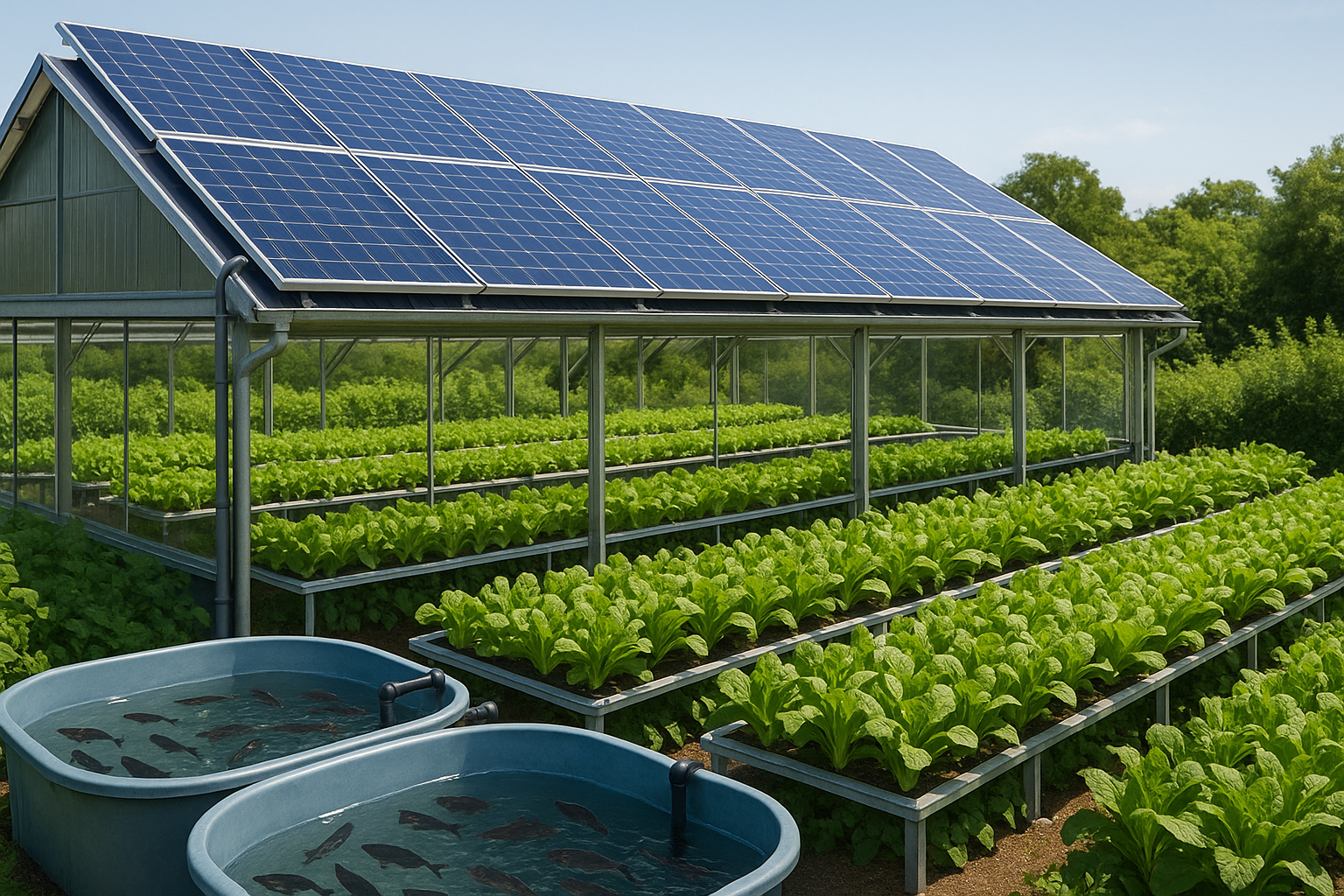
Implementing solar panels and biogas systems can reduce energy costs significantly. For aquaponics systems in particular, the integration of renewable energy sources makes economic sense. These systems can be designed to generate their own energy through biogas production from fish waste, creating a truly circular production model.
The timing of this energy integration is becoming increasingly favorable. Solar panel costs continue to decline, energy storage technology is improving, and utility programs increasingly support renewable energy adoption. Small commercial farmers who incorporate energy generation into their facility planning may find that what initially appears to be an additional expense actually improves their long-term economic viability.
Policy Landscape and Strategic Support
The regulatory and policy environment surrounding aquaculture and controlled environment agriculture is evolving in ways that could significantly benefit small commercial operations. A recent policy report emphasizes the integration of aquaculture into national food security strategies, demanding strengthened research, innovation, and active stakeholder engagement.
This policy focus on aquaculture as a component of food security represents a significant shift. Rather than viewing these systems as niche or experimental, policymakers are beginning to recognize their potential role in addressing broader challenges around food production, resource efficiency, and supply chain resilience.
For small commercial farmers, this policy attention could translate into several practical benefits. Research funding that makes new technologies more accessible, technical assistance programs that help with implementation, and potentially financial incentives that improve project economics. The key is staying informed about policy developments and positioning operations to take advantage of supportive programs as they emerge.
Learning and Networking: The World Aquaculture Safari Example
Industry events like the World Aquaculture Safari 2025 in Uganda highlight another crucial aspect of success in this evolving field. The conference will spotlight the theme “Aquaculture on the Rise,” providing networking and expert insights for industry participants.
While international conferences might seem removed from the day-to-day concerns of small commercial farmers, these events serve several important functions. They provide access to the latest research and technical developments, opportunities to connect with equipment suppliers and service providers, and most importantly, chances to learn from the experience of other operators facing similar challenges.
The event offers sessions for farmers, trade shows, and partnerships with international organizations, creating multiple avenues for knowledge transfer and collaboration. For farmers considering investments in aquaponics or aquaculture systems, the insights gained from these interactions can be invaluable in avoiding common pitfalls and identifying proven approaches.
Space Efficiency and Urban Agriculture Opportunities
One area where controlled environment agriculture offers clear advantages is space utilization. Vertical and urban farming maximize space and reduce carbon footprint, ideal for small commercial farmers. This efficiency becomes particularly valuable as agricultural land becomes more expensive and urban markets demand locally-produced food.
The ability to produce significant quantities of food in relatively small spaces opens up location possibilities that traditional farming can’t match. Small commercial farmers can operate profitably in urban areas, close to their markets, reducing transportation costs and improving product freshness. This proximity also enables direct marketing relationships with restaurants and retailers that can command premium prices.
However, urban operations bring their own challenges. Zoning regulations, neighbor relations, and higher real estate costs must all be factored into the economic equation. The key is finding locations where the benefits of market proximity outweigh these additional costs and complications.
Water Management: A Sustainable Competitive Advantage
Water efficiency represents one of the strongest arguments for controlled environment systems, particularly in regions facing water scarcity or expensive water supplies. Closed-loop systems in aquaponics and hydroponics drastically reduce water usage, often using 90% less water than traditional farming methods.
This efficiency isn’t just environmentally beneficial—it creates economic advantages that become more valuable as water costs rise. In regions where water rights are expensive or availability is uncertain, the ability to operate with minimal water consumption can provide a significant competitive advantage.
The closed-loop nature of these systems also means that water quality can be maintained more consistently than in traditional farming. Nutrients aren’t lost to runoff or evaporation, and contamination risks are minimized through controlled inputs. This consistency translates into more predictable crop quality and yields.
Economic Viability: Scalability and Market Diversification
The question of scale remains central to the economic viability of controlled environment agriculture. High upfront costs limit adoption, but scalable technologies and best practices can improve profitability. The challenge for small commercial farmers is finding the minimum viable scale that generates sufficient revenue to cover fixed costs while remaining manageable from an operational standpoint.
One approach that shows promise is market diversification, where offering a variety of products can mitigate risks and increase profitability. Rather than focusing on a single crop or species, successful operations often combine multiple revenue streams. An aquaponics facility might produce leafy greens, herbs, fish for direct sale, and potentially value-added products like prepared foods or plants for home gardeners.
This diversification serves multiple purposes. It spreads risk across different market segments, provides flexibility to respond to changing demand, and potentially allows for premium pricing of specialized products. However, it also requires broader expertise and more complex marketing efforts.
Strategic Partnerships and Collaborative Approaches
Given the complexity and capital requirements of controlled environment agriculture, strategic partnerships and collaborating with experts and other businesses can improve operational efficiency and access to new markets. These partnerships can take various forms, from equipment leasing arrangements to shared marketing initiatives to technical consulting relationships.
For small commercial farmers, partnerships offer a way to access expertise and resources that would be prohibitively expensive to develop internally. A farmer with strong production skills might partner with someone who has marketing expertise, or multiple small operators might collaborate on equipment purchases or processing facilities.
The key is structuring partnerships that align incentives properly and clearly define responsibilities. Successful collaborations in this industry tend to be those where each party brings distinct, complementary capabilities rather than attempting to divide similar roles.
Technology Support and Management Systems
The complexity of modern aquaponics and controlled environment systems creates a need for comprehensive management platforms that can integrate data from multiple sources and provide actionable insights. Systems like FarmHub® offer sensor-based environmental monitoring, mobile-first data logging, operational checklists, and crop libraries that help farmers manage these complex operations more effectively.
The value of these integrated management systems extends beyond simple data collection. They provide the framework for systematic operational improvement, helping farmers identify which variables most significantly impact their results and enabling more consistent execution of best practices.
For small commercial operations, having access to professional-grade management tools levels the playing field somewhat with larger competitors. When systems can provide guidance on optimal growing conditions, alert farmers to potential problems before they become critical, and track performance over time, smaller operations can achieve reliability and efficiency that might otherwise require much larger teams.
Financial Planning and Investment Strategies
Given the capital requirements and ongoing operational complexities of controlled environment agriculture, successful small commercial farmers need sophisticated approaches to financial planning. The traditional farming model of seasonal cash flows doesn’t apply when production occurs year-round and markets may be more volatile.
The key is developing financial models that account for the unique characteristics of these systems: higher fixed costs, more predictable production, premium pricing potential, and different risk profiles. This often means working with lenders and investors who understand the industry, rather than traditional agricultural financing sources.
Cash flow management becomes particularly critical during the startup phase, when systems are being optimized and market relationships are being established. Many operations that fail do so not because the technology doesn’t work, but because they run out of cash before reaching sustainable profitability.
Looking Forward: Positioning for Success
The current state of aquaponics and controlled environment agriculture presents both opportunities and challenges for small commercial farmers. The technology is advancing rapidly, policy support is growing, and market demand for sustainably-produced food continues to increase. However, the fundamental economics remain challenging, and success requires careful planning, adequate capitalization, and ongoing attention to operational efficiency.
The farmers most likely to succeed in this environment are those who approach these technologies strategically rather than opportunistically. This means conducting thorough feasibility studies, developing realistic financial projections, building relationships with experienced operators and technical experts, and maintaining focus on market development alongside production optimization.
The industry is still young enough that best practices are evolving rapidly. Farmers who stay connected to the broader community through events, trade publications, and professional networks will be better positioned to adapt as conditions change. The learning curve is steep, but the potential rewards for those who navigate it successfully are substantial.
Rather than viewing controlled environment agriculture as a simple replacement for traditional farming methods, successful operators tend to see it as a fundamentally different business model that requires different skills, different financial structures, and different market approaches. Those who embrace this difference, rather than fighting it, are finding ways to build profitable, sustainable operations that serve both their financial goals and their environmental values.