
The aquaponics industry sits at a fascinating crossroads where cutting-edge agricultural technology meets age-old challenges of profitability and sustainability. While the promise of integrated fish and plant production continues to attract innovators and entrepreneurs, the reality of building viable businesses around these systems remains complex. Recent developments across commercial startups, community initiatives, and educational programs reveal both the potential and the persistent obstacles that define this evolving sector.
At the commercial forefront, Greenscale is establishing an indoor combined aquaculture and hydroponic facility in Boise, focusing on producing pesticide-free food with minimal water usage, using controlled environment agriculture methods. This ambitious project represents the kind of scaling effort that has long been considered necessary for aquaponics to move from niche hobby to mainstream agriculture. Yet the company’s experience also illuminates the fundamental challenges that continue to plague the industry.
The primary challenge noted by Greenscale and its collaborators is overcoming the high initial capital and ongoing operational costs necessary for a sustainable long-term business model in CEA aquaponics. This isn’t simply a matter of needing more investment capital—it’s about the fundamental economics of systems that require high upfront costs, sophisticated technical management, and careful balance between multiple biological systems operating simultaneously.
For small commercial farmers observing these developments, the lessons extend far beyond any single company’s success or failure. They highlight the critical importance of understanding the true costs and complexities involved in aquaponics before making significant investments.
The Manufacturing Mindset Applied to Agriculture
Greenscale’s approach reflects a broader trend in controlled environment agriculture: applying manufacturing principles to food production. The company’s 25,000 square foot facility in Boise aims to produce high-quality vegetables and fish using what they describe as a manufacturing-like approach. This methodology emphasizes consistency, quality control, and scalable processes—all elements that traditional agriculture often struggles to achieve.
The appeal of this approach is obvious. Manufacturing systems can be optimized, automated, and replicated in ways that traditional farming cannot. Environmental variables are controlled rather than managed, inputs are precisely measured and delivered, and outputs can be predicted with much greater accuracy than field-based agriculture allows.
However, the application of manufacturing principles to living biological systems introduces complications that traditional manufacturing doesn’t face. Plants and fish don’t respond to inputs with the mechanical predictability of industrial processes. Disease outbreaks, equipment failures, and biological imbalances can cascade through integrated systems in ways that require immediate, expert intervention.
For small commercial farmers, this reality suggests that success with aquaponics requires more than just adequate financing—it demands deep technical expertise, robust backup systems, and the ability to manage multiple interconnected biological processes simultaneously. The manufacturing analogy works to a point, but breaks down when dealing with the inherent variability of living systems.
Community-Scale Success Stories
While commercial ventures grapple with scalability challenges, community-based programs are demonstrating aquaponics’ potential in different contexts. The GROW Aquaponics Program in Australia supports schools and communities by combining aquaculture and hydroponics to foster a sustainable food ecosystem while improving community health, as evidenced by their community health program initiatives.
The GROW program’s success stems from its different objectives and operating environment. Rather than seeking to maximize profit per square foot, the program focuses on education, community engagement, and food security. This shift in priorities changes the economic equation significantly. Systems that might not be profitable as commercial ventures can provide tremendous value when their benefits include education, community building, and improved nutrition.
The program promotes sustainable food ecosystems and community health by using fish waste as plant fertilizer, minimizing chemical use, and providing fresh, organic food to participants. More importantly, it offers courses and workshops for community empowerment, creating knowledge and skills that participants can apply in their own growing efforts.
For small commercial farmers, the GROW program demonstrates how aquaponics systems can serve multiple functions simultaneously. Rather than viewing these systems purely as production tools, successful operators often find that their educational and community engagement aspects can provide additional revenue streams and market differentiation opportunities.
Educational Integration: Building the Next Generation
Educational institutions are playing a crucial role in developing the technical knowledge and practical skills that the aquaponics industry needs to mature. Eastern West Virginia Community and Technical College applies aquaponics systems with juvenile Bluegill fish, promoting natural fertilization of plants while delivering educational content on sustainability.
The college’s program, part of their Biological & Environmental Technology curriculum, focuses on sustainable agricultural technologies while providing hands-on experience with integrated growing systems. Students learn not just the theory behind aquaponics, but the practical realities of managing fish health, water quality, plant nutrition, and system maintenance.
This educational approach addresses one of the industry’s most persistent challenges: the shortage of skilled technicians who understand both aquaculture and hydroponic systems. Most agricultural education programs focus on either traditional farming or specialized hydroponic production, but few provide comprehensive training in integrated systems.
The introduction of juvenile Bluegill fish into the college’s aquaponics systems offers students experience with hardy, locally-adapted fish species that can tolerate the fluctuations and management mistakes common in learning environments. This practical approach helps students develop the problem-solving skills and biological intuition necessary for successful aquaponics management.
For small commercial farmers, the emergence of formal aquaponics education programs suggests that technical support and qualified workers will become more available over time. However, it also highlights the complexity of these systems and the importance of proper training before attempting large-scale implementation.
Water Efficiency and Resource Management
One of the most compelling arguments for aquaponics remains its resource efficiency, particularly regarding water use. The closed-loop nature of properly designed systems means that water loss occurs primarily through evaporation and plant uptake, rather than drainage and runoff. This efficiency becomes increasingly valuable as water costs rise and availability becomes more constrained.
Greenscale’s focus on minimal water usage reflects this priority, but also highlights the technical precision required to achieve such efficiency. Water in aquaponics systems must maintain appropriate chemistry for both fish health and plant nutrition while supporting beneficial bacterial populations that convert fish waste into plant-available nutrients. This biological balance requires constant monitoring and occasional intervention.
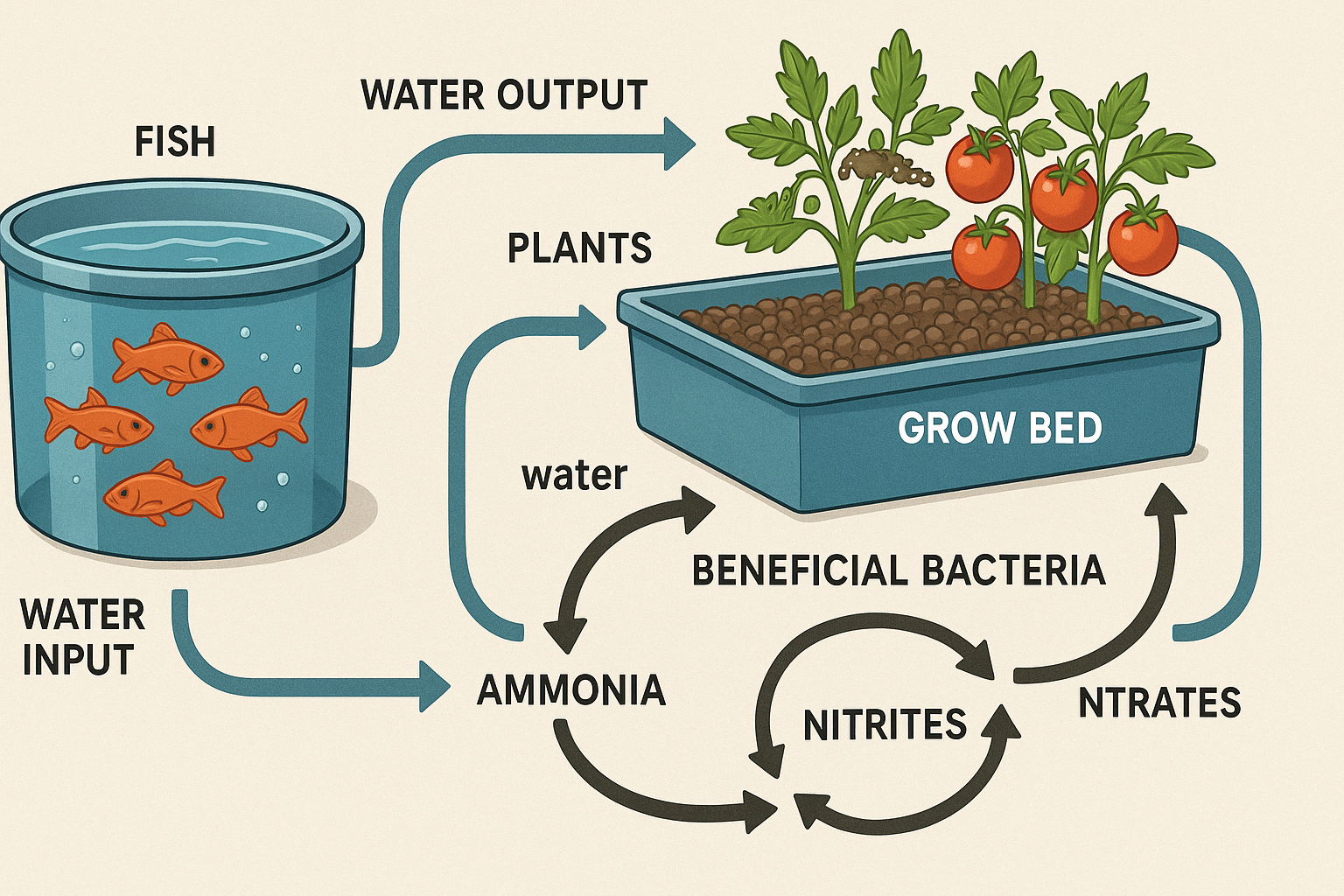
The technical complexity of maintaining water quality in integrated systems differs significantly from either traditional aquaculture or hydroponics alone. Fish produce ammonia, which can be toxic at elevated levels. Beneficial bacteria convert ammonia to nitrites and then to nitrates, which plants can use as fertilizer. However, this biological process can be disrupted by temperature changes, pH fluctuations, antibiotic treatments, or overstocking.
For small commercial operations, understanding these biological processes is essential for system reliability. Unlike hydroponic systems where nutrient solutions can be replaced if problems arise, aquaponics systems require maintaining the health of multiple interconnected biological communities simultaneously.
The Economics of Integration
The economic appeal of aquaponics lies in its potential for multiple revenue streams from the same system footprint. Fish and plants can theoretically provide diversified income that reduces risk compared to single-crop operations. However, the reality is more complex than this simple equation suggests.
Successful aquaponics operations require expertise in fish production, plant cultivation, water chemistry, system maintenance, and biological integration. Each of these areas demands significant knowledge and attention. Many operators find that trying to optimize both fish and plant production simultaneously results in compromises that reduce the profitability of both components.
Moreover, the markets for fish and vegetables often operate on different timelines and with different quality requirements. Fish may be ready for harvest on schedules that don’t align with optimal plant production cycles. Vegetables may require environmental conditions that stress fish, or vice versa.
The lesson for small commercial farmers is that aquaponics shouldn’t be approached simply as a way to double revenue from the same space. Instead, it’s a different production methodology that requires different skills, different markets, and different business models than either traditional farming or single-system controlled environment agriculture.
Technology Integration and Management Systems
The complexity of maintaining multiple biological systems simultaneously creates a strong need for sophisticated monitoring and control systems. Modern aquaponics facilities rely heavily on sensors, automation, and data management to maintain optimal conditions for all system components.
Water quality parameters such as pH, dissolved oxygen, ammonia, nitrite, and nitrate levels must be monitored continuously. Temperature, humidity, and lighting conditions require adjustment based on both fish needs and plant requirements. Feeding schedules, waste removal, and system maintenance all require careful timing and documentation.
Platforms like FarmHub® can provide integrated management solutions that help operators track these multiple variables and maintain system balance. Real-time monitoring, automated alerts, and systematic record-keeping become essential tools for managing the complexity of integrated systems.
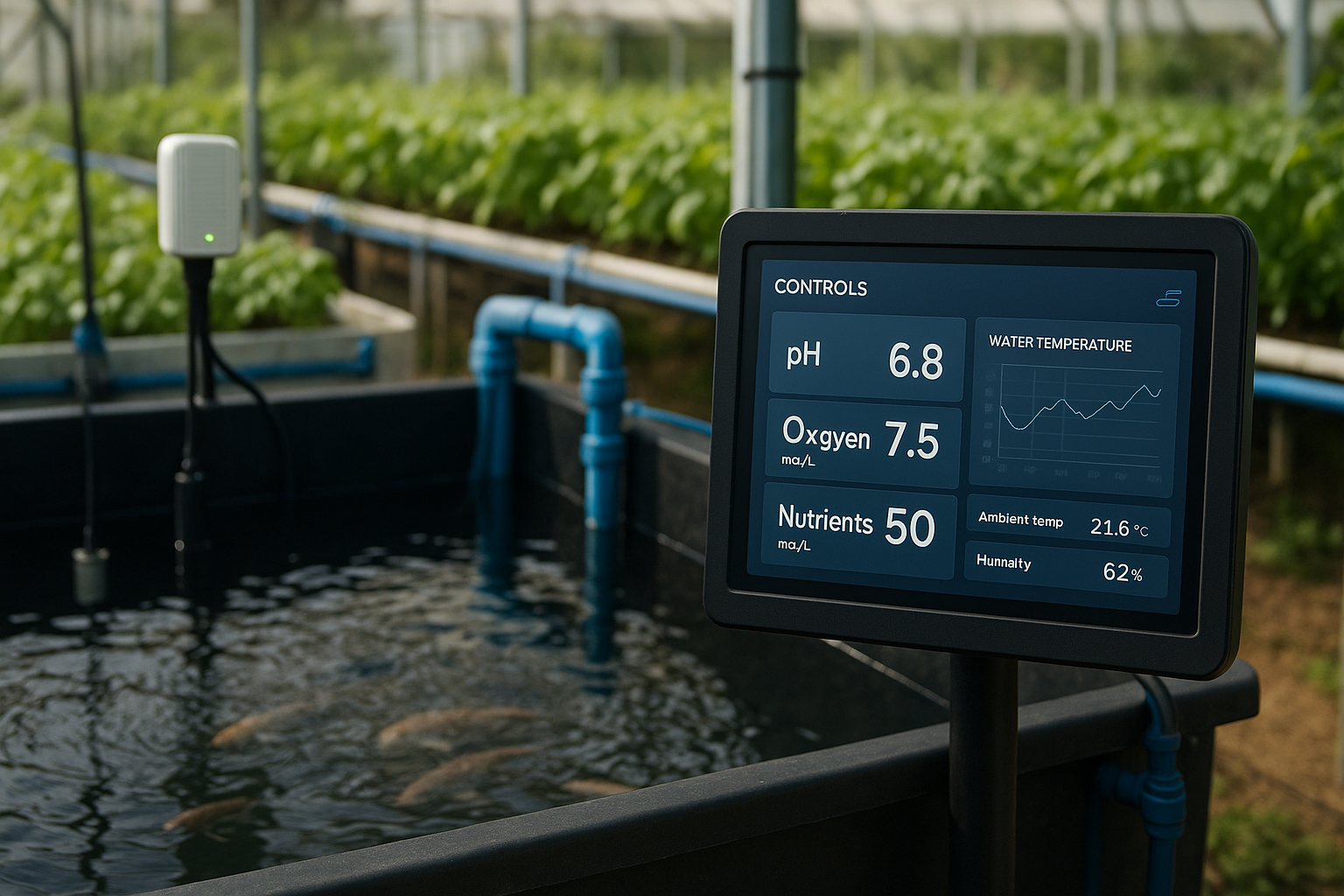
For small commercial farmers, the technology requirements of modern aquaponics systems represent both an opportunity and a challenge. While sophisticated monitoring systems can help manage complexity and reduce labor requirements, they also add to both initial costs and ongoing maintenance needs.
Market Development and Product Positioning
Successful aquaponics operations often find that their production methods provide marketing advantages that can justify premium pricing. The pesticide-free nature of fish and plant production, combined with local production and sustainable resource use, appeals to consumers willing to pay higher prices for products that align with their values.
However, developing these premium markets requires significant effort in customer education, relationship building, and quality consistency. Consumers need to understand what aquaponics is and why it provides benefits worth paying for. Chefs and retailers need reliable supplies of consistent quality products.
The dual nature of aquaponics production—both fish and vegetables—can complicate marketing efforts. Different products may require different distribution channels, different customer relationships, and different promotional strategies. Some operators find success by focusing primarily on one product category while treating the other as a secondary income stream.
For small commercial farmers, the marketing aspects of aquaponics are often as challenging as the production aspects. Success requires not just technical competence in growing, but also entrepreneurial skills in market development and customer relationship management.
Community Health and Food Security Implications
The GROW program’s focus on community health highlights an important dimension of aquaponics that commercial operators sometimes overlook. These systems can provide fresh, nutritious food in areas where traditional agriculture isn’t practical due to climate, soil quality, or space constraints.
In remote communities, urban areas with limited growing space, or regions with challenging environmental conditions, aquaponics can contribute to food security in ways that extend beyond simple economic calculations. The ability to produce food locally, year-round, with minimal external inputs has strategic value that may justify subsidies or community investment.
The educational aspects of community aquaponics programs also create lasting benefits by developing local expertise and interest in sustainable food production. Participants often go on to implement their own growing systems, extending the program’s impact beyond the original installation.
For small commercial farmers, understanding the community benefits of aquaponics can open opportunities for grants, partnerships, and market positioning that aren’t available to pure commercial operations. Systems that serve educational or community health functions may qualify for funding or support that improves their economic viability.
Risk Management in Integrated Systems
The integrated nature of aquaponics systems creates unique risk management challenges. In traditional farming, crop failures are disappointing but don’t typically affect other enterprises. In aquaponics, problems with fish health can impact plant nutrition, while plant diseases can affect water quality and fish survival.
System redundancy becomes critical for commercial operations. Backup aeration systems, emergency power supplies, and contingency plans for biological failures are essential for protecting both fish and plant investments. The cost of these backup systems must be factored into economic planning from the beginning.
Insurance for aquaponics operations can be challenging to obtain and expensive when available. Traditional crop insurance doesn’t cover integrated systems, and aquaculture insurance may not account for the interconnected nature of fish and plant production.
For small commercial farmers, understanding and planning for these integrated risks is essential before making significant investments in aquaponics systems. The potential for cascade failures means that risk management strategies must be more comprehensive than traditional farming operations require.
Scaling Challenges and Solutions
Greenscale’s experience with scaling aquaponics to commercial dimensions reflects broader industry challenges. Systems that work well at small scales often encounter unexpected problems when expanded. Heat management, waste processing, and biological balance all become more complex as systems grow larger.
The economic advantages of scale that apply to most manufacturing processes may not apply as directly to biological systems. Larger aquaponics systems can achieve better efficiency in some areas—energy use, labor per unit of production, and equipment utilization—but may lose flexibility and become more vulnerable to systematic failures.
Many successful aquaponics businesses have found that optimal scale involves multiple smaller systems rather than single large systems. This approach provides redundancy, allows for different crops or fish species in different systems, and maintains the management flexibility that biological systems require.
For small commercial farmers, the scaling question is particularly important because it affects everything from initial investment requirements to ongoing labor needs. Starting with appropriately sized systems that can be expanded incrementally may provide a more sustainable growth path than attempting to achieve optimal scale immediately.
Looking Forward: Integration with Broader Food Systems
The future of aquaponics likely lies not in replacing traditional agriculture, but in filling specific niches where its unique advantages provide clear benefits. Urban food production, specialty crops, educational programs, and community food security initiatives all represent areas where aquaponics can compete effectively.
The integration of aquaponics with other controlled environment agriculture technologies—LED lighting, climate control systems, automation, and data management—continues to improve system efficiency and reliability. As these supporting technologies become more affordable and sophisticated, aquaponics operations become more viable.
The development of supporting infrastructure—specialized equipment suppliers, technical service providers, and educational programs—creates an ecosystem that makes aquaponics more accessible to new operators. This infrastructure development is particularly important for small commercial farmers who may not have the resources to develop specialized expertise internally.
The successes and challenges experienced by companies like Greenscale, programs like GROW, and educational institutions like Eastern West Virginia Community and Technical College are contributing to a growing body of practical knowledge about what works in aquaponics and what doesn’t. This knowledge base makes it easier for new operators to avoid common pitfalls and implement proven strategies.
For small commercial farmers considering aquaponics, the current state of the industry offers both opportunity and caution. The technology is becoming more sophisticated and reliable, support systems are developing, and markets for sustainably-produced food continue to grow. However, the fundamental challenges of managing complex biological systems while maintaining economic viability remain significant.
Success in aquaponics requires a combination of technical competence, business acumen, and realistic expectations about both the potential benefits and persistent challenges of integrated food production systems. The farmers most likely to succeed are those who approach aquaponics as a sophisticated business requiring specialized knowledge and careful planning, rather than a simple way to double production from limited space.
The evolution of aquaponics from experimental curiosity to commercial reality is still underway. The experiences of current pioneers—both their successes and their struggles—are creating the foundation for more widespread adoption of these integrated systems. For small commercial farmers, staying informed about these developments while maintaining realistic expectations about implementation challenges will be key to making successful decisions about aquaponics adoption.