
As we stand at the threshold of 2025, the aquaponics industry is experiencing a convergence of technological innovation, environmental urgency, and market demand that promises to fundamentally reshape how we approach sustainable food production. For small commercial farmers and agricultural entrepreneurs, this year represents not just another step in agricultural evolution, but a potential turning point that could democratize access to profitable, environmentally responsible farming methods.
The confluence of factors driving aquaponics forward in 2025 reflects broader shifts in global agriculture: urbanization pressures that demand local food production, climate change impacts that require water-efficient farming methods, and consumer preferences that increasingly favor sustainably produced food. Unlike previous years where aquaponics remained largely experimental or niche, 2025 marks the transition toward mainstream adoption driven by proven economic viability and technological maturity.
For small commercial farmers, understanding these trends isn’t just about staying current with industry developments—it’s about identifying opportunities to build resilient, profitable operations that can compete effectively with traditional agriculture while contributing to environmental sustainability and food security. The farmers who recognize and adapt to these trends early will be positioned to capitalize on market advantages that may not be available to later adopters.
Technological Revolution: Smart Systems Transform Operations
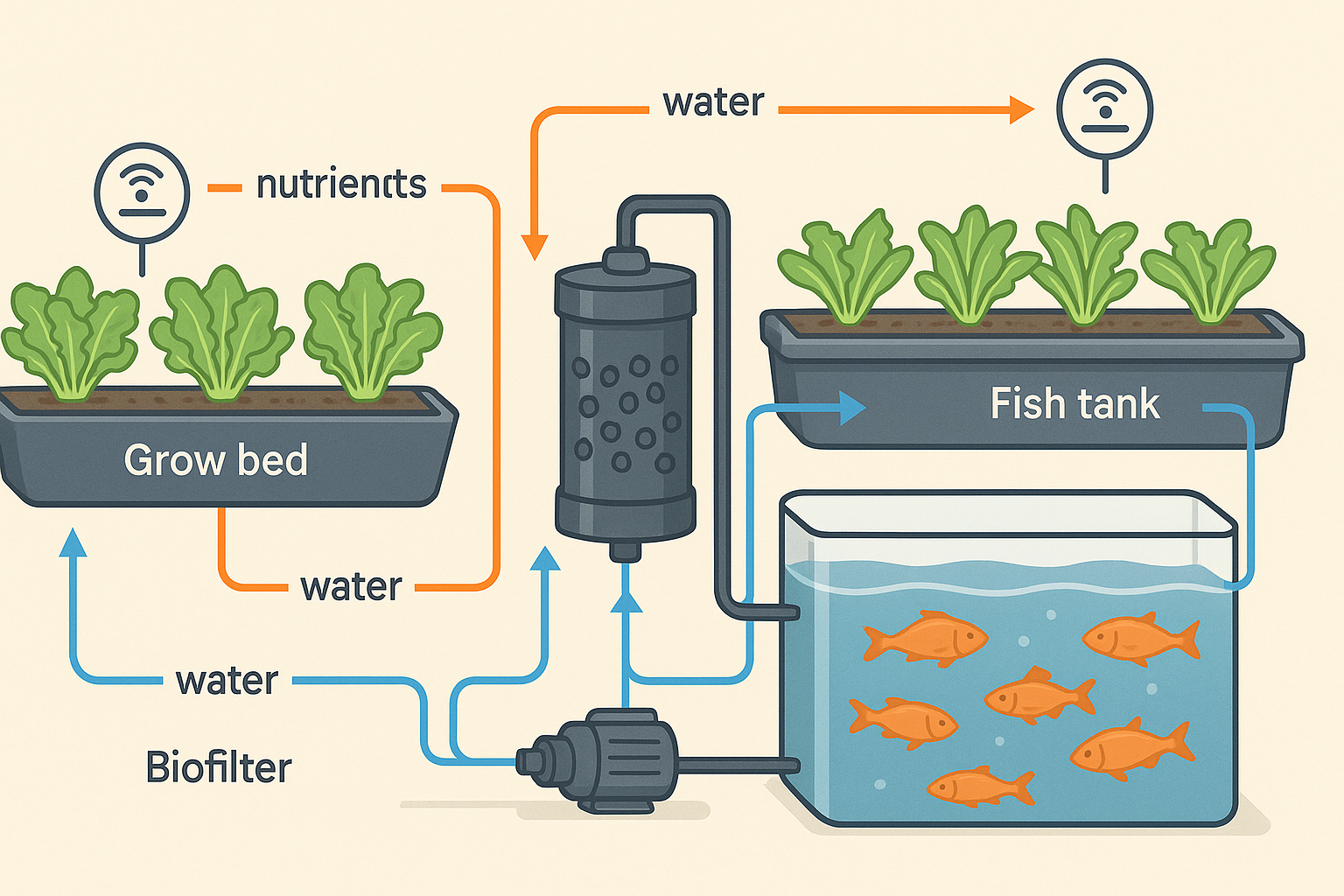
The technological landscape of aquaponics is experiencing unprecedented advancement in 2025, with smart technologies including IoT and AI enhancing monitoring and nutrient management while improving system efficiency. These aren’t just incremental improvements—they represent fundamental changes in how aquaponics systems operate and how farmers interact with their operations.
IoT (Internet of Things) integration has evolved from simple sensor networks to comprehensive ecosystem management platforms that provide real-time monitoring and control capabilities. Farmers can now monitor water quality parameters, fish health indicators, and plant growth metrics from anywhere with internet connectivity, receiving alerts when conditions require attention and historical data that enables optimization over time.
Artificial intelligence applications are transforming data from monitoring systems into actionable insights that improve decision-making and system performance. AI algorithms can predict optimal feeding schedules, identify early signs of disease or nutrient deficiencies, and optimize environmental conditions for maximum productivity. These systems learn from operational data, becoming more accurate and valuable over time.
Closed-loop systems representing new technological approaches reduce energy consumption while increasing productivity, addressing two of the primary concerns about aquaponics economics. These systems maximize resource efficiency by recycling nutrients, minimizing waste, and optimizing energy use through integrated design approaches.
Biofilters have become essential components for nutrient recycling and water management, with new designs that improve efficiency while reducing maintenance requirements. Advanced biofilter technologies enable more precise control of nutrient cycling while supporting higher fish densities and plant productivity.
Automation technologies are reducing labor requirements while improving consistency and reliability of operations. Automated feeding systems, climate control, and harvesting equipment enable small operations to achieve productivity levels that were previously only possible with substantial labor investments.
For small commercial farmers, these technological advances represent opportunities to compete effectively with larger operations while maintaining the quality and sustainability advantages that characterize successful aquaponics enterprises. The key is selecting technologies that provide clear returns on investment while supporting long-term operational efficiency.
Environmental Impact: Sustainability at Scale
The environmental benefits of aquaponics have reached compelling levels in 2025, with water conservation using up to 90% less water than traditional farming methods. This dramatic water efficiency addresses one of agriculture’s most pressing challenges while providing competitive advantages in water-scarce regions or areas with expensive water costs.
Water conservation in modern aquaponics systems results from sophisticated recirculation technologies that minimize losses while maintaining optimal growing conditions. Advanced filtration and treatment systems enable near-zero water waste while supporting high productivity levels that exceed traditional farming yields per unit of water consumed.
Chemical-free farming practices eliminate synthetic fertilizers, reducing environmental impact while producing crops that meet growing consumer demand for pesticide-free food. This approach addresses environmental concerns about agricultural chemical runoff while providing market advantages through organic or sustainable product certification.
The elimination of synthetic chemicals also reduces input costs and simplifies regulatory compliance while improving worker safety and product quality. Farmers can market their products as naturally grown without the complexity and expense of organic certification processes.
Carbon footprint reduction through local production reduces transportation emissions, supporting both environmental goals and economic advantages for local markets. Short supply chains reduce distribution costs while providing fresher products that command premium prices.
Energy efficiency improvements in 2025 aquaponics systems address previous concerns about energy consumption through LED lighting technologies, heat recovery systems, and renewable energy integration. Solar-powered systems and energy-efficient equipment enable operations to achieve net-zero or even negative energy consumption.
Waste reduction strategies integrated into modern systems convert what were previously disposal problems into valuable resources. Fish waste becomes plant nutrients, plant waste provides feed supplements, and system water supports multiple production cycles without discharge.
For environmentally conscious consumers and regulatory agencies, these environmental benefits provide compelling reasons to support aquaponics development through purchasing decisions, policy support, and investment opportunities.
Urban Integration: Bringing Farms to Cities
Urban farming integration has emerged as one of the most significant trends in 2025, with community-based production supporting local food security and sustainable practices in ways that weren’t economically viable just a few years ago. Urban aquaponics addresses multiple challenges simultaneously: food access, environmental impact, and economic development.
Increased yield in compact spaces makes aquaponics suitable for urban environments while maximizing production efficiency. Vertical growing systems and intensive production methods enable significant food production in areas where traditional farming isn’t feasible, creating opportunities for local food systems in densely populated areas.
Urban aquaponics systems serve multiple functions beyond food production, including educational opportunities, community engagement, and green infrastructure that improves urban environments. These systems provide visible examples of sustainable food production while creating gathering spaces that strengthen community connections.
Market advantages for urban operations include direct access to consumers, reduced transportation costs, and premium pricing opportunities for ultra-fresh, locally-produced food. Urban farmers can build direct relationships with customers through farmers’ markets, restaurant sales, and community-supported agriculture programs.
Zoning and regulatory adaptations in many cities now accommodate aquaponics operations through updated agricultural zoning, rooftop farming allowances, and streamlined permitting processes. These regulatory changes reflect growing recognition of urban agriculture’s value for food security and environmental sustainability.
Technology integration particularly benefits urban operations where space efficiency and automation are crucial for economic viability. Smart systems enable urban farmers to maximize productivity while minimizing labor requirements and operational complexity.
Educational and research opportunities in urban settings provide additional revenue streams and community value through school programs, university partnerships, and agricultural education initiatives that support workforce development and public understanding of sustainable agriculture.
For entrepreneurs interested in urban agriculture, aquaponics offers proven technologies and business models that can succeed in urban environments while contributing to community development and environmental improvement.

Market Growth: Economics Drive Adoption
Market expansion projections indicate substantial growth opportunities, with market growth driven by sustainability, urbanization, and consumer demand for organic produce creating favorable conditions for both established operations and new market entrants. The global aquaponics market is expected to grow from $1.42 billion in 2024 to $1.57 billion in 2025, representing healthy expansion that indicates strong fundamentals.
Consumer preferences showing increasing demand for sustainable, pesticide-free food provide market premiums that improve profitability for aquaponics operations. Consumers increasingly understand and value the environmental benefits of sustainable agriculture, creating willingness to pay premium prices for sustainably produced food.
Regulatory support from governments promoting sustainable farming practices includes financial incentives, research funding, and policy support that reduce barriers to aquaponics development. Government recognition of aquaponics benefits creates supportive regulatory environments and access to funding programs.
Investment trends show increasing venture capital and private investment in aquaponics technologies and operations, reflecting growing confidence in the economic viability and scalability of these systems. This investment supports research and development, infrastructure development, and market expansion.
Supply chain development for aquaponics-specific equipment, seeds, and nutrients has matured significantly, reducing costs and improving reliability for operators. Specialized suppliers now offer comprehensive support services that simplify system development and operation.
Market differentiation opportunities enable aquaponics operations to command premium pricing through sustainability messaging, local production benefits, and product quality advantages. Successful operations leverage these differentiators to build loyal customer bases and sustainable pricing power.
Export and scaling opportunities are expanding as aquaponics technologies prove viable in diverse climates and markets. Successful domestic operations can expand internationally or develop licensing and consulting revenue streams.
For small commercial farmers, these market trends suggest that aquaponics operations developed in 2025 will benefit from favorable market conditions, supportive policies, and growing consumer acceptance that may not be available to farmers who wait for later adoption.
Global Food Security: Addressing Tomorrow’s Challenges Today
Food security implications of aquaponics advancement in 2025 extend far beyond individual farm profitability to address fundamental challenges in global food production. Sustainable food production providing consistent yields in controlled environments offers solutions to food security challenges that traditional agriculture struggles to address.
Climate change resilience through optimized water use ensures production resilience in regions facing water scarcity, extreme weather, or soil degradation. Aquaponics systems can maintain consistent production despite external environmental challenges, providing food security that traditional agriculture cannot guarantee.
Yield consistency in aquaponics systems enables reliable food production planning and distribution, reducing food price volatility and improving access to fresh produce in underserved areas. Predictable harvests support stable supply chains and affordable food access.
Nutritional quality of aquaponics products often exceeds conventionally grown alternatives due to optimized growing conditions and harvest-to-market timing. Fresh, nutrient-dense food supports public health goals while providing economic value for producers.
Land use efficiency enables food production in areas unsuitable for traditional agriculture, including urban areas, contaminated soils, and regions with poor soil quality. This efficiency expands the total available agricultural area while reducing pressure on existing farmland.
Resource efficiency in water, energy, and nutrient use enables sustainable production scaling without environmental degradation. As global food demand increases, aquaponics offers production methods that can expand to meet demand without compromising environmental sustainability.
Technology transfer and education programs are spreading aquaponics knowledge globally, enabling food security improvements in developing regions through locally-appropriate technologies and training programs. International development organizations increasingly recognize aquaponics as a viable solution for rural development and food security.
Disaster resilience of well-designed aquaponics systems enables continued food production during natural disasters, economic disruptions, or supply chain interruptions that might compromise traditional agriculture.
For small commercial farmers, participating in food security solutions through aquaponics provides both economic opportunities and social impact that can support marketing, funding, and community support for their operations.
Consumer Awareness: Market Demand Drives Innovation
Consumer awareness of aquaponics benefits has reached critical mass in 2025, creating market demand that supports premium pricing and expansion opportunities. Educated consumers understand the environmental benefits, quality advantages, and local production benefits that aquaponics provides, creating sustainable competitive advantages for producers.
Sustainability messaging resonates strongly with environmentally conscious consumers who seek products that align with their values. Aquaponics enables farmers to tell compelling sustainability stories that differentiate their products while building customer loyalty and brand value.
Quality perception of aquaponics products continues improving as consumers experience the freshness, flavor, and nutritional benefits of optimally grown produce. Positive experiences create repeat customers and word-of-mouth marketing that supports business growth.
Educational outreach by successful aquaponics operations builds consumer understanding while creating community connections that support local food systems. Farm tours, educational programs, and social media engagement help consumers understand aquaponics benefits while building customer relationships.
Certification and labeling programs help consumers identify and select sustainably produced food while providing clear marketing advantages for certified operations. Third-party certifications provide credible verification of sustainability claims.
Social media and digital marketing enable aquaponics farmers to reach consumers directly while building communities of supporters who value sustainable agriculture. Digital platforms provide cost-effective marketing channels that level the playing field between small operations and large agricultural companies.
Restaurant and institutional sales opportunities are expanding as chefs and food service professionals recognize the quality and sustainability advantages of locally-produced aquaponics food. These professional customers often provide stable sales volumes and premium pricing.
For aquaponics farmers, consumer awareness trends suggest that investment in education, marketing, and customer relationship building will provide substantial returns through improved pricing, customer loyalty, and business growth.
Alternative Technologies and Innovations
Biofloc technology optimizing water quality and reducing waste in aquaculture shares synergies with aquaponics, creating hybrid systems that capture benefits of both approaches. These integrated systems often achieve higher productivity and resource efficiency than either technology alone.
Blockchain for traceability enhances transparency and consumer trust by providing verified information about production methods, harvest dates, and handling procedures. Blockchain technology enables premium pricing for products with verified sustainability credentials.
Modular systems allowing scalability and accessibility for small farmers reduce initial investment requirements while providing expansion opportunities as operations grow. Modular designs enable farmers to start small and expand based on market success and available capital.
Vertical farming integration combines aquaponics with vertical growing systems to maximize space efficiency and production density. These hybrid systems are particularly valuable in urban environments where space costs are high.
Renewable energy integration reduces operational costs while improving environmental sustainability. Solar-powered systems and biogas generation from organic waste create energy-independent operations that provide additional economic and environmental benefits.
Artificial intelligence and machine learning applications continue advancing to provide increasingly sophisticated system optimization, predictive maintenance, and production planning capabilities. These technologies enable small operations to achieve efficiency levels previously available only to large commercial operations.
For farmers evaluating aquaponics investments, understanding these alternative and complementary technologies helps identify systems that provide maximum value while supporting long-term growth and adaptation to changing market conditions.
Building for the Future: Strategic Considerations for 2025
Success in the 2025 aquaponics landscape requires strategic thinking that goes beyond simple adoption of new technologies. Farmers must consider market positioning, scalability, regulatory compliance, and long-term sustainability in their planning and investment decisions.
Market positioning strategies should leverage the environmental, quality, and local production advantages that aquaponics provides while building customer relationships that support premium pricing and business growth. Successful operations understand their unique value propositions and target customers who value these benefits.
Scalability planning ensures that initial investments support future growth rather than requiring complete system redesign as operations expand. Modular designs, expandable infrastructure, and flexible technologies provide pathways for growth that preserve initial investments.
Technology selection should balance current capabilities with future adaptability, choosing systems that can evolve with advancing technologies rather than becoming obsolete. Open architectures and modular designs provide flexibility for future upgrades and enhancements.
Financing strategies should leverage available incentives, grants, and investment opportunities while maintaining financial flexibility for growth and adaptation. Understanding financing options helps farmers access capital for development while maintaining operational control.
Education and training investments ensure that farmers can operate sophisticated systems effectively while staying current with advancing technologies and market opportunities. Continuous learning supports long-term success in rapidly evolving markets.
Partnership and collaboration opportunities provide access to expertise, markets, and resources that individual operations might not achieve independently. Strategic partnerships can accelerate development while reducing risks and costs.
Regulatory compliance planning ensures that operations meet current requirements while anticipating future regulatory changes that might affect operations. Proactive compliance reduces risks while positioning operations to benefit from supportive regulatory developments.
For farmers considering aquaponics investments in 2025, the convergence of technological advancement, market demand, environmental benefits, and regulatory support creates uniquely favorable conditions for success. The farmers who understand these trends and position their operations accordingly will be best positioned to capitalize on the opportunities that 2025 represents for sustainable agriculture.
Aquaponics in 2025 isn’t just about growing fish and plants together—it’s about participating in an agricultural revolution that addresses fundamental challenges in food security, environmental sustainability, and economic viability. For small commercial farmers willing to embrace innovation while building on proven principles, this year offers unprecedented opportunities to build operations that are profitable, sustainable, and positioned for long-term success.